Translational Medicine Program, The Hospital for Sick Children, Toronto, ON, Canada.
Division of General and Thoracic Surgery, Translational Medicine, The Hospital for Sick Children, Toronto, ON, Canada.
Nat Commun. 2020 Oct 2;11(1):4950. doi: 10.1038/s41467-020-18750-9.
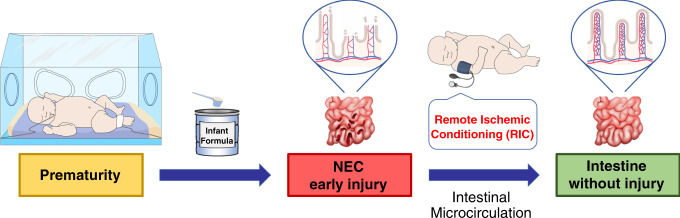
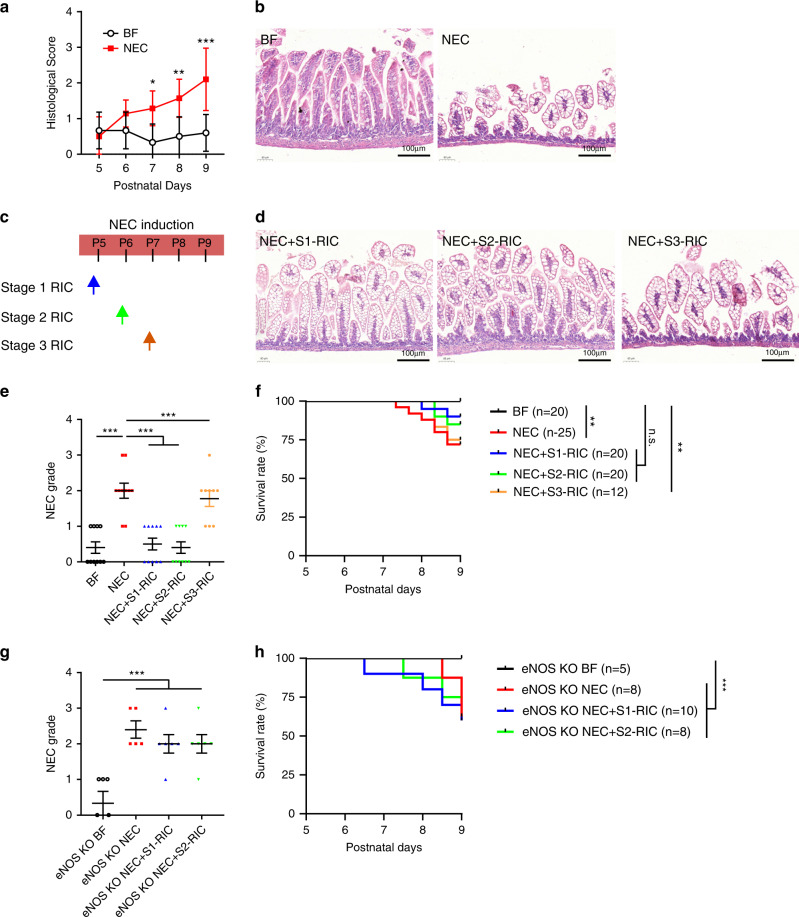
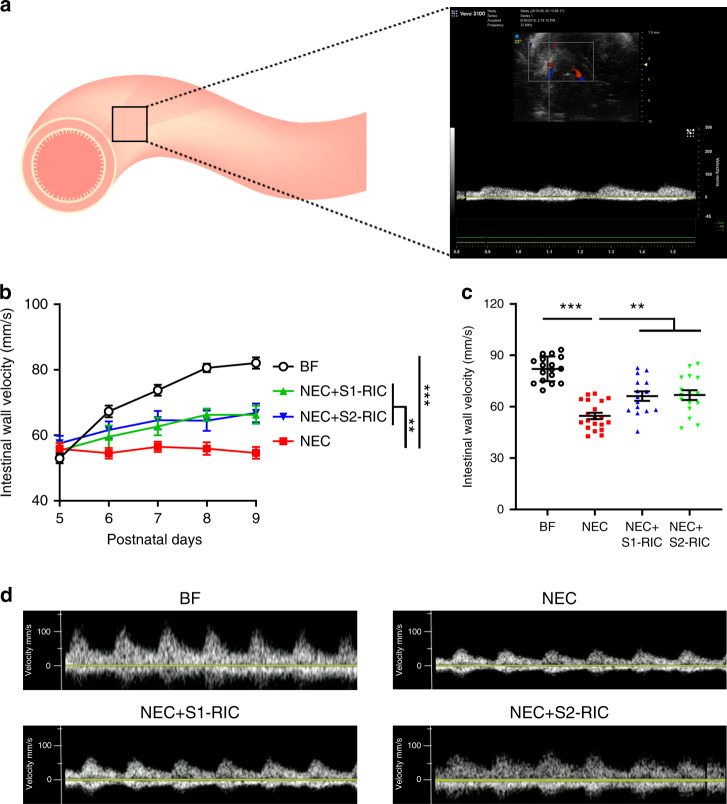
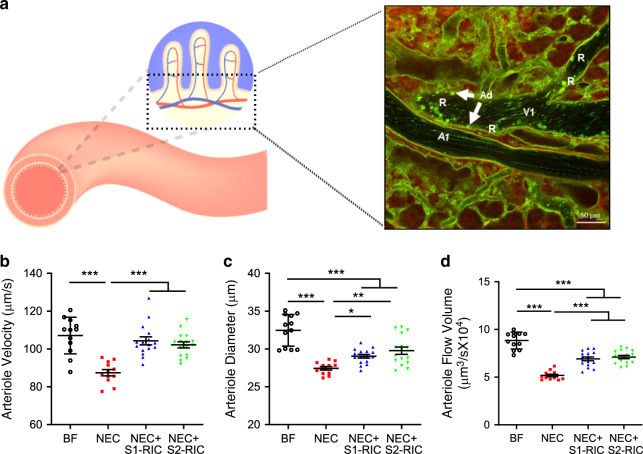
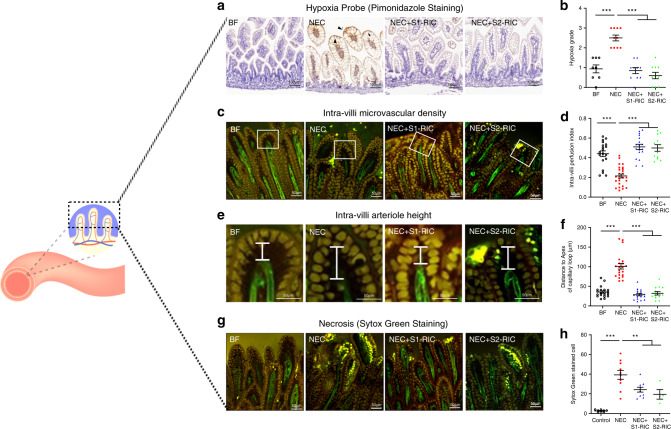
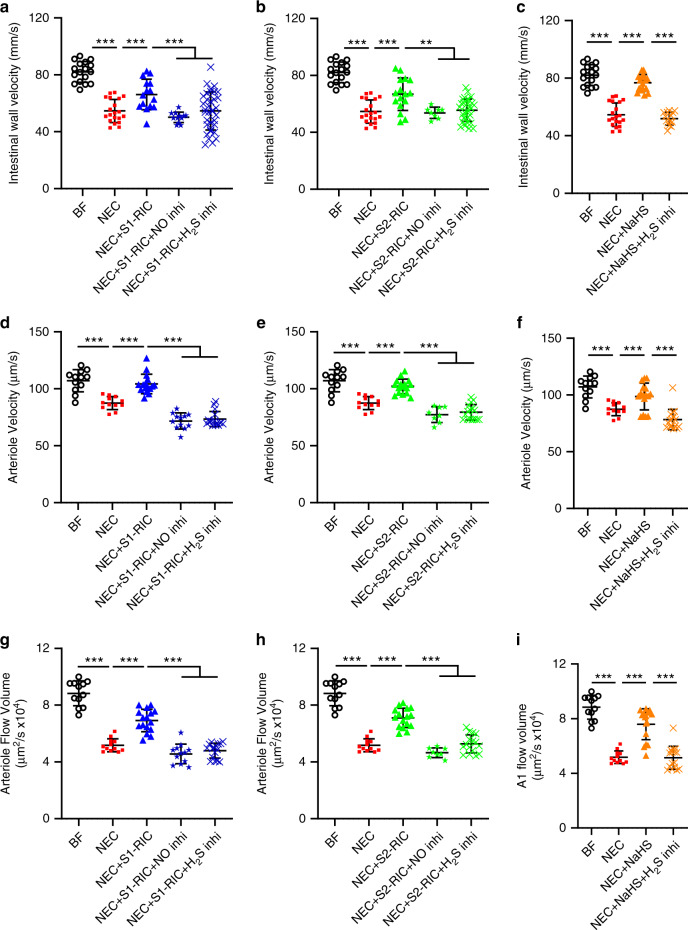
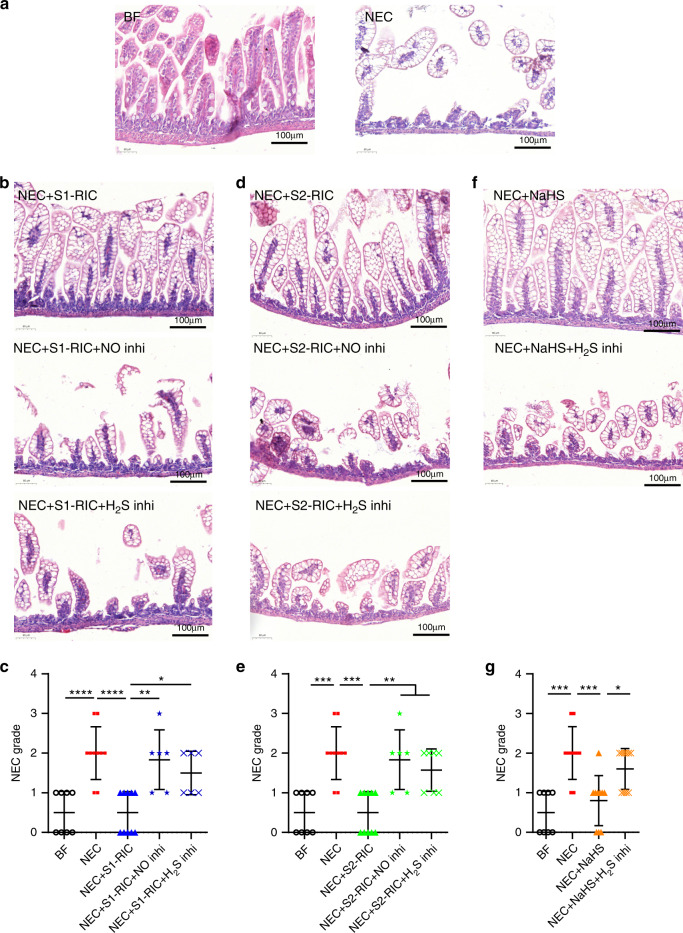
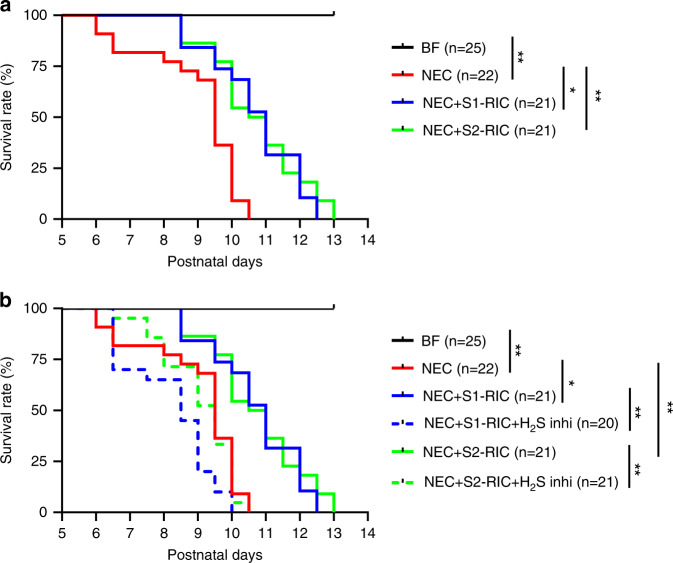
Necrotizing enterocolitis (NEC) is a devastating disease of premature infants with high mortality rate, indicating the need for precision treatment. NEC is characterized by intestinal inflammation and ischemia, as well derangements in intestinal microcirculation. Remote ischemic conditioning (RIC) has emerged as a promising tool in protecting distant organs against ischemia-induced damage. However, the effectiveness of RIC against NEC is unknown. To address this gap, we aimed to determine the efficacy and mechanism of action of RIC in experimental NEC. NEC was induced in mouse pups between postnatal day (P) 5 and 9. RIC was applied through intermittent occlusion of hind limb blood flow. RIC, when administered in the early stages of disease progression, decreases intestinal injury and prolongs survival. The mechanism of action of RIC involves increasing intestinal perfusion through vasodilation mediated by nitric oxide and hydrogen sulfide. RIC is a viable and non-invasive treatment strategy for NEC.
新生儿坏死性小肠结肠炎(NEC)是一种毁灭性疾病,早产儿死亡率高,表明需要精准治疗。NEC 的特征是肠道炎症和缺血,以及肠道微循环紊乱。远程缺血预处理(RIC)作为一种有前途的工具,可防止远距离器官因缺血引起的损伤。然而,RIC 对 NEC 的疗效尚不清楚。为了解决这一差距,我们旨在确定 RIC 在实验性 NEC 中的疗效和作用机制。在出生后第 5 天至第 9 天之间,用鼠幼仔诱导 NEC。RIC 通过间歇性阻断后肢血流来实施。RIC 在疾病进展的早期应用,可减少肠道损伤并延长生存时间。RIC 的作用机制涉及通过一氧化氮和硫化氢介导的血管扩张增加肠道灌注。RIC 是一种可行的、非侵入性的 NEC 治疗策略。