Department of Epidemiology and Biostatistics, Key Laboratory of Environmental Health of Ministry of Education, School of Public Health, Tongji Medical College, Huazhong University of Science and Technology, Wuhan 430030, China.
Department of Respiratory and Critical Care Medicine, Tongji Hospital, Tongji Medical College, Huazhong University of Science and Technology, Wuhan 430030, China.
Nucleic Acids Res. 2021 Jan 8;49(D1):D1065-D1073. doi: 10.1093/nar/gkaa805.
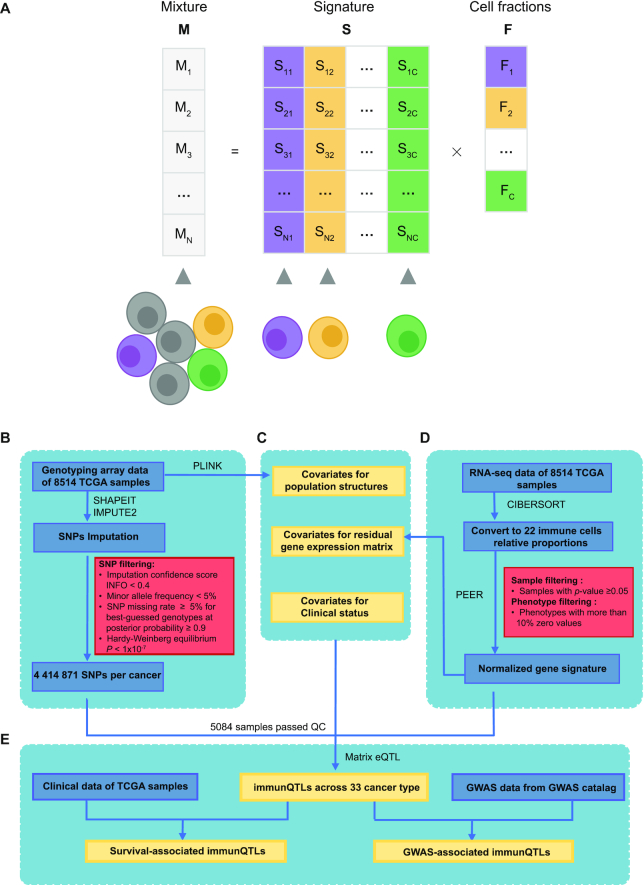
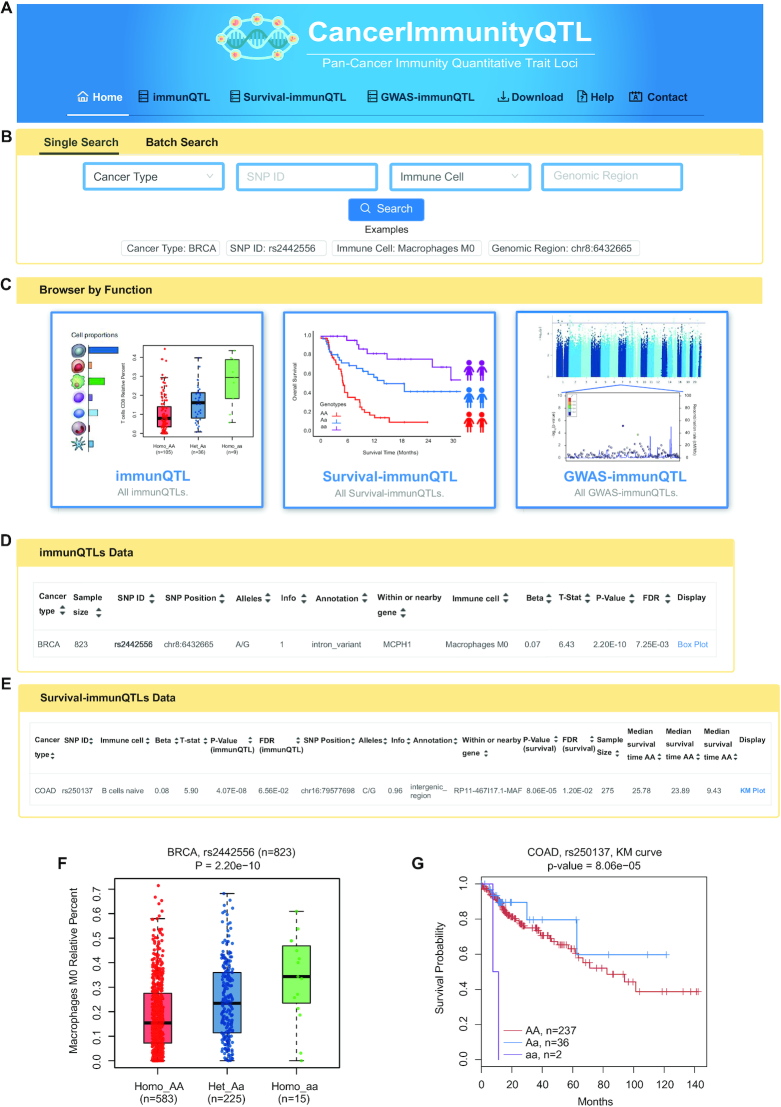
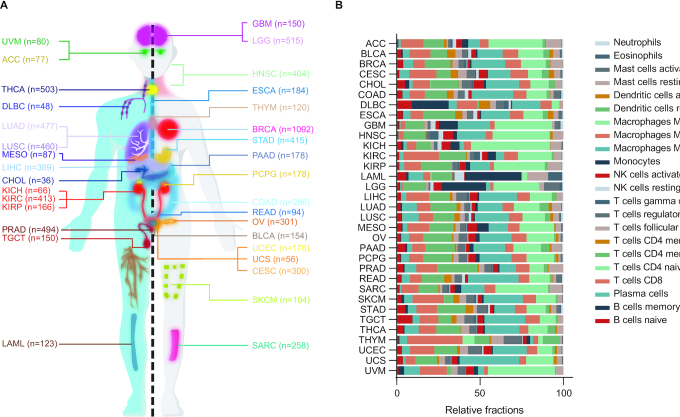
Tumor-infiltrating immune cells as integral component of the tumor microenvironment are associated with tumor progress, prognosis and responses to immunotherapy. Genetic variants have been demonstrated to impact tumor-infiltrating, underscoring the heritable character of immune landscape. Therefore, identification of immunity quantitative trait loci (immunQTLs), which evaluate the effect of genetic variants on immune cells infiltration, might present a critical step toward fully understanding the contribution of genetic variants in tumor development. Although emerging studies have demonstrated the determinants of germline variants on immune infiltration, no database has yet been developed to systematically analyze immunQTLs across multiple cancer types. Using genotype data from TCGA database and immune cell fractions estimated by CIBERSORT, we developed a computational pipeline to identify immunQTLs in 33 cancer types. A total of 913 immunQTLs across different cancer types were identified. Among them, 5 immunQTLs are associated with patient overall survival. Furthermore, by integrating immunQTLs with GWAS data, we identified 527 immunQTLs overlapping with known GWAS linkage disequilibrium regions. Finally, we constructed a user-friendly database, CancerImmunityQTL (http://www.cancerimmunityqtl-hust.com/) for users to browse, search and download data of interest. This database provides an informative resource to understand the germline determinants of immune infiltration in human cancer and benefit from personalized cancer immunotherapy.
肿瘤浸润免疫细胞作为肿瘤微环境的一个组成部分,与肿瘤的进展、预后和对免疫治疗的反应有关。已经证明遗传变异会影响肿瘤浸润,这突显了免疫景观的遗传性。因此,确定免疫数量性状基因座(immunQTLs),即评估遗传变异对免疫细胞浸润的影响,可以作为全面了解遗传变异在肿瘤发生中的作用的关键步骤。尽管新兴的研究已经证明了种系变异对免疫浸润的决定因素,但尚未开发出一个数据库来系统地分析多种癌症类型的 immunQTLs。我们使用 TCGA 数据库的基因型数据和 CIBERSORT 估计的免疫细胞分数,开发了一种计算流程来识别 33 种癌症类型中的 immunQTLs。总共确定了 913 个不同癌症类型的 immunQTLs。其中,有 5 个 immunQTLs与患者的总生存期相关。此外,通过整合 immunQTLs 与 GWAS 数据,我们确定了 527 个与已知 GWAS 连锁不平衡区域重叠的 immunQTLs。最后,我们构建了一个用户友好的数据库 CancerImmunityQTL(http://www.cancerimmunityqtl-hust.com/),供用户浏览、搜索和下载感兴趣的数据。这个数据库提供了一个有价值的资源,可用于了解人类癌症中免疫浸润的种系决定因素,并受益于个性化癌症免疫治疗。