Cumming Royce T, Tirant Stéphane Le, Teemsma Sierra N, Hennemann Frank H, Willemse Luc, Büscher Thies H
Associate Researcher, Montreal Insectarium, 4581 rue Sherbrooke est, Montréal, Québec, H1X 2B2, Canada Montreal Insectarium Montréal Canada.
Ph.D. Student, Richard Gilder Graduate School, American Museum of Natural History, New York, NY 10024, USA American Museum of Natural History New York United States of America.
Zookeys. 2020 Sep 17;969:43-84. doi: 10.3897/zookeys.969.56214. eCollection 2020.
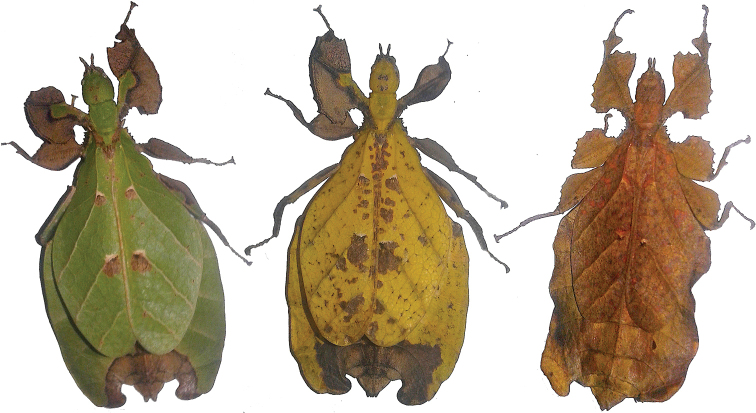
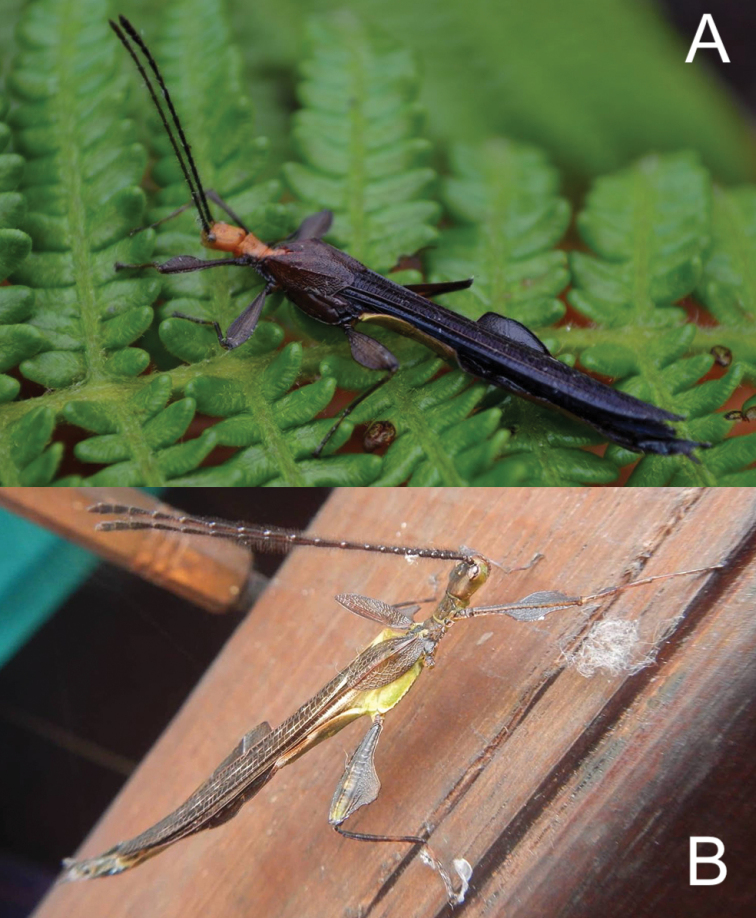
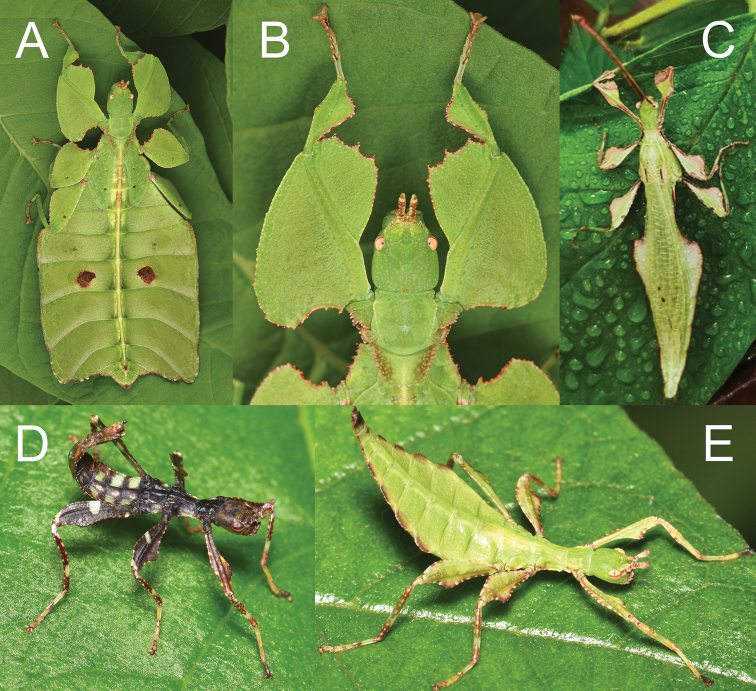
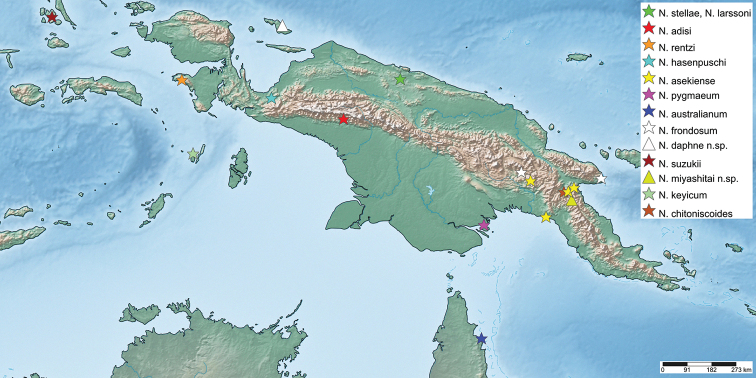
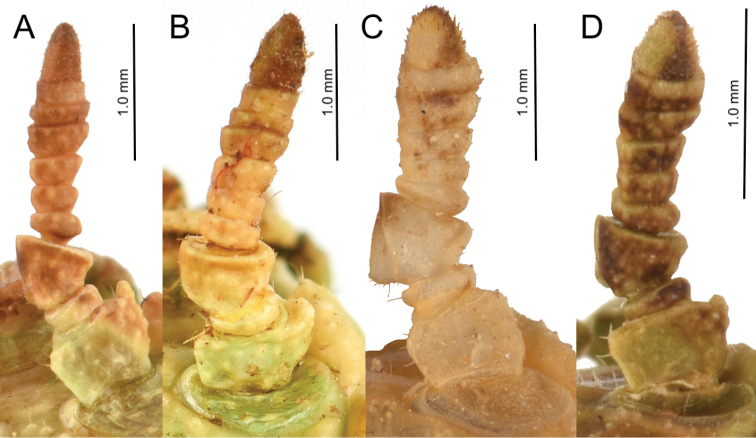
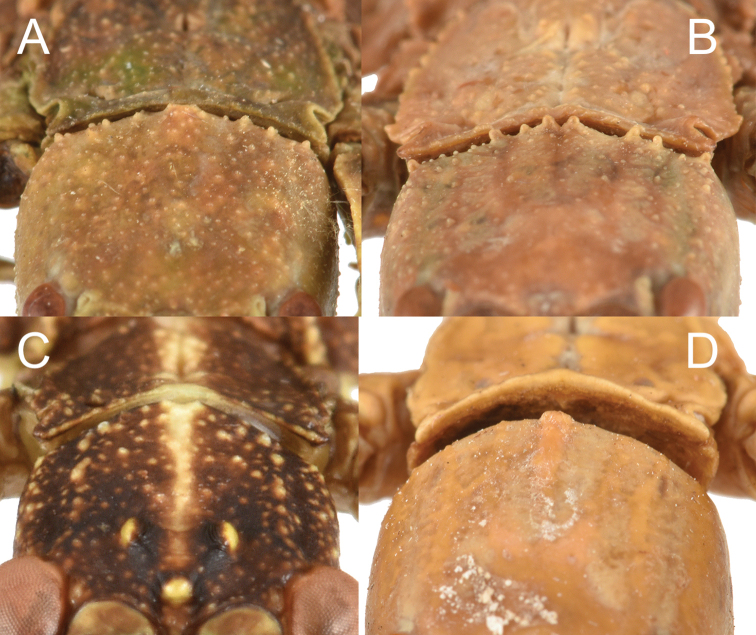
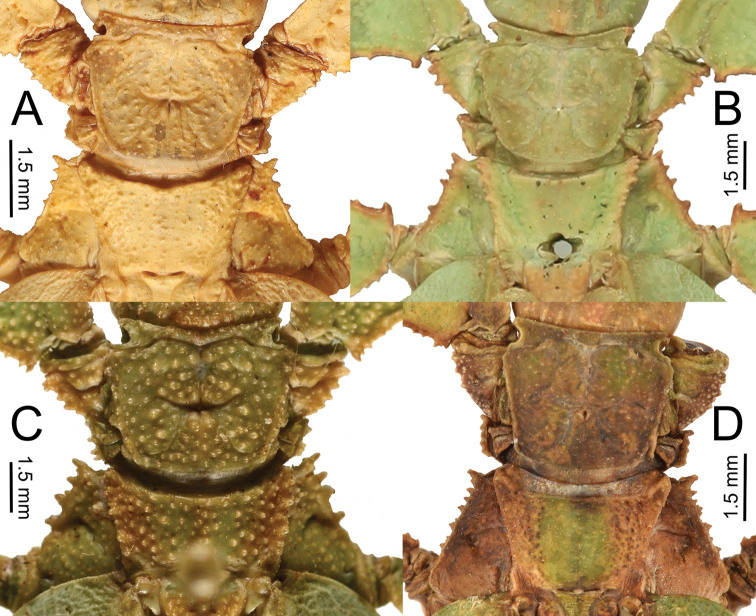
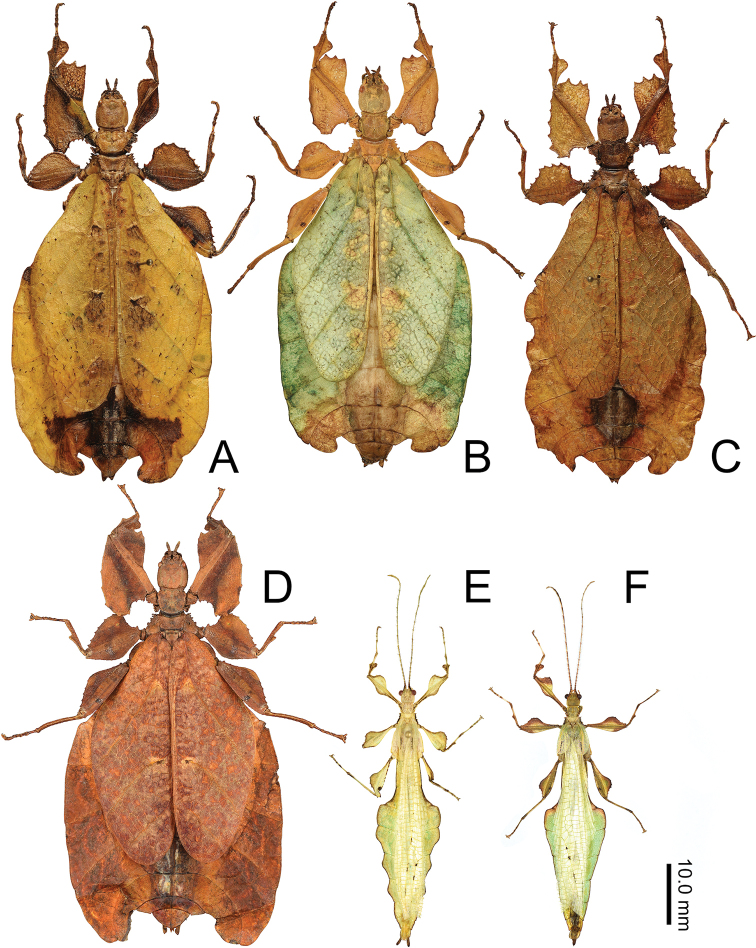
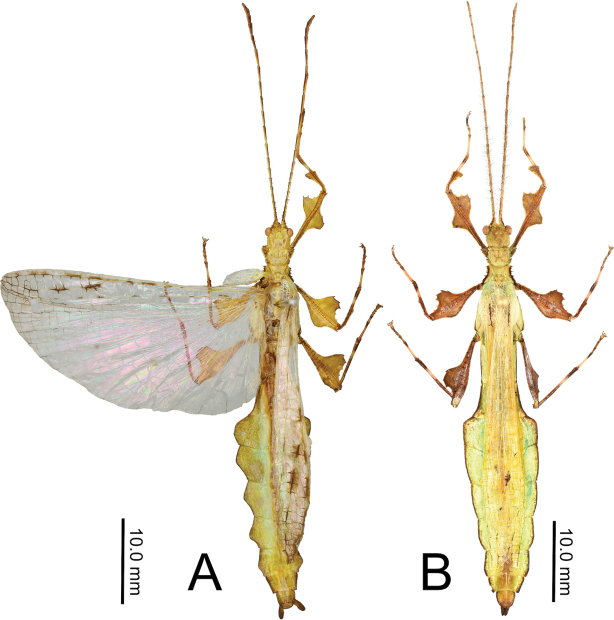
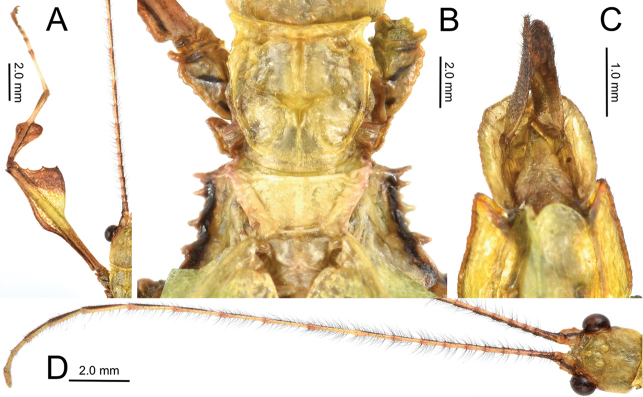
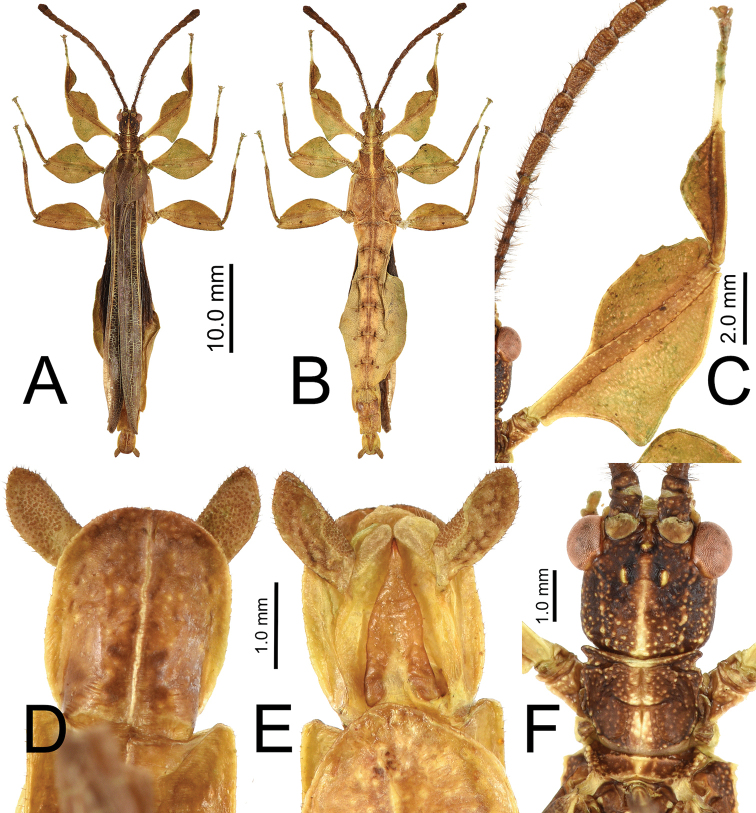
After successful laboratory rearing of both males and females from a single clutch of eggs, the genus Redtenbacher, 1906 (described only from males) and the species group within Phyllium (Pulchriphyllium) Griffini, 1898 (described only from females) are found to be the opposite sexes of the same genus. This rearing observation finally elucidates the relationship of these two small body sized leaf insect groups which, for more than a century, have never been linked before. This paper synonymizes the species group with Redtenbacher, 1906 in order to create a singular and clearly defined taxonomic group. Five species are transferred from the Phyllium (Pulchriphyllium) frondosum species group and create the following new combinations: (Größer, 2002), ; (Größer, 1992), ; (Redtenbacher, 1906), ; (Karny, 1914), ; (Größer, 2008), The only taxon from this species group not transferred from the species group to is Phyllium (Pulchriphyllium) groesseri Zompro, 1998. Based on protibial exterior lobes, this species belongs in the species group as described in Hennemann et al. 2009 and is therefore excluded from further discussion here. The rearing of also yielded the male (Größer, 2002), thus, enabling comparison of this male to the other previously known species. Two new species of nano-leaf insects are described within, , from Morobe Province, Papua New Guinea, and , from Biak Island, Papua Province, Indonesia. With such distinct sexual dimorphism in between sexes, which have only now been matched up via captive rearing, illustrated within are numerous specimens which might represent the unknown opposite sexes of the many currently known species of . Due to pronounced sexual dimorphism in , only future captive rearing or molecular analysis will match up the many unknown sexes. To conclude, with the description of two new species, dichotomous keys to species for known males and females are presented.
在成功地从同一批卵中饲养出雄性和雌性后,发现1906年的Redtenbacher属(仅根据雄性描述)和1898年的Phyllium(Pulchriphyllium)Griffini属中的物种组(仅根据雌性描述)是同一属的不同性别。这一饲养观察最终阐明了这两个小型叶昆虫类群的关系,在一个多世纪以来,它们从未被联系在一起。本文将该物种组与1906年的Redtenbacher属同义,以创建一个单一且明确界定的分类群。五个物种从Phyllium(Pulchriphyllium)frondosum物种组转移过来,并产生了以下新组合:(Größer,2002年),;(Größer,1992年),;(Redtenbacher,1906年),;(Karny,1914年),;(Größer,2008年),该物种组中唯一未从该物种组转移到的分类单元是Phyllium(Pulchriphyllium)groesseri Zompro,1998年。根据胫节外部叶,该物种属于Hennemann等人2009年描述的物种组,因此在此不再进一步讨论。的饲养还产生了雄性(Größer,2002年),从而能够将该雄性与其他先前已知的物种进行比较。在该属中描述了两种新的纳米叶昆虫,来自巴布亚新几内亚莫罗贝省的,以及来自印度尼西亚巴布亚省比亚克岛的。由于该属中两性之间存在明显的性二态性,直到现在才通过圈养饲养进行匹配,文中展示了许多可能代表许多目前已知物种未知异性的标本。由于该属中明显的性二态性,只有未来的圈养饲养或分子分析才能匹配许多未知的性别。总之,随着两种新物种的描述,给出了已知雄性和雌性物种的二分检索表。