Park Cheol, Lee Hyesook, Han Min Ho, Jeong Jin-Woo, Kim Sung Ok, Jeong Soon-Jeong, Lee Bae-Jin, Kim Gi-Young, Park Eui Kyun, Jeon You-Jin, Choi Yung Hyun
Division of Basic Sciences, College of Liberal Studies, Dong?eui University, Busan, Republic of Korea.
Anti-Aging Research Center, Dong-eui University, Busan, Republic of Korea.
EXCLI J. 2020 Aug 4;19:1102-1119. doi: 10.17179/excli2020-2376. eCollection 2020.
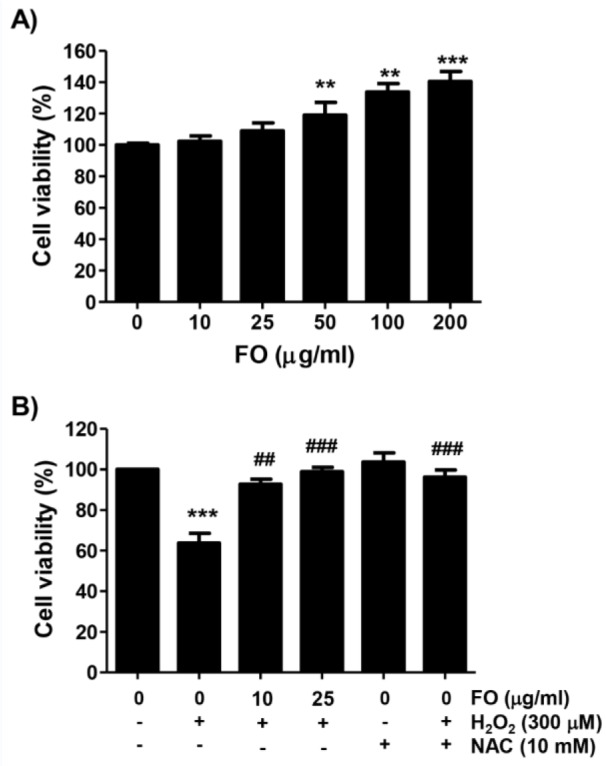
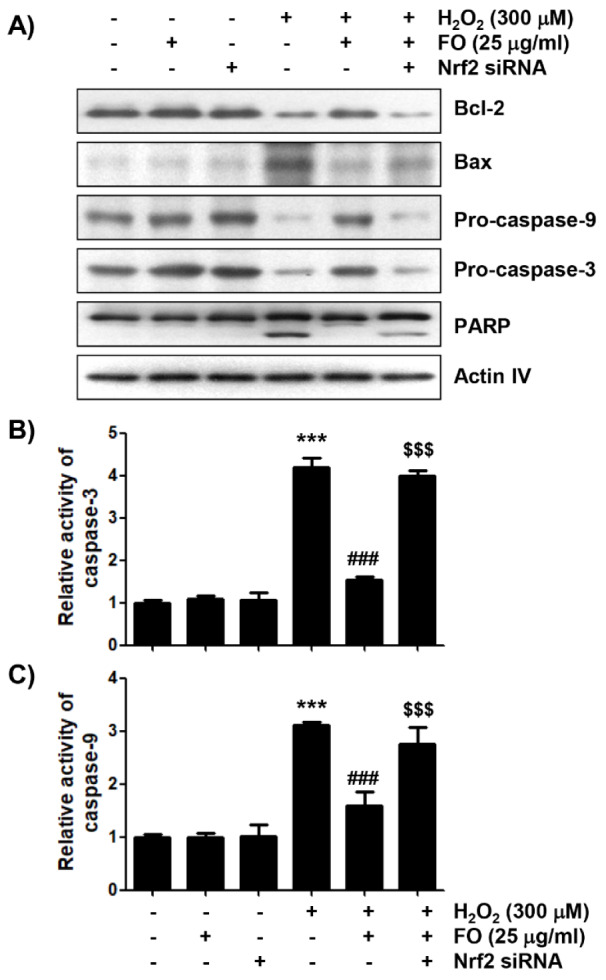
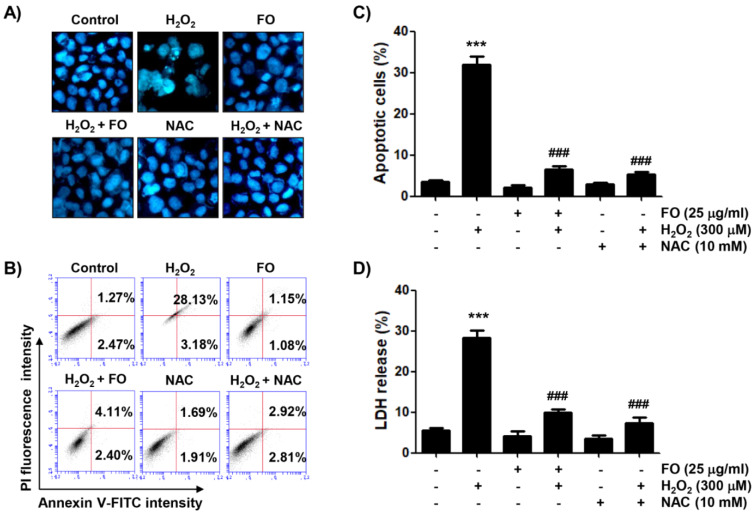
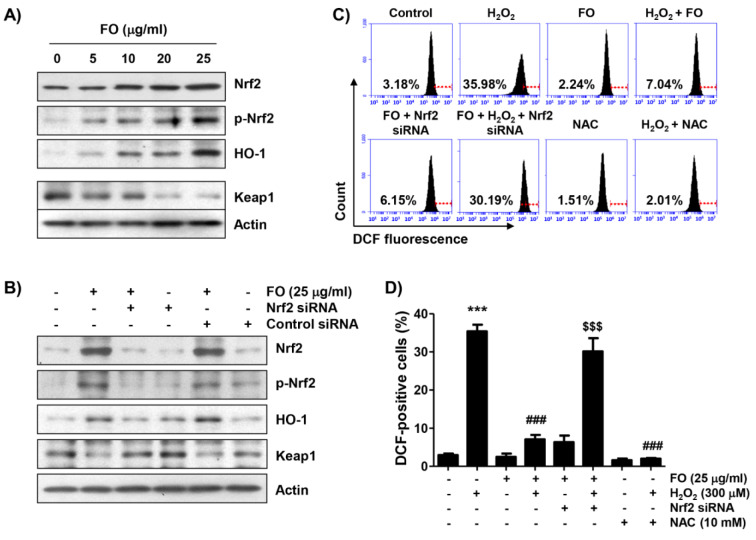
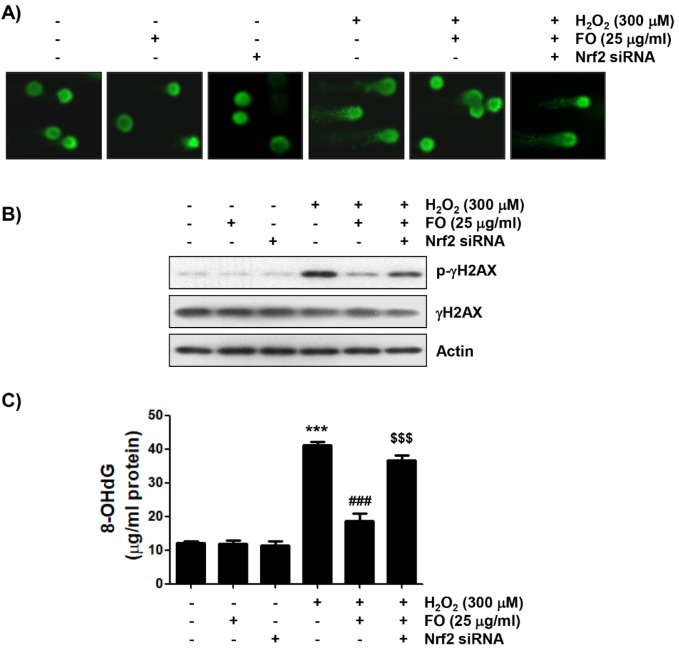
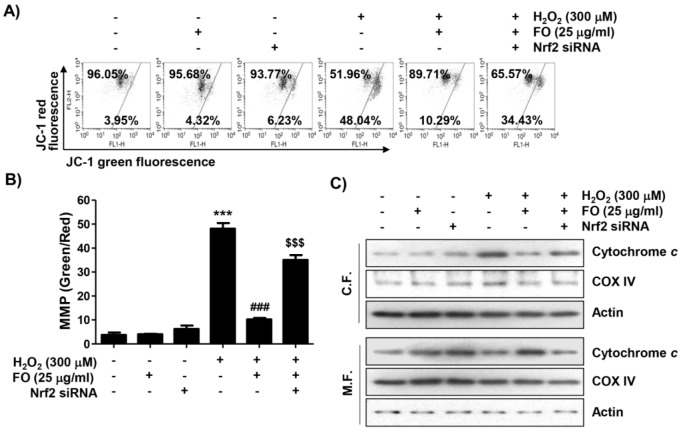
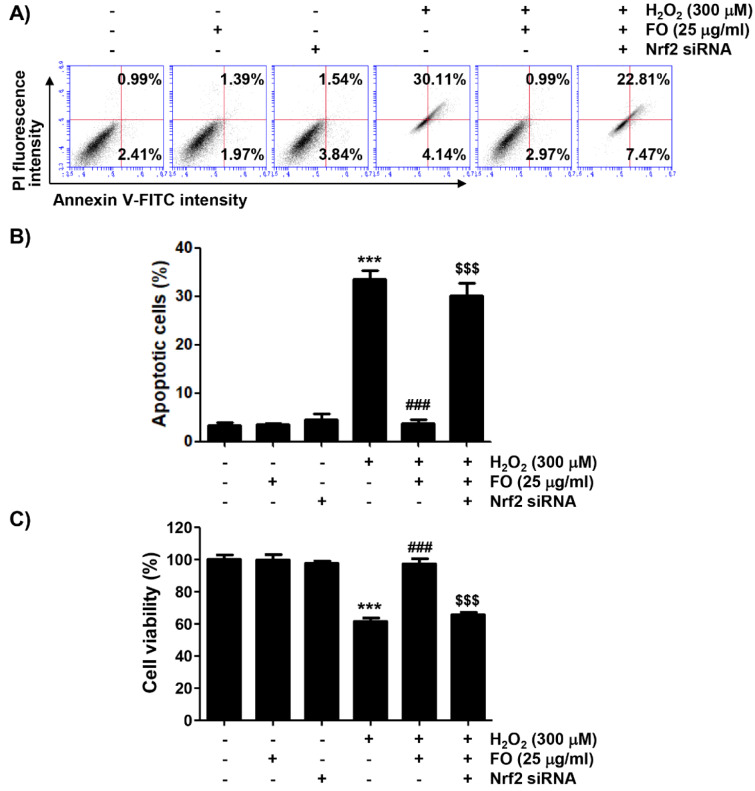
Osteoblast damage by oxidative stress has been recognized as a cause of bone-related disease, including osteoporosis. Recently, we reported that fermented Pacific oyster () extracts (FO) inhibited osteoclastogenesis and osteoporosis, while promoting osteogenesis. However, since the beneficial potential of FO on osteoblasts is not well known, in the present study, we investigated the cytoprotective effect of FO against oxidative stress in MC3T3-E1 osteoblasts. Our results demonstrated that FO inhibited hydrogen peroxide (HO)-induced DNA damage and cytotoxicity through the rescue of mitochondrial function by blocking abnormal ROS accumulation. FO also prevented apoptosis by suppressing loss of mitochondrial membrane potential and cytosolic release of cytochrome , decreasing the rate of Bax/Bcl-2 expression and reducing the activity of caspase-9 and caspase-3 in HO-stimulated MC3T3-E1 osteoblasts, suggesting that FO protected MC3T3-E1 osteoblasts from the induction of caspase dependent- and mitochondria-mediated apoptosis by oxidative stress. In addition, FO markedly promoted the activation of nuclear factor-erythroid-2-related factor 2 (Nrf2), which was associated with the enhanced expression of heme oxygenase-1 (HO-1). However, inhibiting the expression of HO-1 by artificially blocking the expression of Nrf2 using siRNA significantly eliminated the protective effect of FO, indicating that FO activates the Nrf2/HO-1 signaling pathway in MC3T3-E1 osteoblasts to protect against oxidative stress. Based on the present data, FO is thought to be useful as a potential therapeutic agent for the inhibition of oxidative stress in osteoblasts.
氧化应激对成骨细胞的损伤已被认为是包括骨质疏松症在内的骨相关疾病的一个病因。最近,我们报道了发酵太平洋牡蛎提取物(FO)可抑制破骨细胞生成和骨质疏松症,同时促进成骨作用。然而,由于FO对成骨细胞的有益潜力尚不明确,在本研究中,我们调查了FO对MC3T3-E1成骨细胞氧化应激的细胞保护作用。我们的结果表明,FO通过阻止异常ROS积累来挽救线粒体功能,从而抑制过氧化氢(H₂O₂)诱导的DNA损伤和细胞毒性。FO还通过抑制线粒体膜电位的丧失和细胞色素c的胞质释放来防止细胞凋亡,降低HO刺激的MC3T3-E1成骨细胞中Bax/Bcl-2的表达率,并降低caspase-9和caspase-3的活性,这表明FO保护MC3T3-E1成骨细胞免受氧化应激诱导的caspase依赖性和线粒体介导的细胞凋亡。此外,FO显著促进核因子红细胞2相关因子2(Nrf2)的激活,这与血红素加氧酶-1(HO-1)表达的增强有关。然而,使用siRNA人工阻断Nrf2的表达来抑制HO-1的表达,显著消除了FO的保护作用,表明FO激活MC3T3-E1成骨细胞中的Nrf2/HO-1信号通路以抵抗氧化应激。基于目前的数据,FO被认为是一种潜在的治疗剂,可用于抑制成骨细胞中的氧化应激。