Felton Melvin A, Yu Alfred B, Boothe David L, Oie Kelvin S, Franaszczuk Piotr J
Combat Capabilities Development Command (CCDC)-Army Research Laboratory, Adelphi, MD, United States.
Combat Capabilities Development Command (CCDC)-Army Research Laboratory, Aberdeen Proving Ground, MD, United States.
Front Comput Neurosci. 2020 Sep 10;14:81. doi: 10.3389/fncom.2020.00081. eCollection 2020.
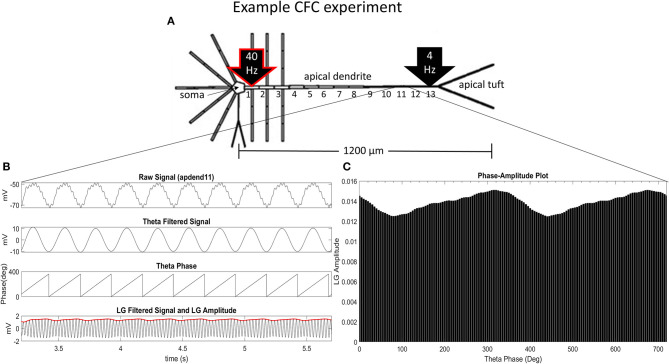
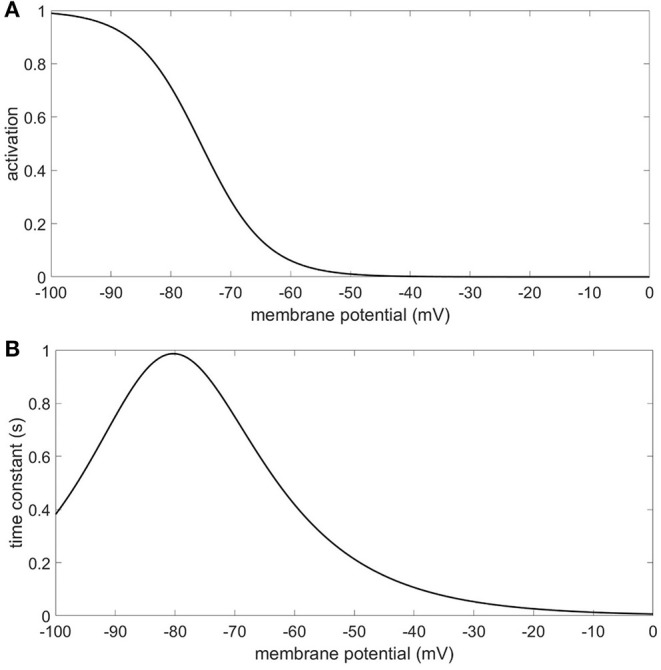
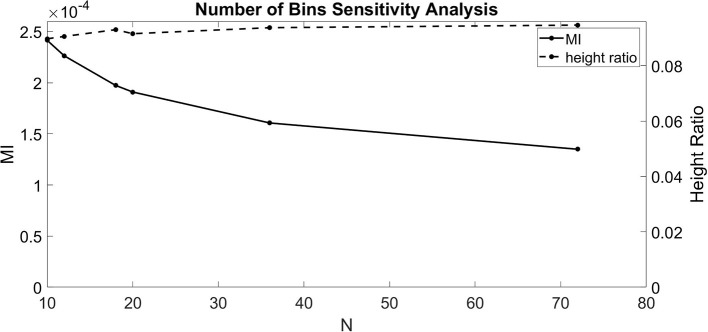
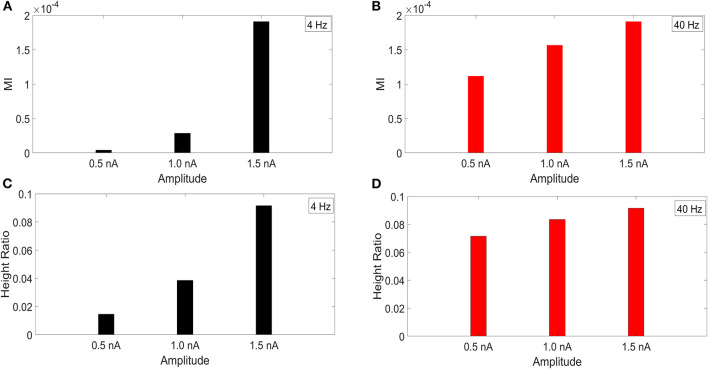
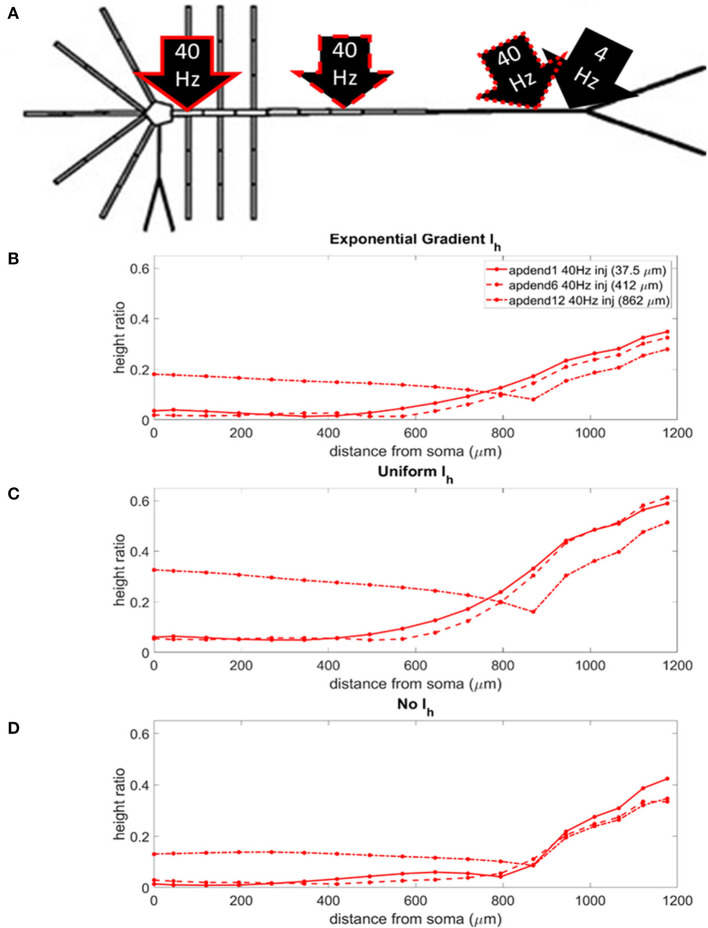
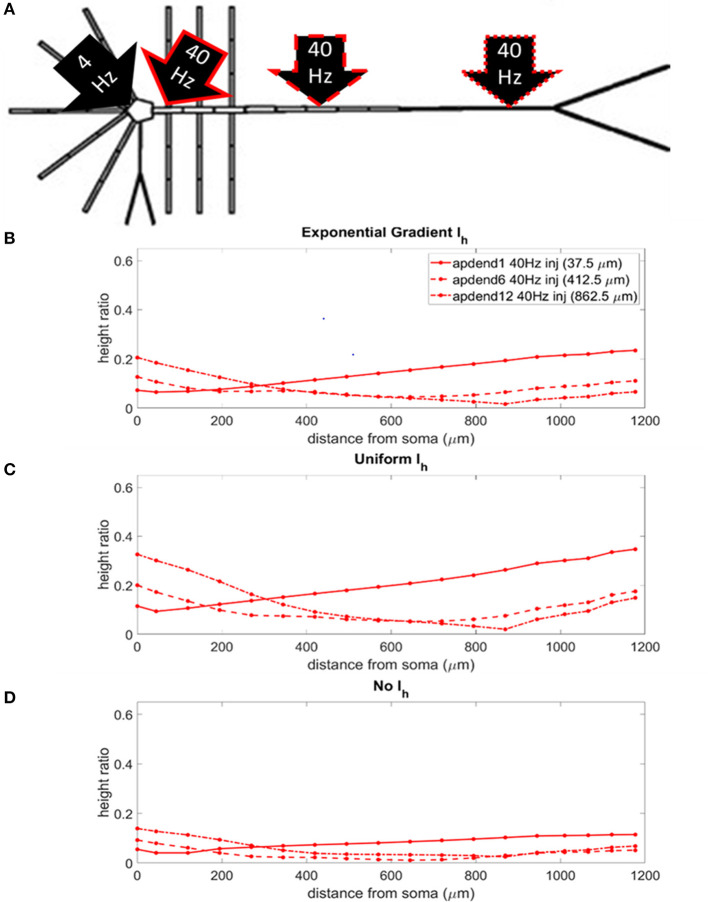
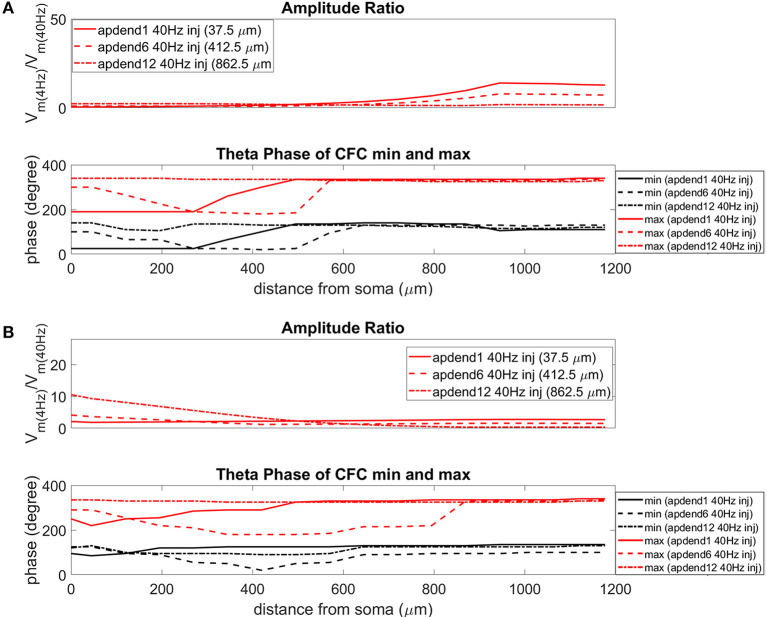
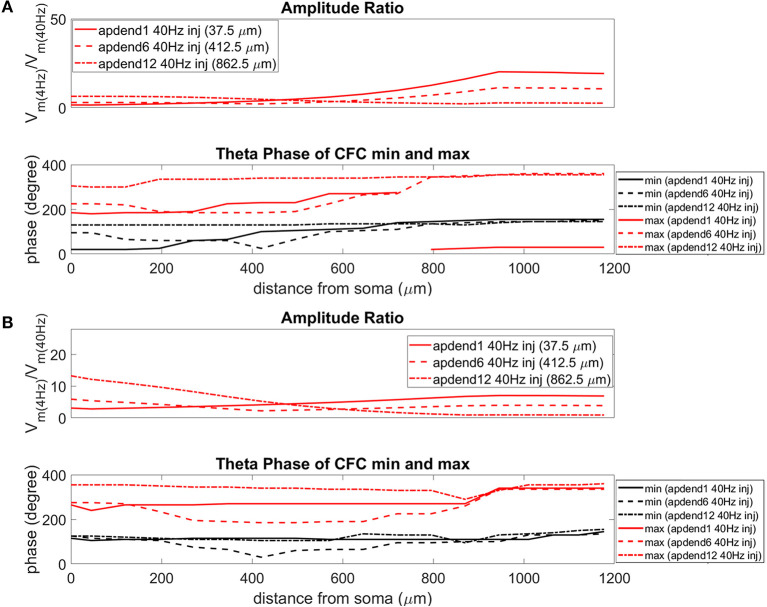
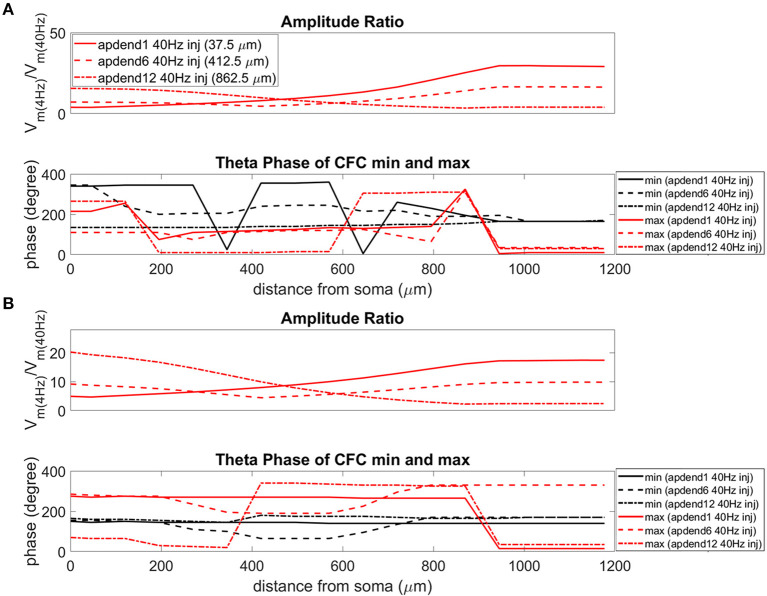
Large cortical and hippocampal pyramidal neurons are elements of neuronal circuitry that have been implicated in cross-frequency coupling (CFC) during cognitive tasks. We investigate potential mechanisms for CFC within these neurons by examining the role that the hyperpolarization-activated mixed cation current (I) plays in modulating CFC characteristics in multicompartment neuronal models. We quantify CFC along the soma-apical dendrite axis and tuft of three models configured to have different spatial distributions of I conductance density: (1) exponential gradient along the soma-apical dendrite axis, (2) uniform distribution, and (3) no I conductance. We simulated two current injection scenarios: distal apical 4 Hz modulation and perisomatic 4 Hz modulation, each with perisomatic, mid-apical, and distal apical 40 Hz injections. We used two metrics to quantify CFC strength-modulation index and height ratio-and we analyzed CFC phase properties. For all models, CFC was strongest in distal apical regions when the 40 Hz injection occurred near the soma and the 4 Hz modulation occurred in distal apical dendrite. The strongest CFC values were observed in the model with uniformly distributed I conductance density, but when the exponential gradient in I conductance density was added, CFC strength decreased by almost 50%. When I was in the model, regions with much larger membrane potential fluctuations at 4 Hz than at 40 Hz had stronger CFC. Excluding the I conductance from the model resulted in CFC either reduced or comparable in strength relative to the model with the exponential gradient in I conductance. The I conductance also imposed order on the phase characteristics of CFC such that minimum (maximum) amplitude 40 Hz membrane potential oscillations occurred during I conductance deactivation (activation). On the other hand, when there was no I conductance, phase relationships between minimum and maximum 40 Hz oscillation often inverted and occurred much closer together. This analysis can help experimentalists discriminate between CFC that originates from different underlying physiological mechanisms and can help illuminate the reasons why there are differences between CFC strength observed in different regions of the brain and between different populations of neurons based on the configuration of the I conductance.
大脑皮质和海马体的大型锥体神经元是神经元回路的组成部分,在认知任务期间与交叉频率耦合(CFC)有关。我们通过研究超极化激活的混合阳离子电流(Ih)在多室神经元模型中调节CFC特征所起的作用,来探究这些神经元内CFC的潜在机制。我们沿着三个配置为具有不同Ih电导密度空间分布的模型的胞体 - 顶端树突轴和树突簇量化CFC:(1)沿着胞体 - 顶端树突轴的指数梯度,(2)均匀分布,以及(3)无Ih电导。我们模拟了两种电流注入情况:远端顶端4Hz调制和胞体周围4Hz调制,每种情况都有胞体周围、顶端中部和远端顶端40Hz注入。我们使用两个指标来量化CFC强度——调制指数和高度比——并且我们分析了CFC相位特性。对于所有模型,当40Hz注入发生在胞体附近且4Hz调制发生在远端顶端树突时,CFC在远端顶端区域最强。在具有均匀分布的Ih电导密度的模型中观察到最强的CFC值,但是当添加Ih电导密度的指数梯度时,CFC强度下降了近50%。当模型中存在Ih时,在4Hz时具有比40Hz时大得多的膜电位波动的区域具有更强的CFC。从模型中排除Ih电导导致CFC强度相对于具有Ih电导指数梯度的模型降低或相当。Ih电导还对CFC的相位特性施加了顺序,使得在Ih电导失活(激活)期间出现最小(最大)幅度的40Hz膜电位振荡。另一方面,当没有Ih电导时,最小和最大40Hz振荡之间的相位关系经常反转并且发生得更加紧密。该分析可以帮助实验人员区分源自不同潜在生理机制的CFC,并且可以帮助阐明基于Ih电导配置在大脑不同区域和不同神经元群体中观察到的CFC强度之间存在差异的原因。