Huang Anan, Li Huihui, Zeng Chao, Chen Wanli, Wei Liping, Liu Yue, Qi Xin
Nankai University School of Medicine, Tianjin, China.
Department of Cardiology, Tianjin Union Medical Center, Tianjin, China.
Front Pharmacol. 2020 Sep 3;11:1235. doi: 10.3389/fphar.2020.01235. eCollection 2020.
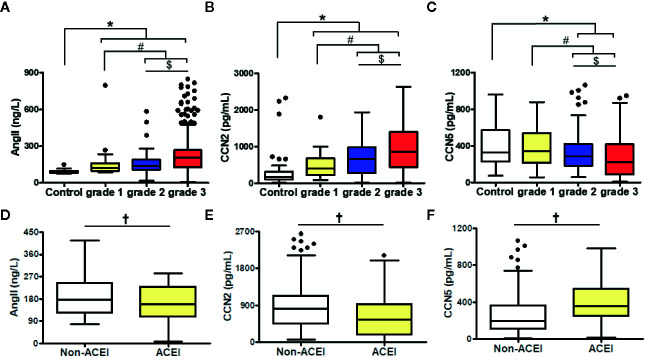
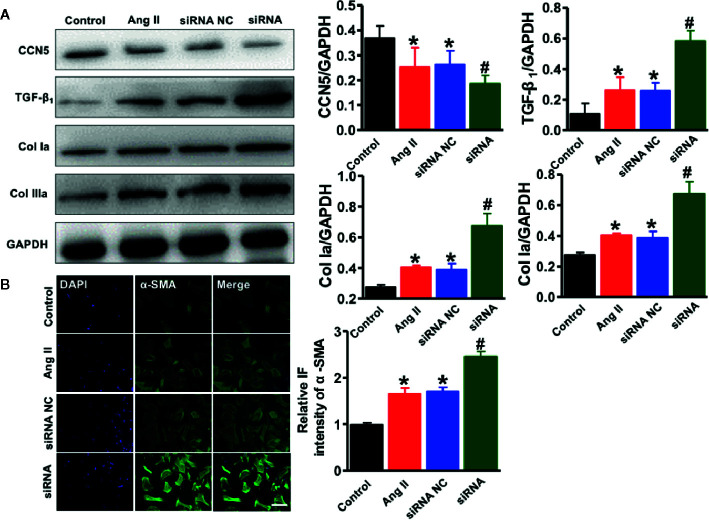
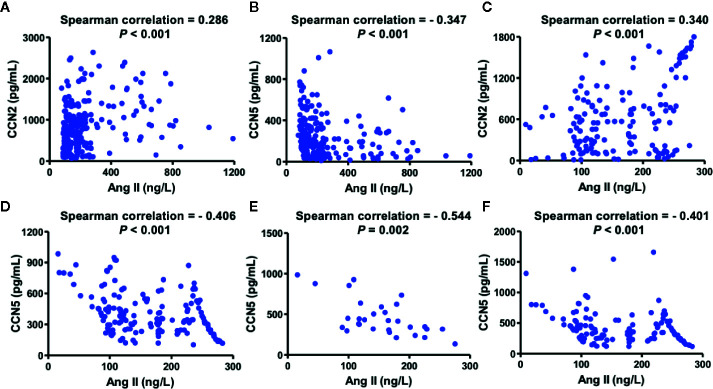
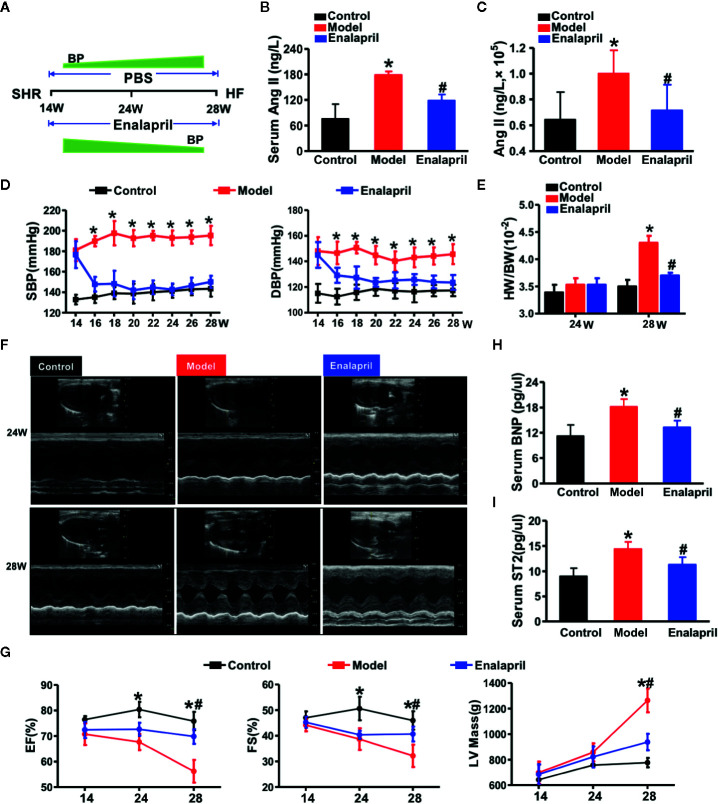
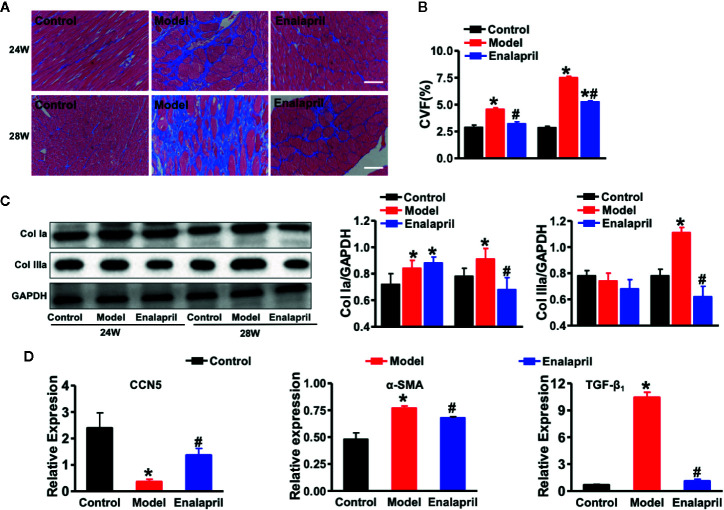
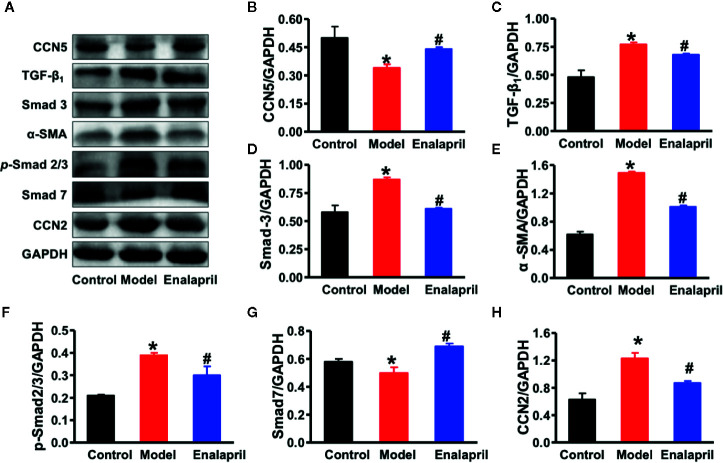
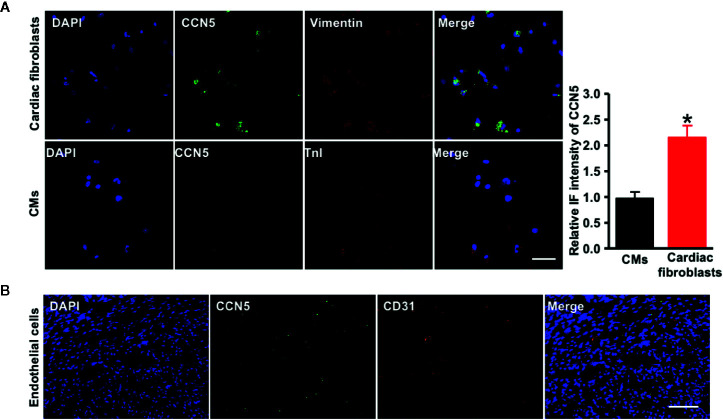
Aberrant activation of angiotensin II (Ang II) accelerates hypertensive heart failure (HF); this has drawn worldwide attention. The complex Ang II/transforming growth factor (TGF)-β networking consists of central mechanisms underlying pro-fibrotic effects; however, this networking still remains unclear. Cellular communication network 5 (CCN5), known as secreted matricellular protein, mediates anti-fibrotic activity by inhibiting fibroblast-to-myofibroblast transition and the TGF-β signaling pathway. We hypothesized that endogenous CCN5 plays an essential role in TGF-β/Ang II networking-induced cardiac fibrosis (CF), which accelerates the development of hypertensive HF. This study aimed to investigate the potential role of CCN5 in TGF-β/Ang II networking-induced CF. Our clinical retrospective study demonstrated that serum CCN5 decreased in hypertensive patients, but significantly increased in hypertensive patients taking oral angiotensin-converting enzyme inhibitor (ACEI). A negative association was observed between CCN5 and Ang II in grade 2and 3 hypertensive patients receiving ACEI treatment. We further created an experimental model of high Ang II-induced hypertensive HF. CCN5 was downregulated in the spontaneously hypertensive rats (SHRs) and increased the inhibition of Ang II production by ACEI. This CCN5 downregulation may activate the TGF-β signaling pathway, which promotes direct deposition of the extracellular matrix (ECM) and fibroblast-to-myofibroblast transition activated Smad-3. Double immunofluorescence staining of CCN5 and cell markers of cardiac tissue cell types suggested that CCN5 was mainly expressed in the cardiac fibroblasts. Isolated cardiac fibroblasts were exposed to Ang II and transfected with small interfering RNA targeting CCN5. The expression of TGF-β together with Col Ia and Col IIIa was further promoted, and alpha-smooth muscle actin (α-SMA) was strongly expressed in the cardiac fibroblasts stimulated with Ang II and siRNA. In our study, we confirmed the anti-fibrotic ability of endogenous CCN5 in high Ang II-induced hypertensive HF. Elevated Ang II levels may decrease CCN5 expression, which subsequently activates TGF-β and finally promotes the direct deposition of the ECM and fibroblast-to-myofibroblast transition Smad-3 activation. CCN5 may serve as a potential biomarker for estimating CF in hypertensive patients. A novel therapeutic target should be developed for stimulating endogenous CCN5 production.
血管紧张素II(Ang II)的异常激活会加速高血压性心力衰竭(HF);这已引起全球关注。复杂的Ang II/转化生长因子(TGF)-β网络是促纤维化作用的核心机制;然而,该网络仍不清楚。细胞通讯网络5(CCN5),即分泌型基质细胞蛋白,通过抑制成纤维细胞向肌成纤维细胞的转变和TGF-β信号通路来介导抗纤维化活性。我们假设内源性CCN5在TGF-β/Ang II网络诱导的心脏纤维化(CF)中起重要作用,而CF会加速高血压性HF的发展。本研究旨在探讨CCN5在TGF-β/Ang II网络诱导的CF中的潜在作用。我们的临床回顾性研究表明,高血压患者血清CCN5降低,但口服血管紧张素转换酶抑制剂(ACEI)的高血压患者血清CCN5显著升高。在接受ACEI治疗的2级和3级高血压患者中,观察到CCN5与Ang II之间呈负相关。我们进一步建立了高Ang II诱导的高血压性HF实验模型。自发性高血压大鼠(SHR)中CCN5下调,ACEI增加了对Ang II产生的抑制作用。这种CCN5下调可能激活TGF-β信号通路,促进细胞外基质(ECM)的直接沉积和成纤维细胞向肌成纤维细胞的转变,激活Smad-3。CCN5与心脏组织细胞类型的细胞标志物的双重免疫荧光染色表明,CCN5主要表达于心脏成纤维细胞中。分离的心脏成纤维细胞暴露于Ang II并转染靶向CCN5 的小干扰RNA。TGF-β与I型胶原和III型胶原的表达进一步升高,α-平滑肌肌动蛋白(α-SMA)在Ang II和siRNA刺激的心脏成纤维细胞中强烈表达。在我们的研究中,我们证实了内源性CCN5在高Ang II诱导的高血压性HF中的抗纤维化能力。升高的Ang II水平可能会降低CCN5表达,随后激活TGF-β,最终促进ECM的直接沉积和成纤维细胞向肌成纤维细胞的转变,激活Smad-3。CCN5可能作为评估高血压患者CF的潜在生物标志物。应开发一种新的治疗靶点以刺激内源性CCN5的产生。