Aravind Aswati, Ravula Arun Reddy, Chandra Namas, Pfister Bryan J
Department of Biomedical Engineering, Center for Injury Biomechanics, Materials and Medicine, New Jersey Institute of Technology, Newark, NJ, United States.
Front Neurol. 2020 Sep 4;11:990. doi: 10.3389/fneur.2020.00990. eCollection 2020.
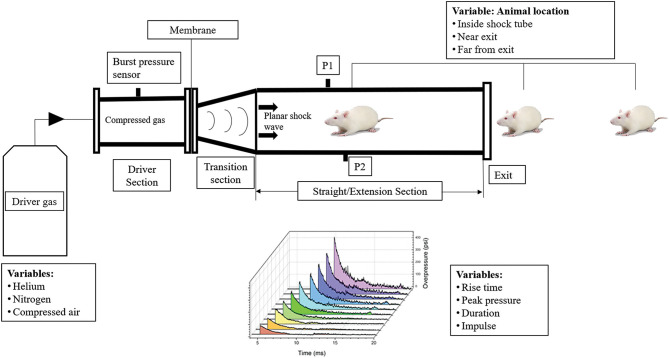
Blast exposure has been identified to be the most common cause for traumatic brain injury (TBI) in soldiers. Over the years, rodent models to mimic blast exposures and the behavioral outcomes observed in veterans have been developed extensively. However, blast tube design and varying experimental parameters lead to inconsistencies in the behavioral outcomes reported across research laboratories. This review aims to curate the behavioral outcomes reported in rodent models of blast TBI using shockwave tubes or open field detonations between the years 2008-2019 and highlight the important experimental parameters that affect behavioral outcome. Further, we discuss the role of various design parameters of the blast tube that can affect the nature of blast exposure experienced by the rodents. Finally, we assess the most common behavioral tests done to measure cognitive, motor, anxiety, auditory, and fear conditioning deficits in blast TBI (bTBI) and discuss the advantages and disadvantages of these tests.
爆炸暴露已被确定为士兵创伤性脑损伤(TBI)的最常见原因。多年来,已广泛开发出模拟爆炸暴露的啮齿动物模型以及观察退伍军人的行为结果。然而,爆炸管设计和不同的实验参数导致各研究实验室报告的行为结果不一致。本综述旨在整理2008年至2019年间使用冲击波管或野外爆炸的爆炸TBI啮齿动物模型中报告的行为结果,并突出影响行为结果的重要实验参数。此外,我们讨论了爆炸管的各种设计参数对啮齿动物所经历的爆炸暴露性质的影响。最后,我们评估了用于测量爆炸TBI(bTBI)中认知、运动、焦虑、听觉和恐惧条件反射缺陷的最常见行为测试,并讨论了这些测试的优缺点。