Panagoulias Georgios S, Eleftheriadou Ioanna, Papanas Nikolaos, Manes Christos, Kamenov Zdravko, Tesic Dragan, Bousboulas Stavros, Tentolouris Anastasios, Jude Edward B, Tentolouris Nikolaos
First Department of Propaedeutic Internal Medicine, Medical School, National and Kapodistrian University of Athens, Laiko General Hospital, Athens, Greece.
Second Department of Internal Medicine, Diabetes Center, Democritus University of Thrace, University Hospital of Alexandroupolis, Alexandroupoli, Greece.
Front Endocrinol (Lausanne). 2020 Sep 8;11:625. doi: 10.3389/fendo.2020.00625. eCollection 2020.
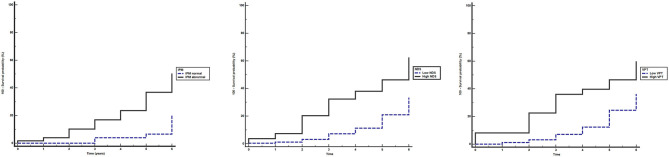
Previous cross-sectional studies have shown an association between sudomotor dysfunction and diabetic foot ulceration (DFU). The aim of this prospective multicenter study was to determine the role of dryness of foot skin and of established neurological modalities in the prediction of risk for foot ulceration in a cohort of individuals with diabetes mellitus (DM). The study was conducted from 2012 to 2017. A total of 308 subjects with DM without history of DFU or critical limb ischemia completed the study. Diabetic neuropathy was assessed using the neuropathy symptom score (NSS) and neuropathy disability score (NDS). In a subset of participants, vibration perception threshold (VPT) was evaluated. Dryness of foot skin was assessed by the visual indicator plaster method (IPM). The diagnostic performance of the above neurological modalities for prediction of DFU was tested by receiver operating characteristic curve (ROC) analysis. During the 6-year follow-up, 55 patients (annual ulceration incidence 2.97%) developed DFU. Multivariate Cox-regression analysis after controlling for the effect of age, gender, and DM duration demonstrated that the risk (hazard ratio, 95% confidence intervals) of DFU increased significantly with either abnormal IPM (3.319, 1.460-7.545, = 0.004) or high (≥6) NDS (2.782, 1.546-5.007, = 0.001) or high (≥25 volts) VPT (2.587, 1.277-5.242, = 0.008). ROC analysis showed that all neurological modalities could discriminate participants who developed DFU ( < 0.001). IPM testing showed high sensitivity (0.86) and low specificity (0.49), while high vs. low NDS and VPT showed low sensitivity (0.40 and 0.39, respectively) and high specificity (0.87 and 0.89, respectively) for identification of patients at risk for DFU. Dryness of foot skin assessed by the IPM predicts the development of DFU. IPM testing has high sensitivity, whereas high NDS and VPT have high specificity in identifying subjects at risk for DFU. The IPM can be included in the screening methods for identification of the foot at risk.
既往横断面研究表明,汗腺功能障碍与糖尿病足溃疡(DFU)之间存在关联。这项前瞻性多中心研究的目的是确定足部皮肤干燥和既定神经学指标在预测糖尿病(DM)患者足部溃疡风险中的作用。该研究于2012年至2017年进行。共有308例无DFU病史或严重肢体缺血的DM患者完成了研究。使用神经病变症状评分(NSS)和神经病变残疾评分(NDS)评估糖尿病神经病变。在一部分参与者中,评估了振动觉阈值(VPT)。采用视觉指标贴膏法(IPM)评估足部皮肤干燥情况。通过受试者工作特征曲线(ROC)分析测试上述神经学指标对DFU的预测诊断性能。在6年随访期间,55例患者(年溃疡发生率2.97%)发生了DFU。在控制年龄、性别和DM病程的影响后进行多变量Cox回归分析表明,IPM异常(3.319,1.460 - 7.545,P = 0.004)、NDS高(≥6)(2.782,1.546 - 5.007,P = 0.001)或VPT高(≥25伏)(2.587,1.277 - 5.242,P = 0.008)时,DFU风险(风险比,95%置信区间)显著增加。ROC分析表明,所有神经学指标均可区分发生DFU的参与者(P < 0.001)。IPM检测显示敏感性高(0.86)而特异性低(0.49),而高与低NDS及VPT对识别DFU风险患者显示敏感性低(分别为0.40和0.39)而特异性高(分别为0.87和0.89)。通过IPM评估的足部皮肤干燥可预测DFU的发生。IPM检测具有高敏感性,而高NDS和VPT在识别DFU风险受试者方面具有高特异性。IPM可纳入识别足部风险的筛查方法中。