Comparative Genetics and Refinement, Biomedical Primate Research Centre, Rijswijk, Netherlands.
Theoretical Biology and Bioinformatics, Utrecht University, Utrecht, Netherlands.
Front Immunol. 2020 Sep 11;11:582804. doi: 10.3389/fimmu.2020.582804. eCollection 2020.
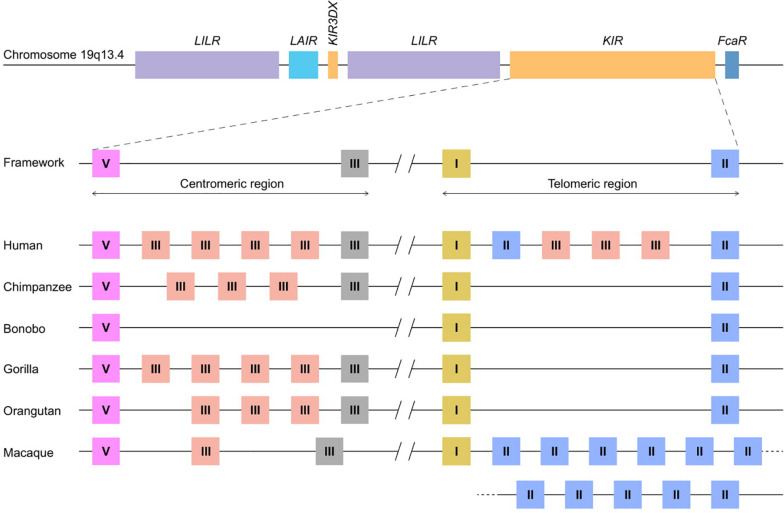
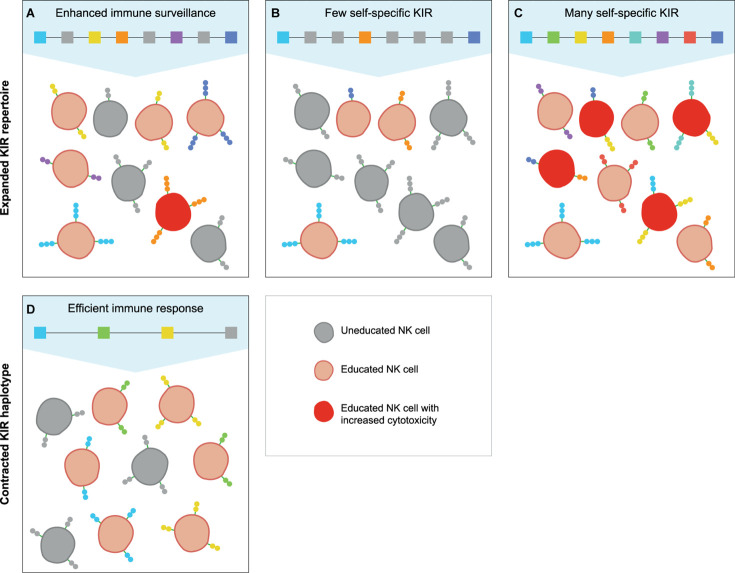
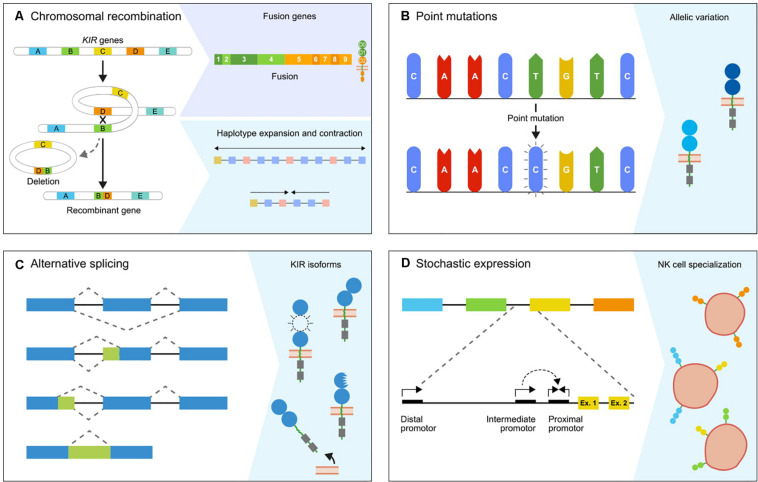
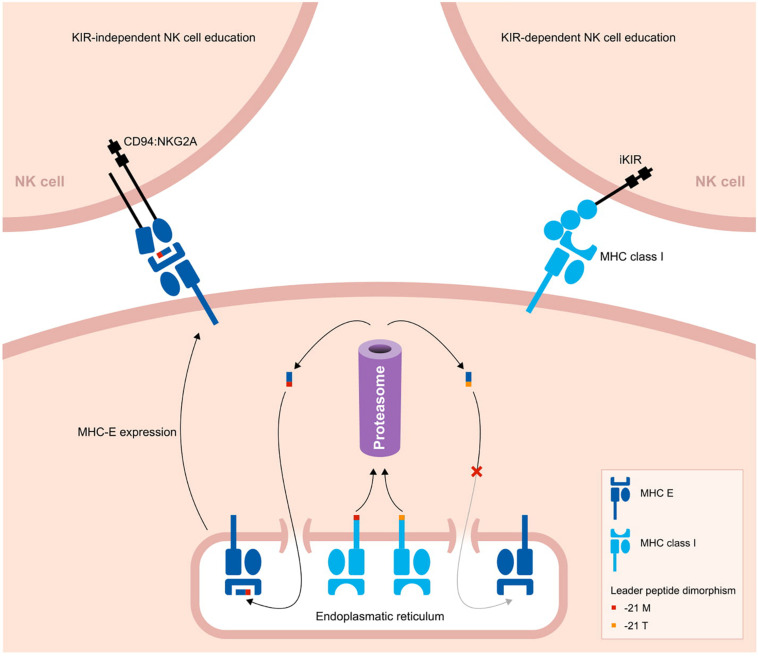
The activity and function of natural killer (NK) cells are modulated through the interactions of multiple receptor families, of which some recognize MHC class I molecules. The high level of polymorphism requires their ligands either to interact with conserved epitopes, as is utilized by the NKG2A receptor family, or to co-evolve with the MHC class I allelic variation, which task is taken up by the killer cell immunoglobulin-like receptor (KIR) family. Multiple molecular mechanisms are responsible for the diversification of the gene system, and include abundant chromosomal recombination, high mutation rates, alternative splicing, and variegated expression. The combination of these genetic mechanisms generates a compound array of diversity as is reflected by the contraction and expansion of haplotypes, frequent birth of fusion genes, allelic polymorphism, structurally distinct isoforms, and variegated expression, which is in contrast to the mainly allelic nature of MHC class I polymorphism in humans. A comparison of the thoroughly studied human and macaque gene repertoires demonstrates a similar evolutionarily conserved toolbox, through which selective forces drove and maintained the diversified nature of the gene cluster. This hypothesis is further supported by the comparative genetics of haplotypes and genes in other primate species. The complex nature of the gene system has an impact upon the education, activity, and function of NK cells in coherence with an individual's MHC class I repertoire and pathogenic encounters. Although selection operates on an individual, the continuous diversification of the gene system in primates might protect populations against evolving pathogens.
自然杀伤 (NK) 细胞的活性和功能通过多种受体家族的相互作用来调节,其中一些受体识别 MHC Ⅰ类分子。高度多态性要求其配体要么与保守表位相互作用,如 NKG2A 受体家族所利用的那样,要么与 MHC Ⅰ类等位基因变异共同进化,这一任务由杀伤细胞免疫球蛋白样受体 (KIR) 家族承担。多种分子机制负责基因系统的多样化,包括丰富的染色体重组、高突变率、选择性剪接和斑驳表达。这些遗传机制的组合产生了多样化的复合阵列,如单倍型的收缩和扩张、融合基因的频繁产生、等位基因多态性、结构不同的同工型和斑驳表达,这与人类 MHC Ⅰ类多态性的主要等位基因性质形成对比。对经过深入研究的人类和猕猴基因库进行比较表明,通过选择压力驱动并维持了基因簇多样化的性质,存在类似的进化保守工具包。这一假设通过其他灵长类动物的基因库中基因和单倍型的比较遗传学得到进一步支持。基因系统的复杂性对 NK 细胞的教育、活性和功能产生影响,与个体的 MHC Ⅰ类基因库和病原体接触相一致。尽管选择作用于个体,但基因系统在灵长类动物中的持续多样化可能保护种群免受不断进化的病原体的侵害。