Comparative Genetics and Refinement, Biomedical Primate Research Centre, Rijswijk, Netherlands.
Department of Immunogenetics, Sanquin, Amsterdam, Netherlands.
Front Immunol. 2018 Dec 4;9:2846. doi: 10.3389/fimmu.2018.02846. eCollection 2018.
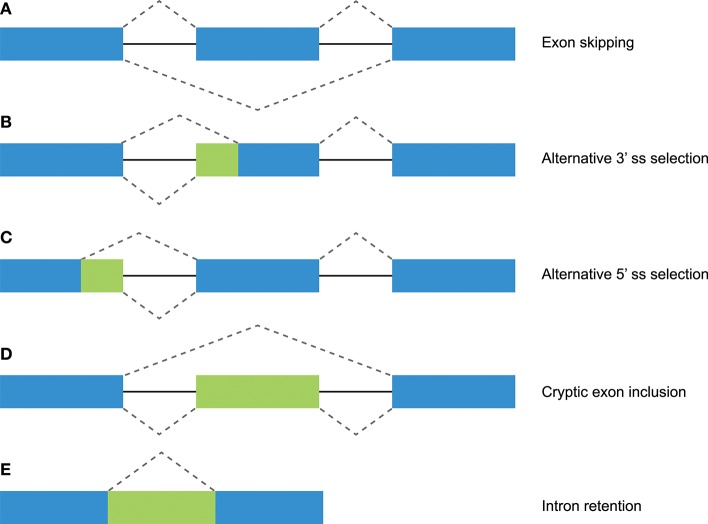
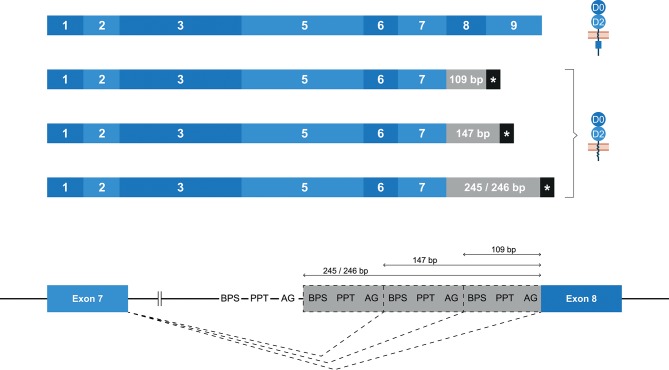
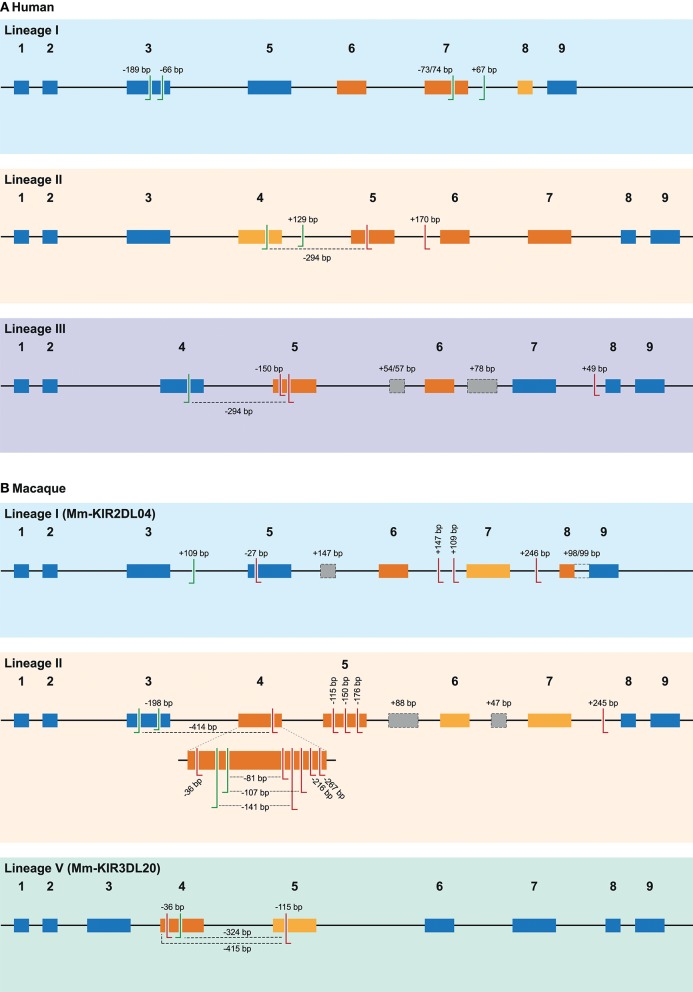
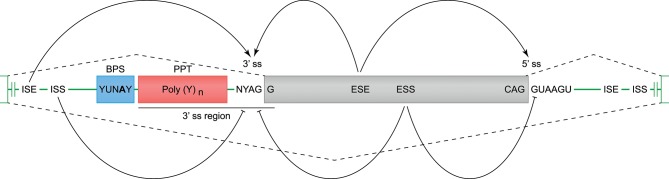
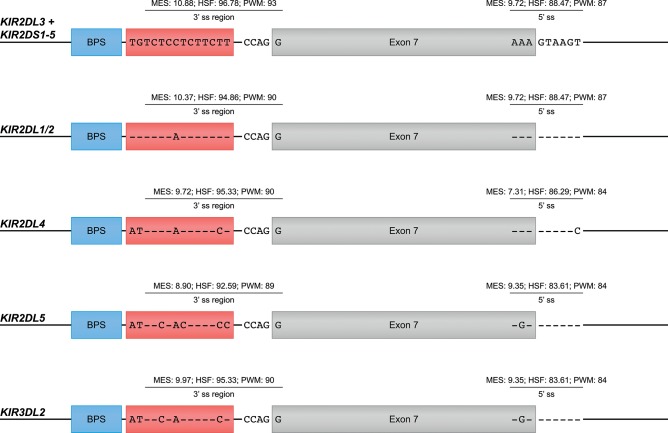
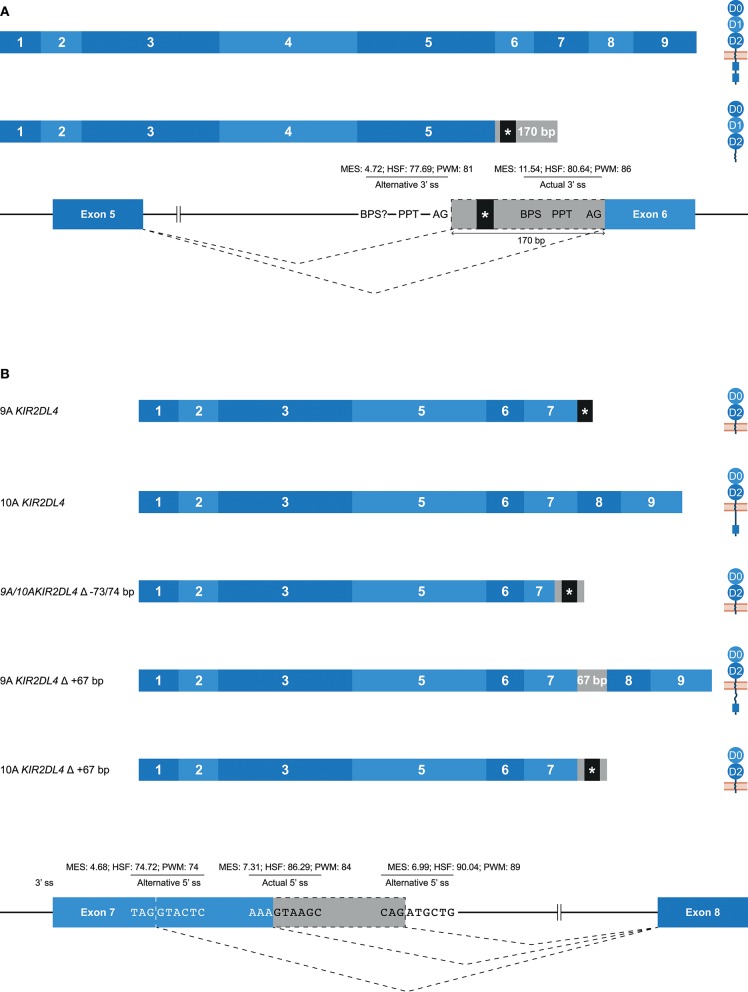
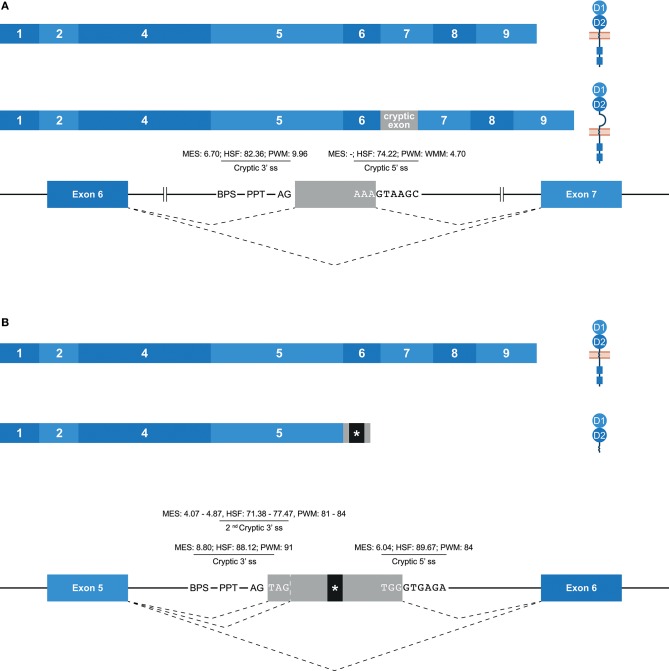
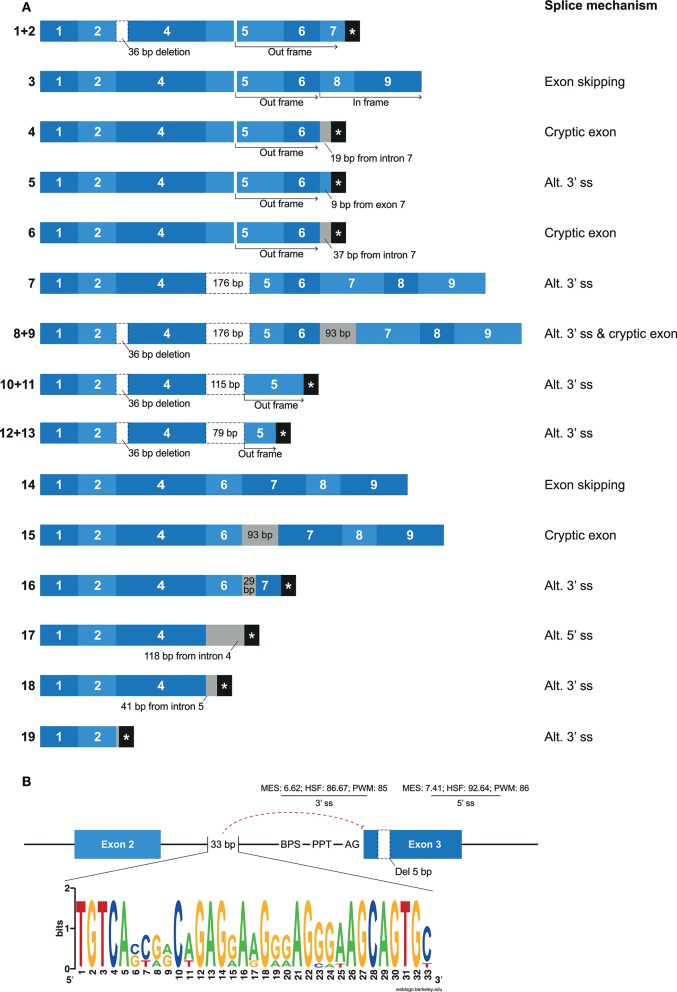
The killer-cell Ig-like receptors (KIR) form a multigene entity involved in modulating immune responses through interactions with MHC class I molecules. The complexity of the cluster is reflected by, for instance, abundant levels of allelic polymorphism, gene copy number variation, and stochastic expression profiles. The current transcriptome study involving human and macaque families demonstrates that family members are also subjected to differential levels of alternative splicing, and this seems to be gene dependent. Alternative splicing may result in the partial or complete skipping of exons, or the partial inclusion of introns, as documented at the transcription level. This post-transcriptional process can generate multiple isoforms from a single gene, which diversifies the characteristics of the encoded proteins. For example, alternative splicing could modify ligand interactions, cellular localization, signaling properties, and the number of extracellular domains of the receptor. In humans, we observed abundant splicing for , and to a lesser extent in the lineage III genes. All experimentally documented splice events are substantiated by splicing strength predictions. To a similar extent, alternative splicing is observed in rhesus macaques, a species that shares a close evolutionary relationship with humans. Splicing profiles of and displayed a great diversity, whereas (lineage V) is consistently spliced to generate a homolog of human (lineage I). The latter case represents an example of convergent evolution. Although just a single KIR splice event is shared between humans and macaques, the splicing mechanisms are similar, and the predicted consequences are comparable. In conclusion, alternative splicing adds an additional layer of complexity to the gene system in primates, and results in a wide structural and functional variety of KIR receptors and its isoforms, which may play a role in health and disease.
杀伤细胞免疫球蛋白样受体(KIR)形成一个多基因实体,通过与 MHC Ⅰ类分子相互作用来调节免疫反应。该基因簇的复杂性体现在丰富的等位基因多态性、基因拷贝数变异和随机表达谱等方面。目前涉及人类和猕猴家族的转录组研究表明,KIR 家族成员也受到不同程度的选择性剪接的影响,而且这种影响似乎是基因依赖性的。选择性剪接可能导致外显子部分或完全跳过,或内含子部分包含,如转录水平所记录的那样。这个转录后过程可以从单个基因产生多个异构体,从而使编码蛋白的特征多样化。例如,选择性剪接可以修饰配体相互作用、细胞定位、信号转导特性和受体的细胞外结构域数量。在人类中,我们观察到 KIR 的剪接非常丰富,而在 III 类基因中则较少。所有实验记录的剪接事件都得到剪接强度预测的支持。在恒河猴中也观察到了类似程度的选择性剪接,恒河猴与人类有密切的进化关系。KIR 和 的剪接谱显示出很大的多样性,而 (V 类)则始终剪接生成人类 的同源物(I 类)。后一种情况代表了趋同进化的一个例子。尽管人类和猕猴之间仅共享一个 KIR 剪接事件,但剪接机制相似,预测的结果也相当。总之,选择性剪接为灵长类动物的 KIR 基因系统增加了一个额外的复杂性层次,并导致 KIR 受体及其异构体的广泛结构和功能多样性,这可能在健康和疾病中发挥作用。