He Mei, Ding Nai-Zheng
College of Life Science, Shandong Normal University, Jinan, China.
Front Plant Sci. 2020 Sep 4;11:562785. doi: 10.3389/fpls.2020.562785. eCollection 2020.
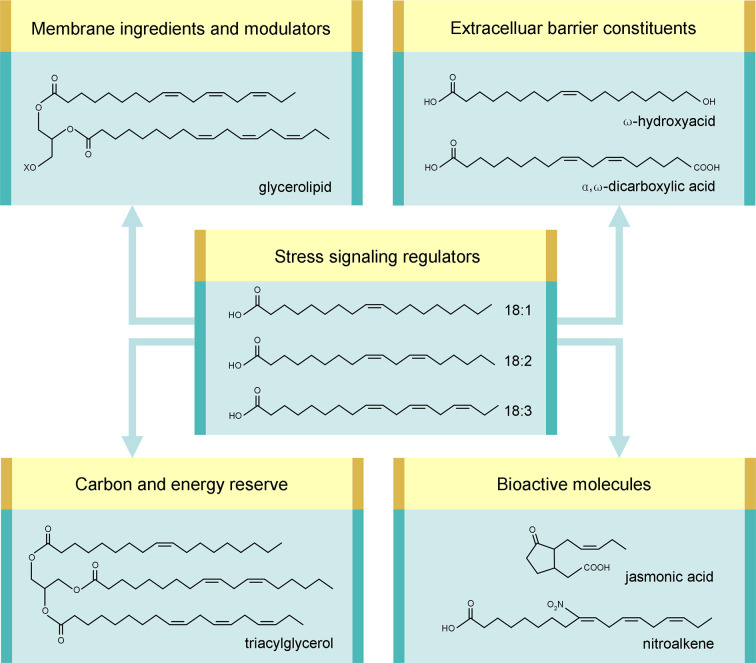
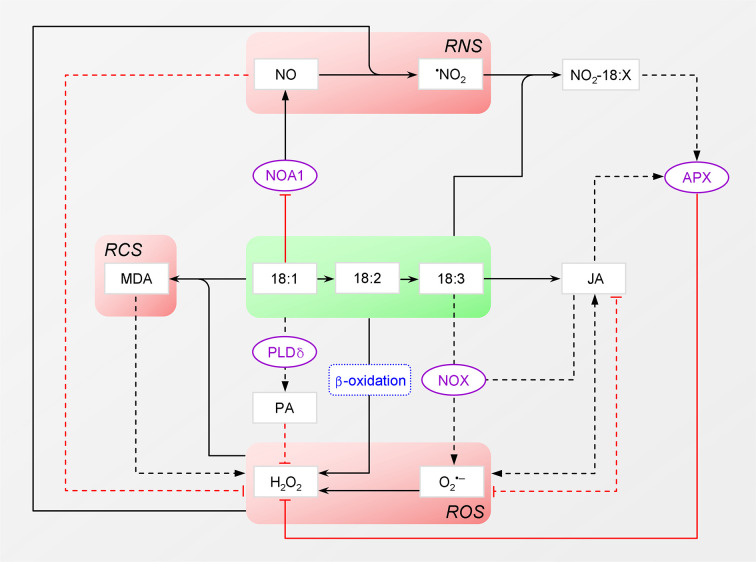
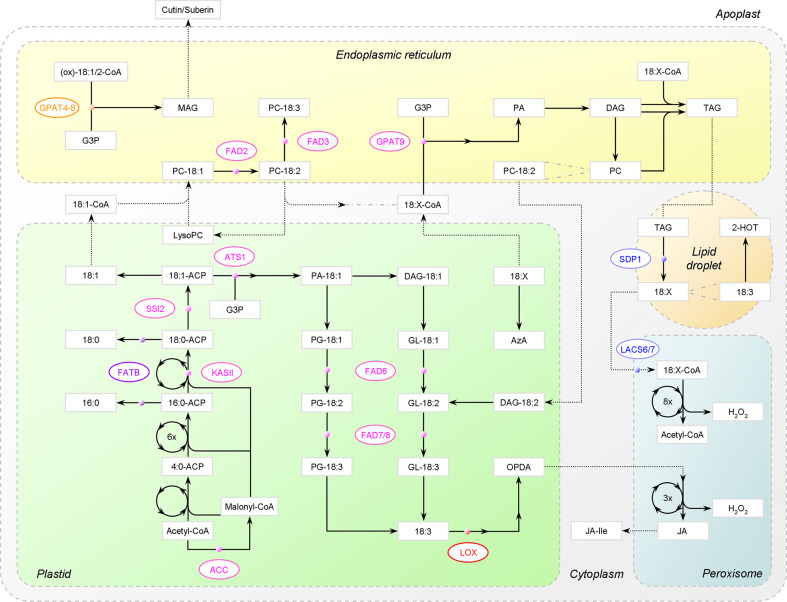
Land plants are exposed to not only biotic stresses such as pathogen infection and herbivore wounding, but abiotic stresses such as cold, heat, drought, and salt. Elaborate strategies have been developed to avoid or abide the adverse effects, with unsaturated fatty acids (UFAs) emerging as general defenders. In higher plants, the most common UFAs are three 18-carbon species, namely, oleic (18:1), linoleic (18:2), and α-linolenic (18:3) acids. These simple compounds act as ingredients and modulators of cellular membranes in glycerolipids, reserve of carbon and energy in triacylglycerol, stocks of extracellular barrier constituents (e.g., cutin and suberin), precursors of various bioactive molecules (e.g., jasmonates and nitroalkenes), and regulators of stress signaling. Nevertheless, they are also potential inducers of oxidative stress. In this review, we will present an overview of these roles and then shed light on genetic engineering of FA synthetic genes for improving plant/crop stress tolerance.
陆生植物不仅会受到生物胁迫,如病原体感染和食草动物啃食,还会受到非生物胁迫,如寒冷、高温、干旱和盐分。植物已经进化出了复杂的策略来避免或承受这些不利影响,其中不饱和脂肪酸(UFA)成为了普遍的防御物质。在高等植物中,最常见的不饱和脂肪酸是三种18碳的脂肪酸,即油酸(18:1)、亚油酸(18:2)和α-亚麻酸(18:3)。这些简单的化合物在甘油脂质中作为细胞膜的成分和调节剂,在三酰甘油中作为碳和能量的储备,在细胞外屏障成分(如角质和木栓质)中储存,是各种生物活性分子(如茉莉酸和硝基烯烃)的前体,也是胁迫信号的调节剂。然而,它们也是氧化应激的潜在诱导剂。在这篇综述中,我们将概述这些作用,然后阐明通过基因工程改造脂肪酸合成基因来提高植物/作物胁迫耐受性的方法。