Li Wenchao, Chen Weiwei, Huang Saisai, Yao Genhong, Tang Xiaojun, Sun Lingyun
Department of Rheumatology and Immunology The Affiliated Drum Tower Hospital of Nanjing University Medical School Nanjing China.
Clin Transl Immunology. 2020 Sep 30;9(10):e1181. doi: 10.1002/cti2.1181. eCollection 2020.
Mesenchymal stem cells (MSCs) have shown great potential in treating autoimmune diseases (ADs). Unlike the traditional immunosuppressants, which inadvertently impair patients' antimicrobial immunity, MSCs reduce the incidence and duration of respiratory infection. However, the underlying mechanisms are unknown.
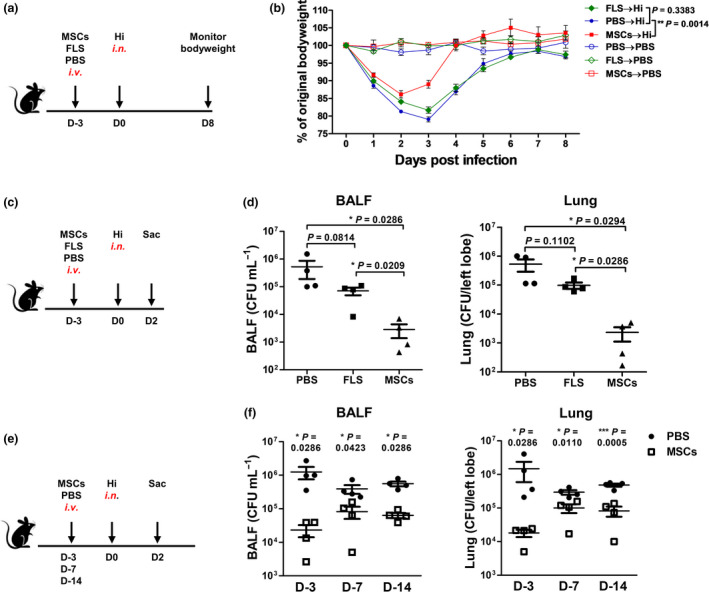
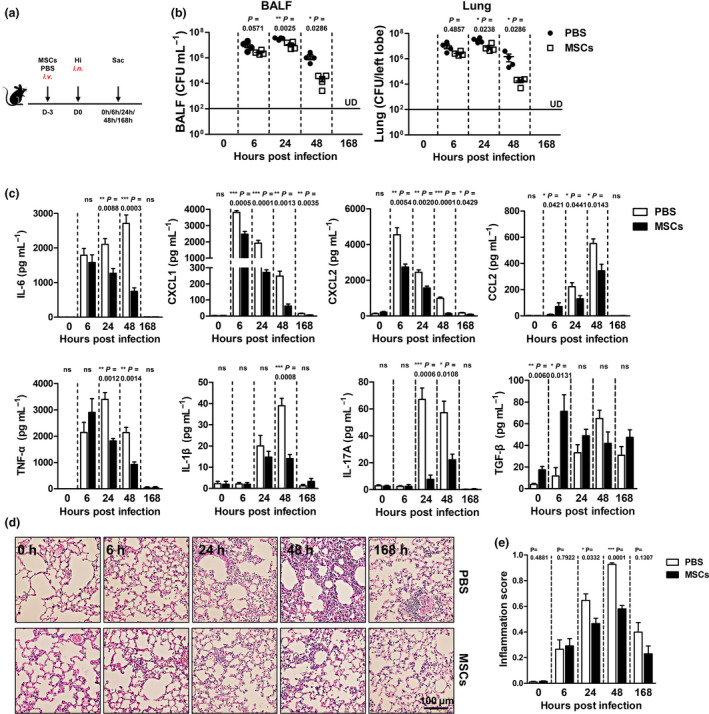
To investigate how MSCs regulate the lung immunity and improve the defence against respiratory infection, we infected MSC-treated wild-type and lupus-prone mice with intranasally and determined the clearance of bacteria. Tissue damage and inflammatory cytokines were measured by H&E staining and ELISA separately. Immune cell subsets in the tissues were analysed by flow cytometry.
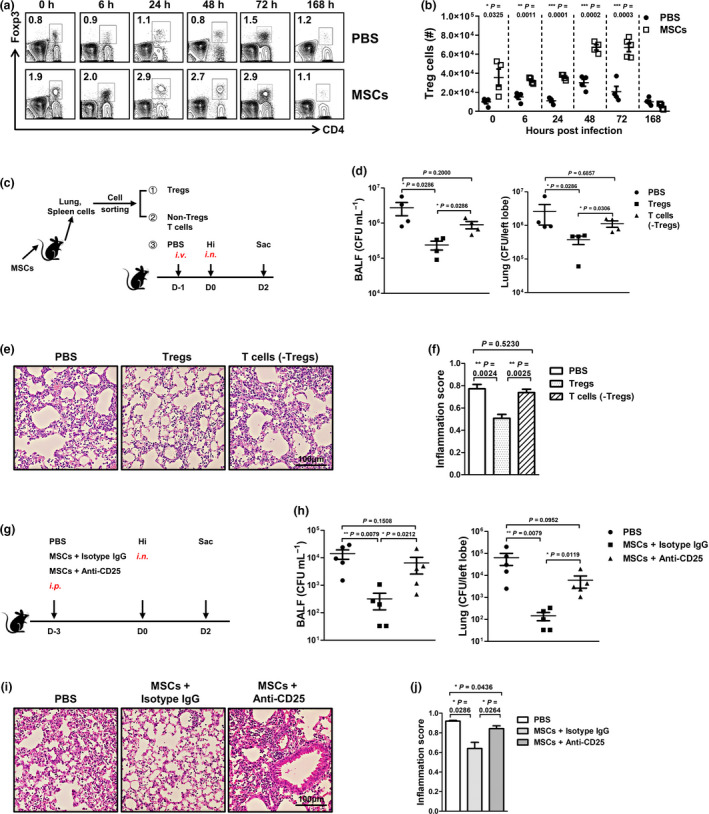
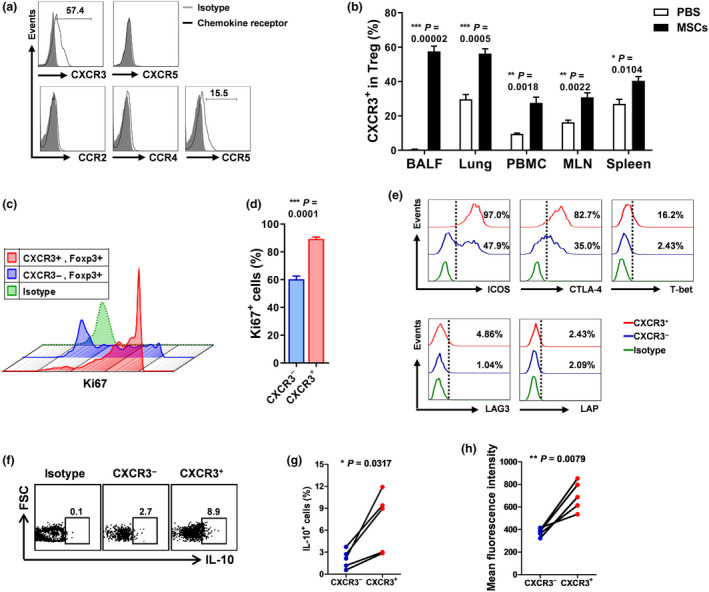
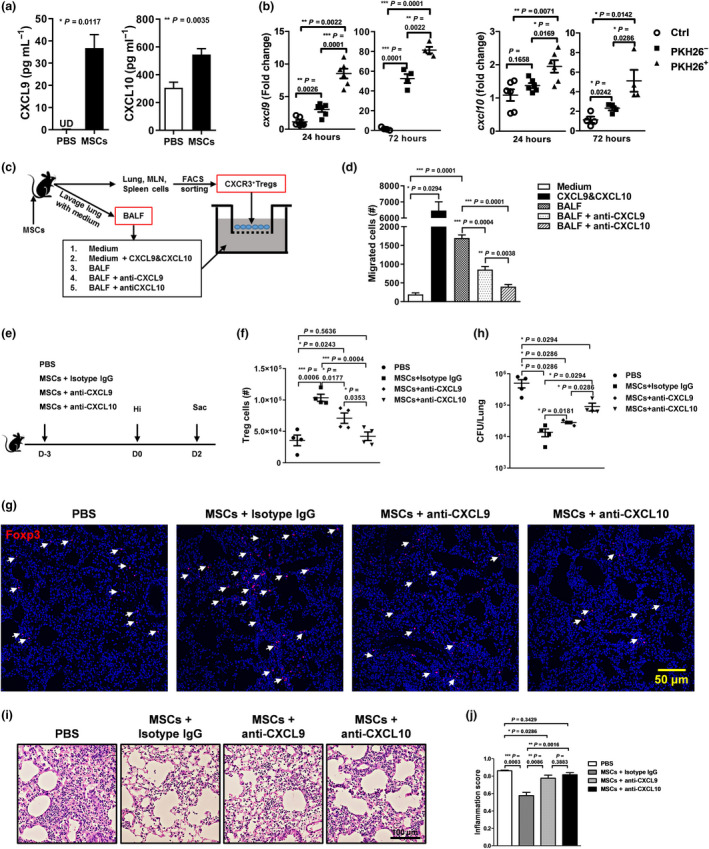
MSC pretreatment prevented overwhelming inflammation and accelerated bacterial clearance in both wild-type and lupus-prone mice. Tregs increased dramatically in the lung after MSC treatment. Adoptive transfer of Tregs isolated from MSC-treated mice offered similar protection, while deletion of Tregs abrogated the protective effects of MSCs. The majority of the intravenously injected MSCs were engulfed by lung phagocytes, which in turn produced CXCL9 and CXCL10 and recruited tremendous CXCR3 Tregs into the lung. Compared with their CXCR3 counterparts, CXCR3 Tregs displayed enhanced proliferation and stronger inhibitory functions. Neutralisation of CXCL9 and CXCL10 significantly downregulated the migration of CXCR3 Tregs and eliminated the benefits of MSC pretreatment.
Here, we showed that by recruiting CXCR3 Tregs, MSC treatment restricted the overactivation of inflammatory responses and prevented severe symptoms caused by infection. By discovering this novel property of MSCs, our study sheds light on optimising long-term immunosuppressive regimen for autoimmune diseases and other immune disorders.
间充质干细胞(MSCs)在治疗自身免疫性疾病(ADs)方面已显示出巨大潜力。与传统免疫抑制剂不同,传统免疫抑制剂会无意中损害患者的抗菌免疫力,而MSCs可降低呼吸道感染的发生率和持续时间。然而,其潜在机制尚不清楚。
为了研究MSCs如何调节肺部免疫并改善对呼吸道感染的防御,我们通过鼻内感染经MSCs处理的野生型和易患狼疮的小鼠,并测定细菌清除率。分别通过苏木精-伊红(H&E)染色和酶联免疫吸附测定(ELISA)测量组织损伤和炎性细胞因子。通过流式细胞术分析组织中的免疫细胞亚群。
MSCs预处理可预防野生型和易患狼疮的小鼠发生过度炎症反应并加速细菌清除。MSCs处理后,肺中的调节性T细胞(Tregs)显著增加。过继转移从经MSCs处理的小鼠中分离出的Tregs可提供类似的保护作用,而Tregs的缺失则消除了MSCs的保护作用。大多数静脉注射的MSCs被肺吞噬细胞吞噬,肺吞噬细胞进而产生CXC趋化因子配体9(CXCL9)和CXC趋化因子配体10(CXCL10),并将大量CXC趋化因子受体3(CXCR3)Tregs募集到肺中。与CXCR3阴性的Tregs相比,CXCR3 Tregs表现出增强的增殖能力和更强的抑制功能。CXCL9和CXCL10的中和显著下调了CXCR3 Tregs的迁移,并消除了MSCs预处理的益处。
在此,我们表明,通过募集CXCR3 Tregs,MSCs治疗可限制炎症反应的过度激活,并预防感染引起的严重症状。通过发现MSCs的这一新特性,我们的研究为优化自身免疫性疾病和其他免疫疾病的长期免疫抑制方案提供了思路。