Pandemic Health System REsilience PROGRAM (REPROGRAM) Consortium, REPROGRAM Telemedicine Sub-committee, Sydney, NSW, Australia.
Department of Neurology, Liverpool Hospital and South Western Sydney Local Health District, Sydney, NSW, Australia.
Front Public Health. 2020 Sep 7;8:410. doi: 10.3389/fpubh.2020.00410. eCollection 2020.
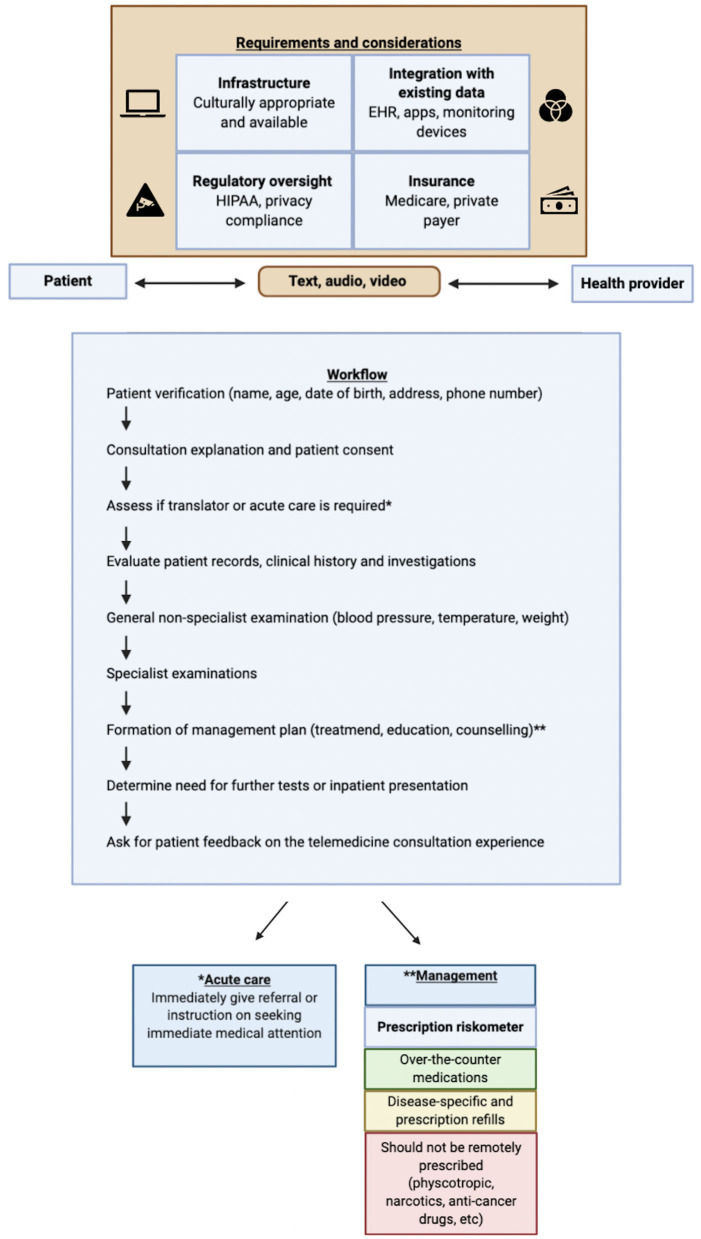
Technology has acted as a great enabler of patient continuity through remote consultation, ongoing monitoring, and patient education using telephone and videoconferencing in the coronavirus disease 2019 (COVID-19) era. The devastating impact of COVID-19 is bound to prevail beyond its current reign. The vulnerable sections of our community, including the elderly, those from lower socioeconomic backgrounds, those with multiple comorbidities, and immunocompromised patients, endure a relatively higher burden of a pandemic such as COVID-19. The rapid adoption of different technologies across countries, driven by the need to provide continued medical care in the era of social distancing, has catalyzed the penetration of telemedicine. Limiting the exposure of patients, healthcare workers, and systems is critical in controlling the viral spread. Telemedicine offers an opportunity to improve health systems delivery, access, and efficiency. This article critically examines the current telemedicine landscape and challenges in its adoption, toward remote/tele-delivery of care, across various medical specialties. The current consortium provides a roadmap and/or framework, along with recommendations, for telemedicine uptake and implementation in clinical practice during and beyond COVID-19.
在 2019 冠状病毒病(COVID-19)时代,技术通过远程咨询、使用电话和视频会议进行持续监测和患者教育,成为患者连续性的重要推动者。COVID-19 的破坏性影响肯定会持续下去。我们社区的弱势群体,包括老年人、社会经济背景较低的人、患有多种合并症的人和免疫功能低下的患者,在 COVID-19 等大流行中承受着相对更高的负担。为了在社交隔离时代提供持续的医疗服务,各国迅速采用了各种技术,推动了远程医疗的普及。限制患者、医护人员和系统的暴露对于控制病毒传播至关重要。远程医疗为改善医疗系统的提供、获取和效率提供了机会。本文批判性地审查了当前远程医疗的现状和采用远程医疗面临的挑战,以实现各医学专业的远程/远程护理。当前的联盟提供了一个路线图和/或框架,以及建议,用于在 COVID-19 期间和之后在临床实践中采用远程医疗。