Wang Lin, Ji Xiang-Bo, Wang Li-Hong, Qiu Jian-Ge, Zhou Feng-Mei, Liu Wen-Jing, Wan Di-di, Lin Marie Chai-Mi, Liu Ling-Zhi, Zhang Jian-Ying, Jiang Bing-Hua
The First Affiliated Hospital of Zhengzhou University, Zhengzhou University, Zhengzhou, China.
BGI College & Henan Institute of Medical and Pharmaceutical Sciences, Zhengzhou University, Zhengzhou, China.
Front Cell Dev Biol. 2020 Sep 8;8:840. doi: 10.3389/fcell.2020.00840. eCollection 2020.
MicroRNA-497 (miR-497) has been implicated in several cancers. Increasing studies demonstrate the role of AKT2 in cancers as an oncogene which is closely associated with tumor aggressiveness by enhancing cancer cell survival, migration and invasion However, miR-497/AKT2 axis in non-small cell lung cancer (NSCLC) remains unclear.
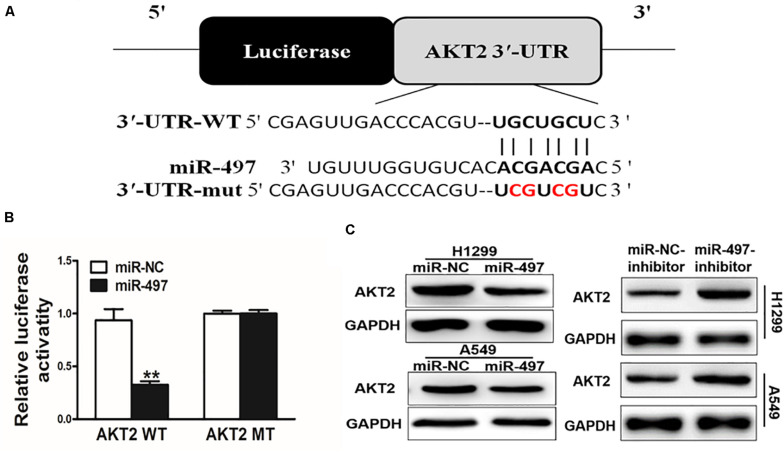
Quantitative real-time PCR (qRT-PCR) was used to quantify the expression of miR-497 and its target gene. The function of miR-497 in lung cancer was investigated through and assays (cell proliferation assay, cell migration assay, colony formation assay, flow cytometry assay, immunoblotting and tumorigenesis assay). Luciferase reporter assay was conducted to confirm the target gene of miR-497.
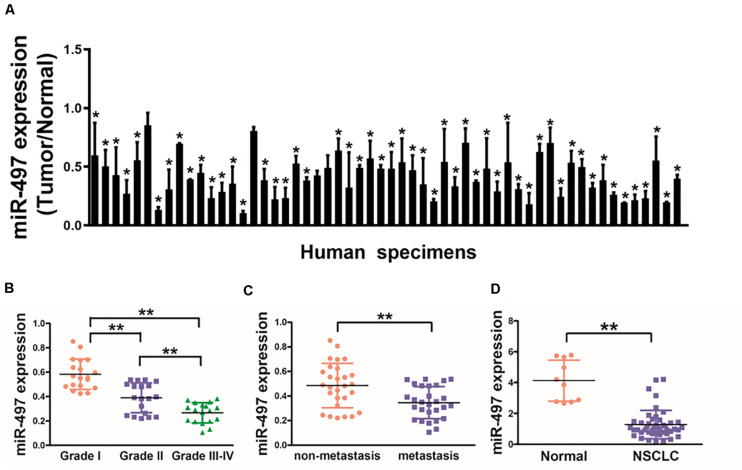
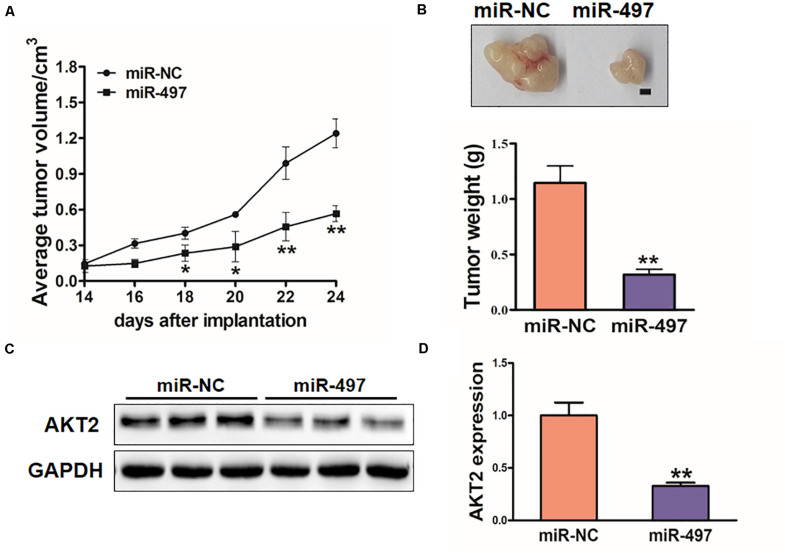
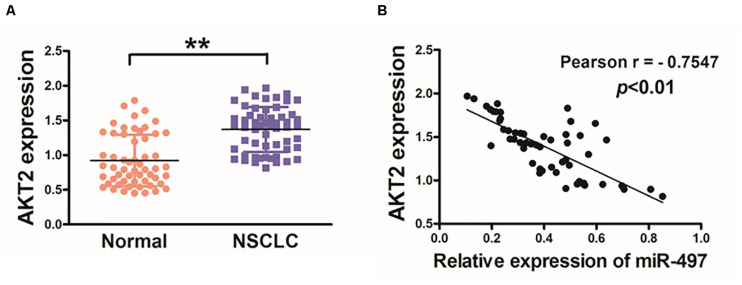
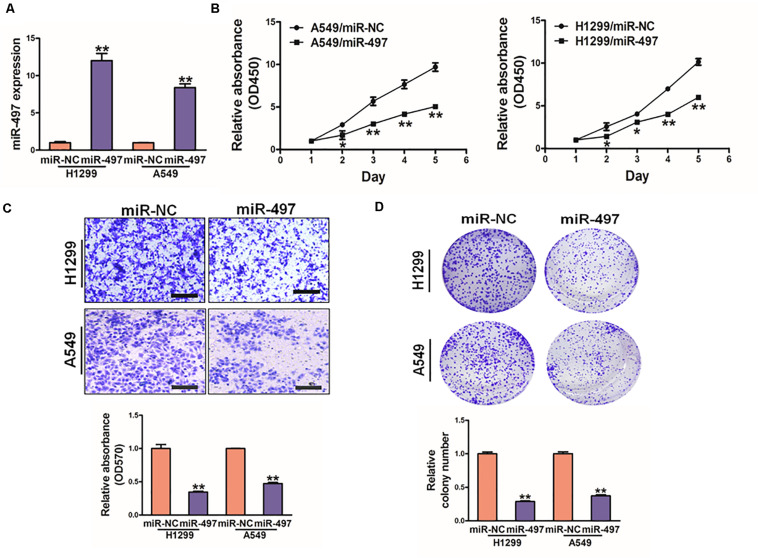
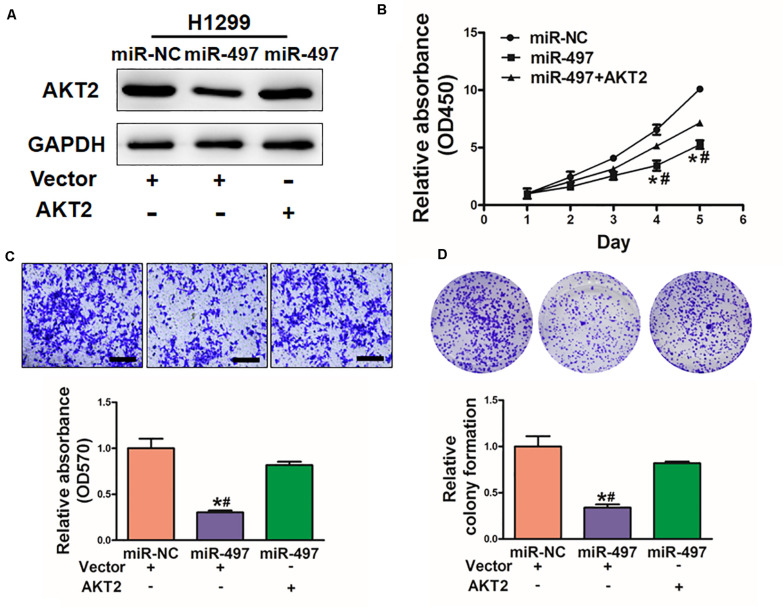
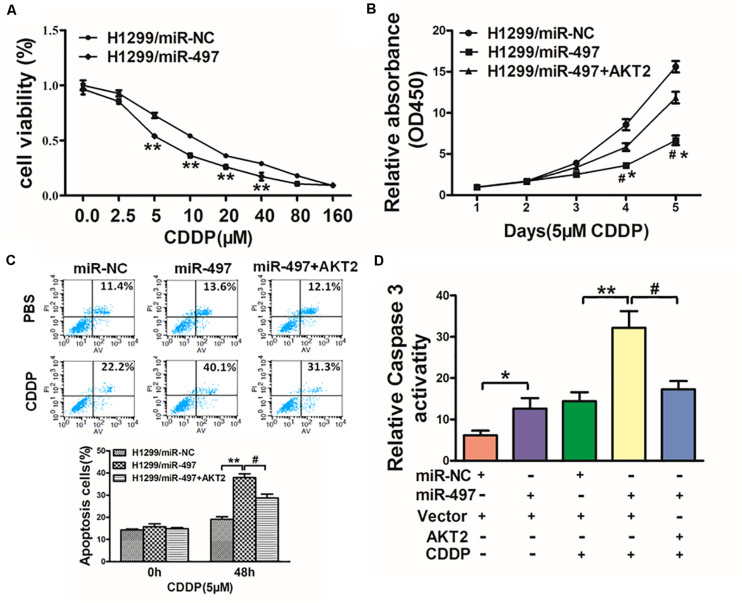
In this study, we found that miR-497 was significantly downregulated in tumor tissues and blood samples of lung cancer patients. To understand the potential mechanism of miR-497 in inhibiting tumor growth, we showed that miR-497 blocked the activation of AKT2 and regulated cell proliferation, cell migration, colony formation and increases chemosensitivity of H1299 cells to cisplatin by inhibiting AKT2. MiR-497 also inhibited tumor growth and suppressed expression of AKT2 at the protein and mRNA levels in mouse xenograft tumors.
Taken together, our findings indicated that miR-497 suppresses the tumor growth by targeting AKT2, and the miR-497/AKT2 axis is a potential therapeutic target for NSCLC intervention.
微小RNA-497(miR-497)与多种癌症有关。越来越多的研究表明,AKT2在癌症中作为一种癌基因发挥作用,它通过增强癌细胞的存活、迁移和侵袭能力,与肿瘤侵袭性密切相关。然而,非小细胞肺癌(NSCLC)中的miR-497/AKT2轴仍不清楚。
采用定量实时聚合酶链反应(qRT-PCR)来定量miR-497及其靶基因的表达。通过细胞增殖试验、细胞迁移试验、集落形成试验、流式细胞术试验、免疫印迹和肿瘤发生试验研究miR-497在肺癌中的作用。进行荧光素酶报告基因试验以确认miR-497的靶基因。
在本研究中,我们发现miR-497在肺癌患者的肿瘤组织和血液样本中显著下调。为了解miR-497抑制肿瘤生长的潜在机制,我们发现miR-497通过抑制AKT2阻断其激活,并调节细胞增殖、细胞迁移、集落形成,增加H1299细胞对顺铂的化学敏感性。miR-497还在小鼠异种移植瘤中抑制肿瘤生长,并在蛋白质和mRNA水平上抑制AKT2的表达。
综上所述,我们的研究结果表明,miR-497通过靶向AKT2抑制肿瘤生长,miR-497/AKT2轴是NSCLC干预的潜在治疗靶点。