Theut Lindsey R, Dsouza Del L, Grove Ryan C, Boesen Erika I
Department of Cellular & Integrative Physiology, University of Nebraska Medical Center, Omaha, NE, United States.
Front Med (Lausanne). 2020 Sep 8;7:516. doi: 10.3389/fmed.2020.00516. eCollection 2020.
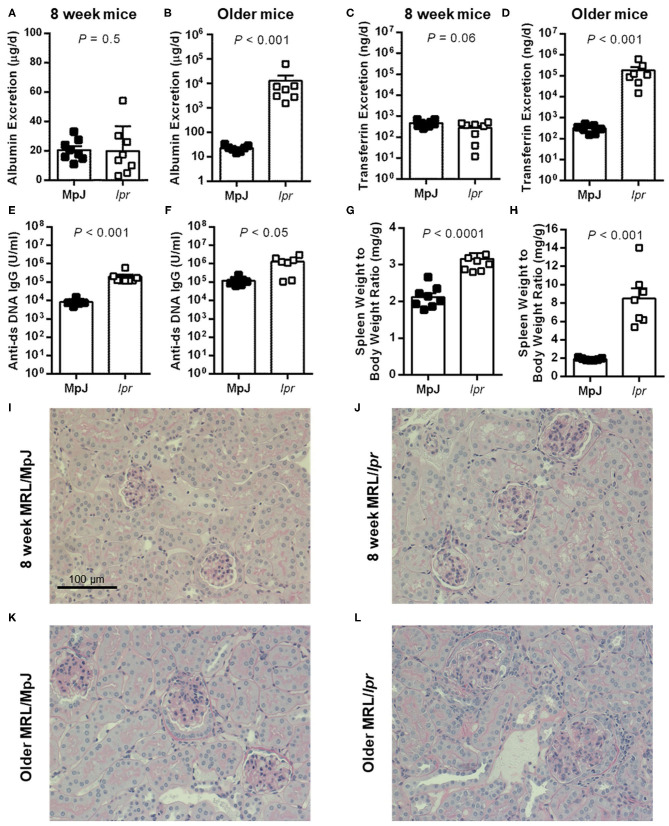
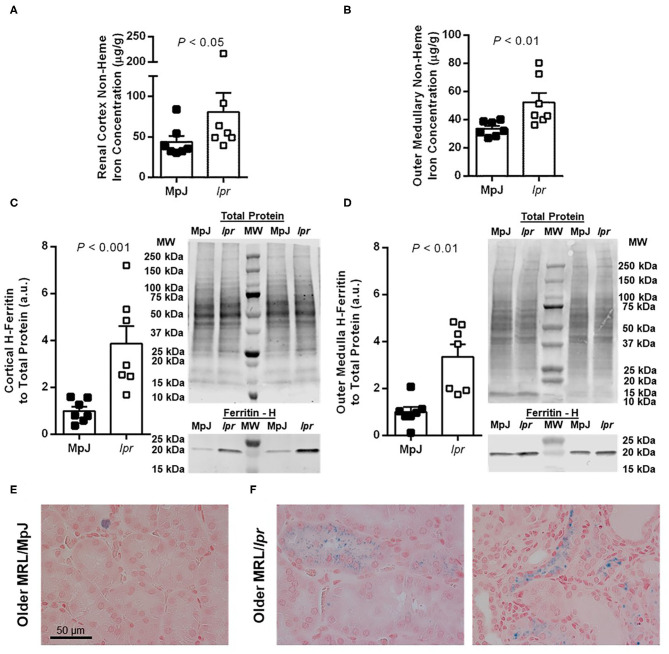
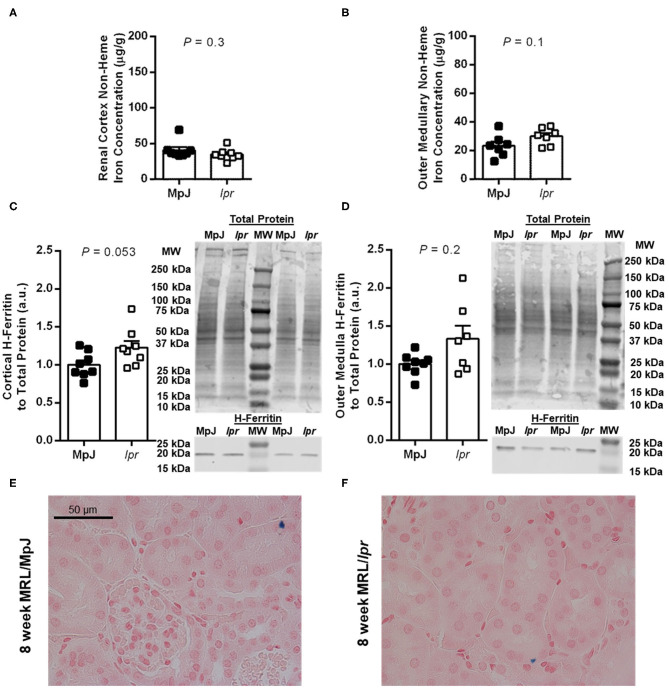
Lupus nephritis represents a common and serious complication of the autoimmune disease Systemic Lupus Erythematosus (SLE). Clinical studies suggest that several proteins related to iron metabolism, including transferrin, serve as urinary biomarkers of lupus nephritis. We previously reported that in female NZBWF1 mice, a commonly used mouse model of SLE with a female sex bias, increased urinary transferrin excretion and renal iron accumulation occur around the onset of albuminuria. The current study investigated whether similar findings occur in male mice of a different mouse model of SLE, the MRL/ mouse. Two different cohorts were studied: MRL/ mice at an early, pre-albuminuric age (8 weeks), and after developing albuminuria (>100 mg/dL, confirmed by ELISA); age-matched MRL/MpJ control strain mice served for comparison. Urinary transferrin excretion was dramatically increased in the older, albuminuric MRL/ mice compared to the age-matched MRL/MpJ ( < 0.05), but there was no significant difference between strains at 8 weeks of age. Similarly, there were no significant differences between strains in renal cortical or outer medullary non-heme iron concentrations at 8 weeks. In the older, albuminuric MRL/ mice, renal cortical and outer medullary non-heme iron concentrations were significantly increased compared with age-matched MRL/MpJ mice, as was the expression of the iron storage protein ferritin ( < 0.01). Together, these data show that increased urinary transferrin excretion and renal tissue iron accumulation also occurs in albuminuric male MRL/ mice, suggesting that renal iron accumulation may be a feature of multiple mouse models of SLE.
狼疮性肾炎是自身免疫性疾病系统性红斑狼疮(SLE)常见且严重的并发症。临床研究表明,包括转铁蛋白在内的几种与铁代谢相关的蛋白质可作为狼疮性肾炎的尿液生物标志物。我们之前报道过,在雌性NZBWF1小鼠(一种常用的具有雌性性别偏向的SLE小鼠模型)中,蛋白尿发作前后会出现尿转铁蛋白排泄增加和肾脏铁蓄积。本研究调查了在另一种SLE小鼠模型MRL/lpr小鼠的雄性小鼠中是否会出现类似的结果。研究了两个不同的队列:处于蛋白尿前期早期(8周龄)的MRL/lpr小鼠,以及出现蛋白尿后(通过ELISA确认>100mg/dL)的MRL/lpr小鼠;年龄匹配的MRL/MpJ对照品系小鼠用于比较。与年龄匹配的MRL/MpJ小鼠相比,年龄较大且出现蛋白尿的MRL/lpr小鼠的尿转铁蛋白排泄显著增加(P<0.05),但在8周龄时两个品系之间没有显著差异。同样,在8周龄时,两个品系在肾皮质或外髓质非血红素铁浓度方面也没有显著差异。在年龄较大且出现蛋白尿的MRL/lpr小鼠中,与年龄匹配的MRL/MpJ小鼠相比,肾皮质和外髓质非血红素铁浓度显著增加,铁储存蛋白铁蛋白的表达也是如此(P<0.01)。总之,这些数据表明,出现蛋白尿的雄性MRL/lpr小鼠也会出现尿转铁蛋白排泄增加和肾组织铁蓄积,提示肾铁蓄积可能是多种SLE小鼠模型的一个特征。