Department of Intensive Care Unit (ICU), People's Hospital of Rizhao, Shandong Province, China.
Department of Cardiology, People's Hospital of Rizhao, Shandong Province, China.
Biomed Res Int. 2020 Sep 16;2020:9673284. doi: 10.1155/2020/9673284. eCollection 2020.
To probe into the role of miR-92a in alleviating oxidative stress and apoptosis of alveolar epithelial cell (AEC) injury induced by lipopolysaccharide (LPS) exposure through the Toll-like receptor (TLR) 2/activator protein-1 (AP-1) pathway.
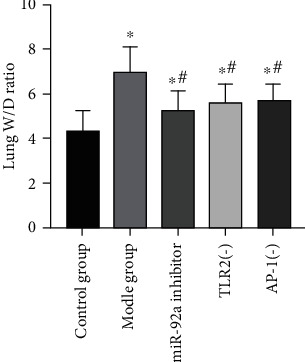
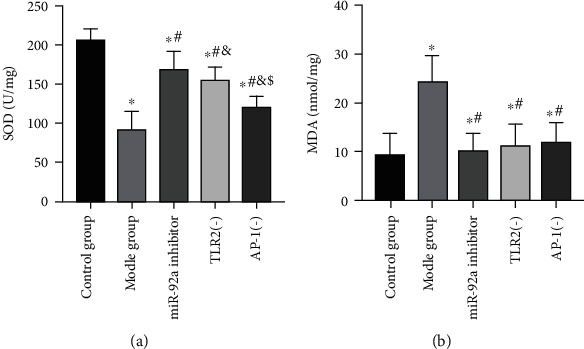
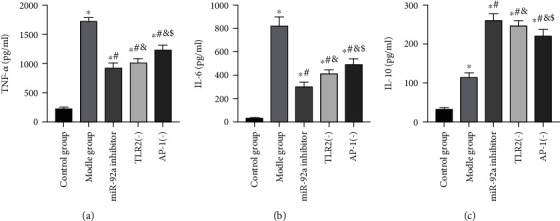
Acute lung injury (ALI) rat model and ALI alveolar epithelial cell model were constructed to inhibit the expression of miR-92a/TLR2/AP-1 in rat and alveolar epithelial cells (AECs), to detect the changes of oxidative stress, inflammatory response, and cell apoptosis in rat lung tissues and AECs, and to measure the changes of wet-dry weight (W/D) ratio in rat lung tissues.
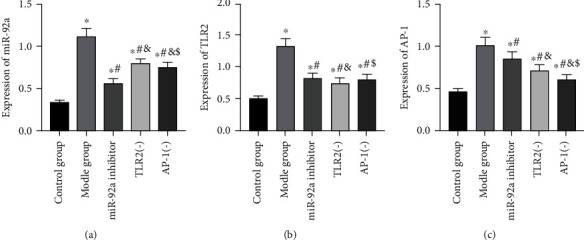
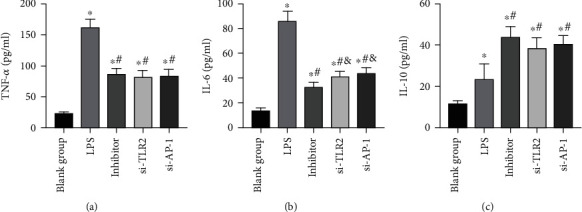
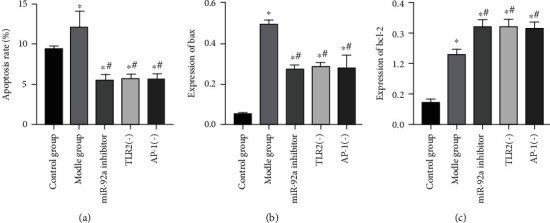
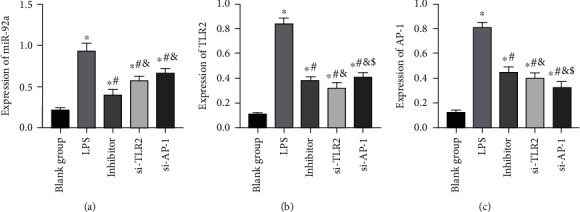
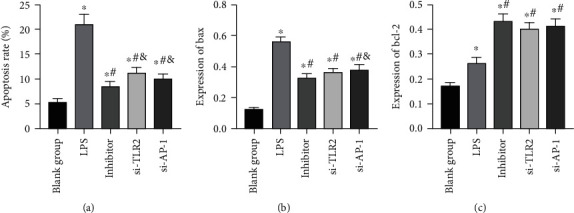
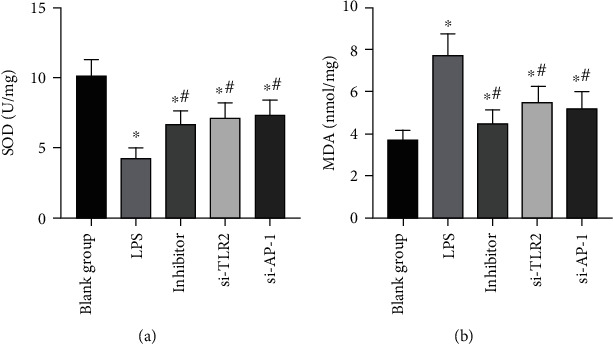
Both inhibition of miR-92a expression and knockout of TLR2 and AP-1 gene could reduce LPS-induced rat ALI, alleviate pulmonary edema, inhibit oxidative stress and inflammatory response, and reduce apoptosis of lung tissue cells. In addition, the TLR2 and AP-1 levels in the lung tissues of ALI rats were noticed to be suppressed when inhibiting the expression of miR-92a, and the AP-1 level was also decreased after the knockout of TLR2 gene. Further, we verified this relationship in AECs and found that inhibition of miR-92a/TLR2/AP-1 also alleviated LPS-induced AEC injury, reduced cell apoptosis, and inhibited oxidative stress and inflammatory response. What is more, like that in rat lung tissue, the phenomenon also existed in AECs, that is, when the expression of miR-92a was inhibited, the expression of TLR2 and AP-1 was inhibited, and silencing TLR2 can reduce the expression level of AP-1.
MiR-92a/TLR2/AP-1 is highly expressed in ALI, and its inhibition can improve oxidative stress and inflammatory response and reduce apoptosis of AECs.
通过 Toll 样受体(TLR)2/激活蛋白-1(AP-1)通路探讨 miR-92a 缓解脂多糖(LPS)暴露引起的肺泡上皮细胞(AEC)损伤氧化应激和细胞凋亡的作用。
构建急性肺损伤(ALI)大鼠模型和 ALI 肺泡上皮细胞模型,抑制大鼠和肺泡上皮细胞(AECs)中 miR-92a/TLR2/AP-1 的表达,检测大鼠肺组织和 AECs 中氧化应激、炎症反应和细胞凋亡的变化,并测量大鼠肺组织湿干重(W/D)比值的变化。
抑制 miR-92a 的表达和敲除 TLR2 和 AP-1 基因均可减轻 LPS 诱导的大鼠 ALI,减轻肺水肿,抑制氧化应激和炎症反应,减少肺组织细胞凋亡。此外,抑制 miR-92a 的表达可抑制 ALI 大鼠肺组织中 TLR2 和 AP-1 水平,敲除 TLR2 基因后 AP-1 水平也降低。此外,我们在 AECs 中验证了这种关系,发现抑制 miR-92a/TLR2/AP-1 也可减轻 LPS 诱导的 AEC 损伤,减少细胞凋亡,抑制氧化应激和炎症反应。更重要的是,与大鼠肺组织一样,这种现象也存在于 AECs 中,即抑制 miR-92a 的表达可抑制 TLR2 和 AP-1 的表达,沉默 TLR2 可降低 AP-1 的表达水平。
miR-92a/TLR2/AP-1 在 ALI 中高表达,其抑制可改善 AEC 的氧化应激和炎症反应,减少细胞凋亡。