Kushnarova-Vakal Anastasiia, Äärelä Antti, Huovinen Tuomas, Virta Pasi, Lamminmäki Urpo
Department of Biochemistry and Department of Chemistry, University of Turku, 20500 Turku, Finland.
ACS Omega. 2020 Sep 19;5(38):24927-24934. doi: 10.1021/acsomega.0c03750. eCollection 2020 Sep 29.
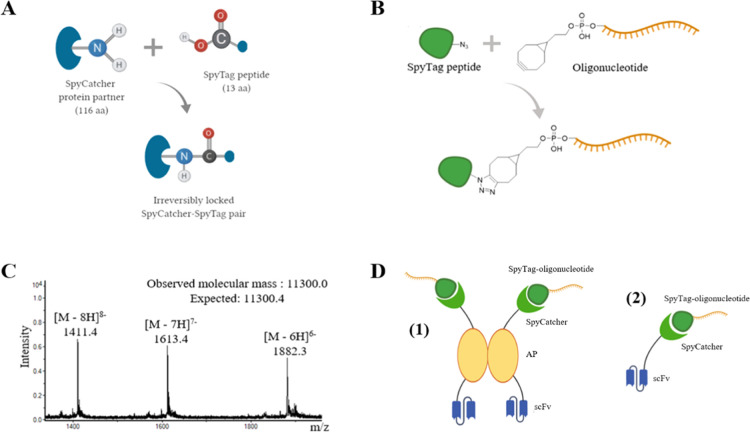
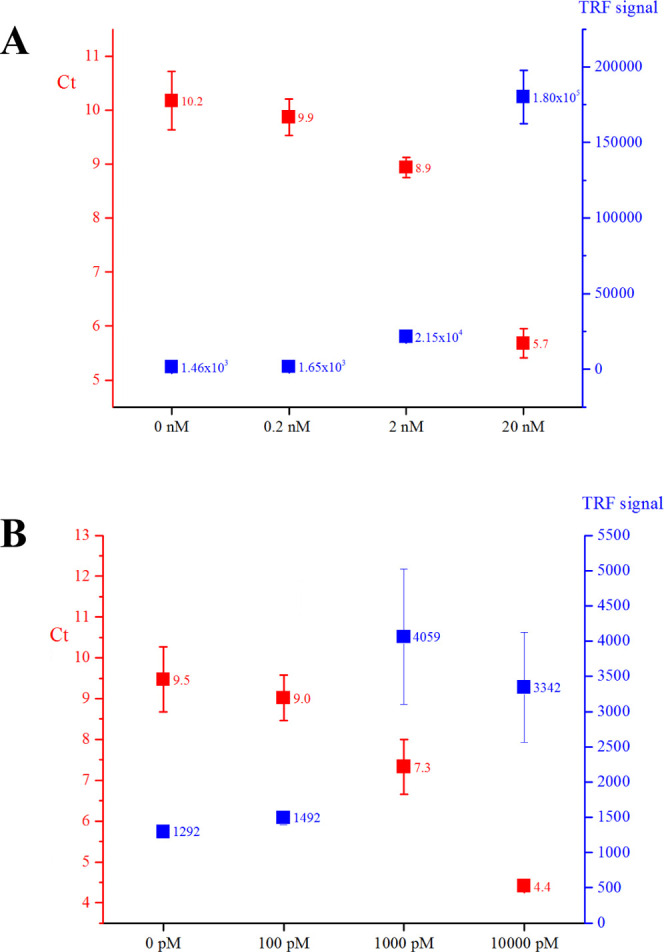
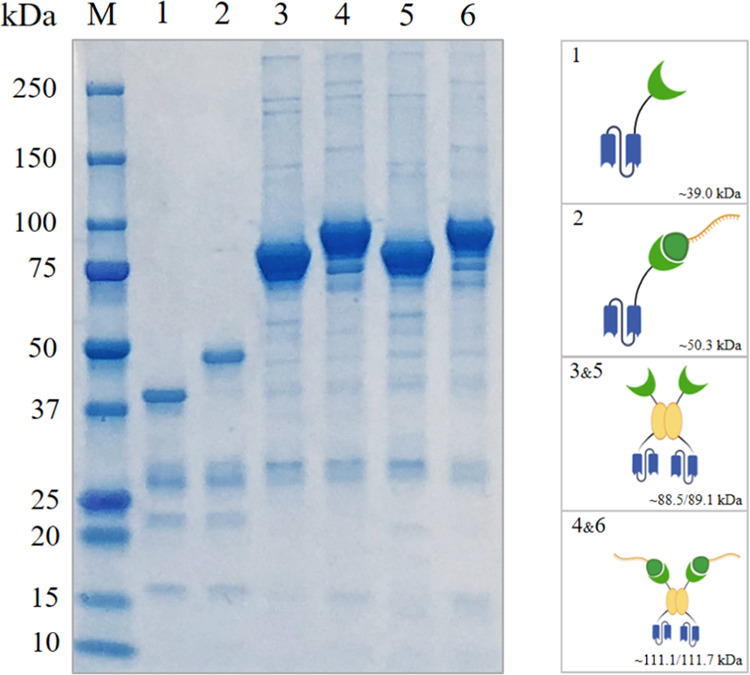
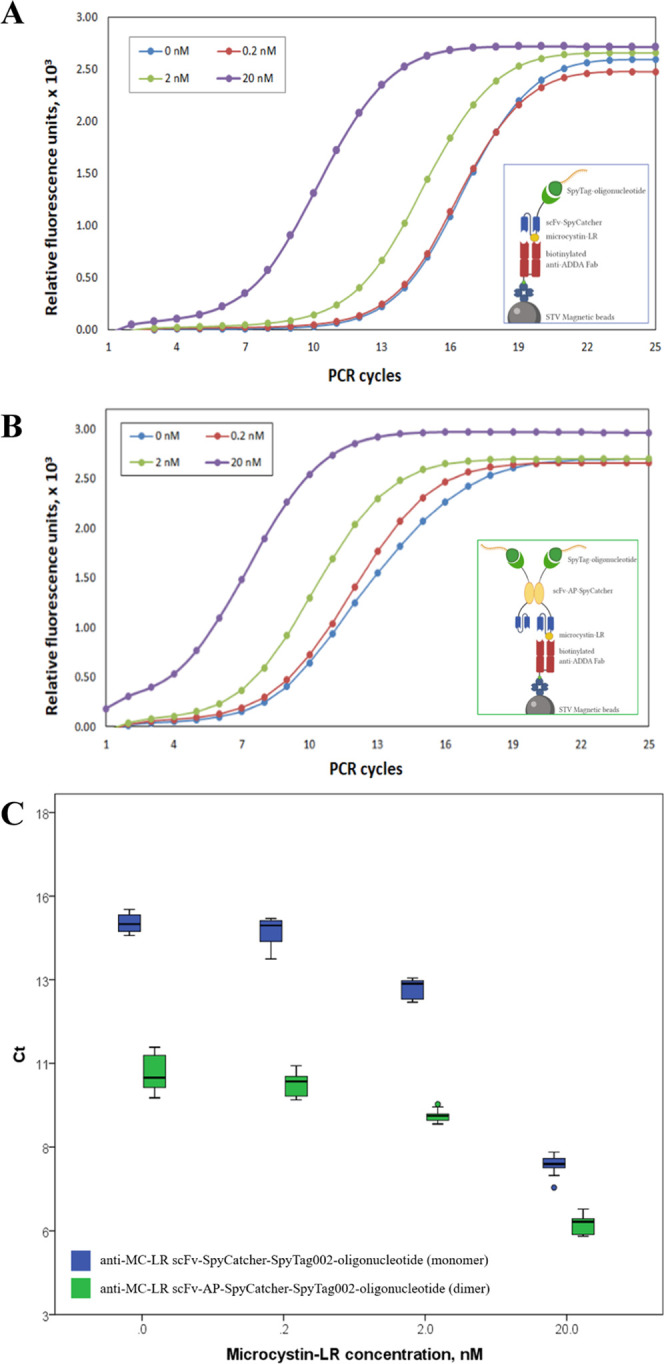
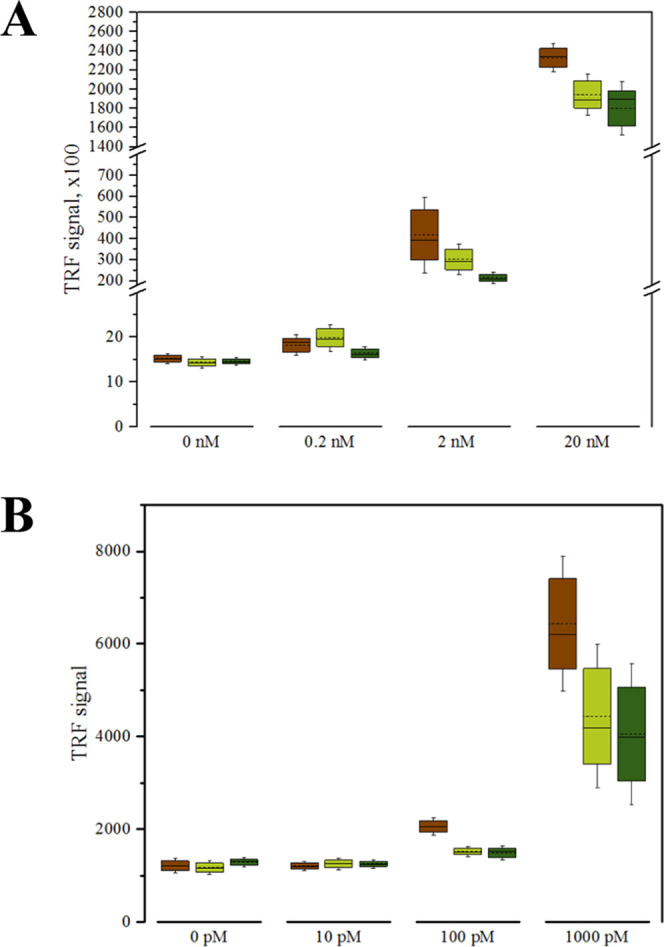
Antibody-oligonucleotide conjugates (AOCs) are a versatile class of chimeric biomolecules for therapeutics and biotechnological applications. Most widely employed chemical labeling methods for proteins are based on targeting of Lys or Cys residues that leads to mixed stoichiometry in the degree of conjugation and may interfere with antigen binding, thus, compromising the function of the antibody. A site-specific oligonucleotide conjugation technology providing full control over valency in mild reaction conditions would be an advancement to the state-of-the-art in bioconjugation. Herein, we demonstrate the production of single-chain variable fragment antibodies with fused SpyCatcher (scFv-SpyCatcher, monovalent) and alkaline phosphatase-SpyCatcher (scFv-AP-SpyCatcher, bivalent) on C-terminus and their conjugation to SpyTag002-oligonucleotide in phosphate-buffered saline (PBS). The formation of a covalent isopeptide bond between the protein and SpyTag002-oligonucleotide was confirmed by sodium dodecyl sulfate polyacrylamide gel electrophoresis (SDS-PAGE) analysis, and the functionality of the obtained AOCs was confirmed in immuno-polymerase chain reaction (PCR) assays for the detection of microcystin-LR and 17β-estradiol. Based on time-resolved fluorescence immunoassays with scFv-AP fusion constructs, we observed that the SpyCatcher and SpyCatcher-SpyTag002-oligonucleotide part lowered the absolute signal obtained from the assay by 27.6 and 48.4% at 2 nM and by 26.2 and 27.6% at 100 pM microcystin-LR and 17β-estradiol concentrations, respectively. Nevertheless, the overall sensitivity of the immuno-PCR assays was similar to the time-resolved fluorescence immunoassays performed with the same components. In this study, vectors for SpyCatcher-fusion construction were created for directional cloning with sites enabling the rapid generation of AOC constructs for site-specific SpyTag-oligonucleotide conjugation.
抗体 - 寡核苷酸缀合物(AOCs)是一类用途广泛的嵌合生物分子,可用于治疗和生物技术应用。蛋白质最常用的化学标记方法是基于靶向赖氨酸(Lys)或半胱氨酸(Cys)残基,这会导致缀合程度的化学计量比混合,并可能干扰抗原结合,从而损害抗体的功能。一种能在温和反应条件下完全控制价态的位点特异性寡核苷酸缀合技术将是生物缀合领域的一项进步。在此,我们展示了在C末端产生融合了SpyCatcher的单链可变片段抗体(scFv - SpyCatcher,单价)和碱性磷酸酶 - SpyCatcher(scFv - AP - SpyCatcher,二价),以及它们在磷酸盐缓冲盐水(PBS)中与SpyTag002 - 寡核苷酸的缀合。通过十二烷基硫酸钠聚丙烯酰胺凝胶电泳(SDS - PAGE)分析证实了蛋白质与SpyTag002 - 寡核苷酸之间形成了共价异肽键,并在用于检测微囊藻毒素 - LR和17β - 雌二醇的免疫聚合酶链反应(PCR)测定中证实了所得AOCs的功能。基于使用scFv - AP融合构建体的时间分辨荧光免疫测定,我们观察到,在微囊藻毒素 - LR和17β - 雌二醇浓度分别为2 nM和100 pM时,SpyCatcher和SpyCatcher - SpyTag002 - 寡核苷酸部分使测定获得的绝对信号分别降低了27.6%和48.4%,以及26.2%和27.6%。然而,免疫PCR测定的总体灵敏度与使用相同组件进行的时间分辨荧光免疫测定相似。在本研究中,创建了用于SpyCatcher融合构建的载体,用于定向克隆,其位点能够快速生成用于位点特异性SpyTag - 寡核苷酸缀合的AOC构建体。