Shekouhi Niloufar, Dick David, Baechle Maxwell William, Kaeley Dilpreet Kaur, Goel Vijay K, Serhan Hassan, Rawlinson Jeremy, Shaw Derek
Engineering Center for Orthopedic Research Excellence (E-CORE) University of Toledo Toledo, Ohio USA.
Prestige Adjunct Professor, Departments of Bioengineering and Orthopaedic Surgery University of Toledo Toledo Ohio USA.
JOR Spine. 2020 Aug 21;3(3):e1119. doi: 10.1002/jsp2.1119. eCollection 2020 Sep.
The emergence of distraction-based growing rods has provided the means to reduce the progression of spinal deformity in early onset scoliosis (EOS). The current protocols for evaluating spinal implants (ie, ASTM-F1717 and ISO-12189) were developed for fusion/dynamic devices. These protocols do not feature long unsupported rod lengths subjected to distraction. Due to the unsuitability of the existing guidelines for the evaluation of growing rods, a new distraction-based finite element protocol is presented herein for the first time.
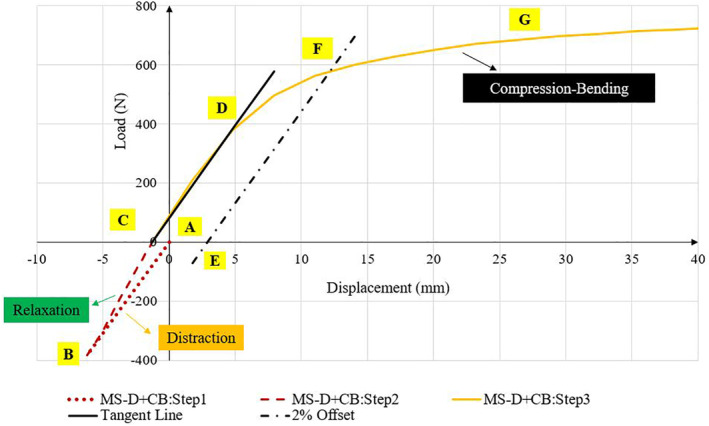
A vertebrectomy (VO) model from current protocols was modified to accommodate multi-spinal segments (ie, MS model) in which springs with appropriate stiffness were simulated in between the plastic blocks. To assess the efficacy of the protocol, two different computational studies were conducted: (a) compression-bending (MS-CB) with no distraction, and (b) distraction followed by compression-bending (MS-D + CB). In each study, the model with no axial connector (rods-only) was modified to include a) 80-mm long tandem (LT) connectors, and b) side-by-side (SBS) connectors. Stiffness and yield loads were calculated as per ASTM-F1717 guidelines and compared with the corresponding VO models with no distraction. In the MS-D + CB models, distraction was applied at the top block, stretching the spring-block construct in a simulation of scoliosis surgery prior to locking the construct at the connector-rods' interface.
MS-CB models predicted higher stiffness and yield loads, compared to the VO models. The locking mechanism produced pre-existing stresses on the rod-connector interface, which caused a shift in the location of high-stress regions to the distraction site. Distraction led to a decrease in the construct's stiffness and yield load.
The proposed protocol enables the simulation of clinical parameters that are not feasible in the F1717 models and predicted stress patterns in the hardware consistent with observed clinical failures.
基于撑开的生长棒的出现为减少早发性脊柱侧弯(EOS)中脊柱畸形的进展提供了手段。当前评估脊柱植入物的方案(即ASTM-F1717和ISO-12189)是为融合/动态装置制定的。这些方案没有考虑到长的无支撑棒长度在撑开时的情况。由于现有指南不适用于评估生长棒,本文首次提出了一种基于撑开的新有限元方案。
对当前方案中的椎体切除(VO)模型进行修改,以适应多节段脊柱(即MS模型),其中在塑料块之间模拟了具有适当刚度的弹簧。为评估该方案的有效性,进行了两项不同的计算研究:(a)无撑开的压缩弯曲(MS-CB),以及(b)撑开后压缩弯曲(MS-D + CB)。在每项研究中,对没有轴向连接器(仅棒)的模型进行修改,以包括:a)80毫米长的串联(LT)连接器,以及b)并排(SBS)连接器。根据ASTM-F1717指南计算刚度和屈服载荷,并与无撑开的相应VO模型进行比较。在MS-D + CB模型中,在顶部块施加撑开,在将结构锁定在连接器-棒的界面之前,在模拟脊柱侧弯手术中拉伸弹簧-块结构。
与VO模型相比,MS-CB模型预测出更高的刚度和屈服载荷。锁定机制在棒-连接器界面产生了预先存在的应力,这导致高应力区域的位置转移到撑开部位。撑开导致结构的刚度和屈服载荷降低。
所提出的方案能够模拟F1717模型中不可行的临床参数,并预测硬件中的应力模式与观察到的临床失败情况一致。