Laboratory of Biological Psychology, KU Leuven, Tiensestraat 102, Leuven, 3000, Belgium.
Institut für Biochemie, Christian-Albrechts-Universität zu Kiel, Kiel, 24098, Germany.
Brain Pathol. 2021 Mar;31(2):223-238. doi: 10.1111/bpa.12903. Epub 2020 Nov 1.
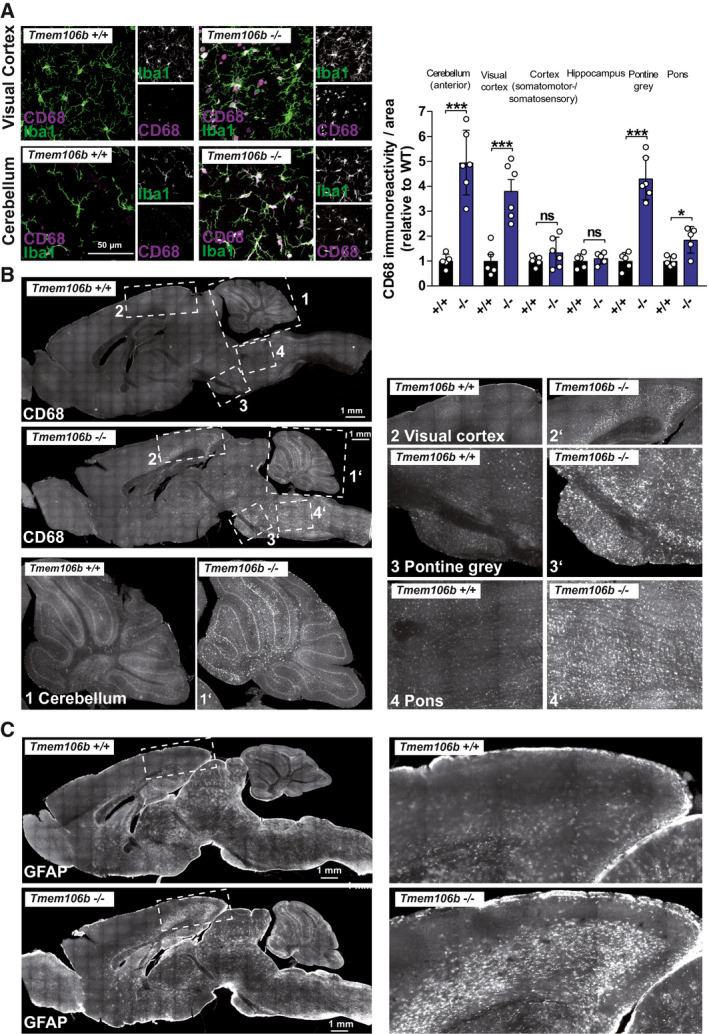
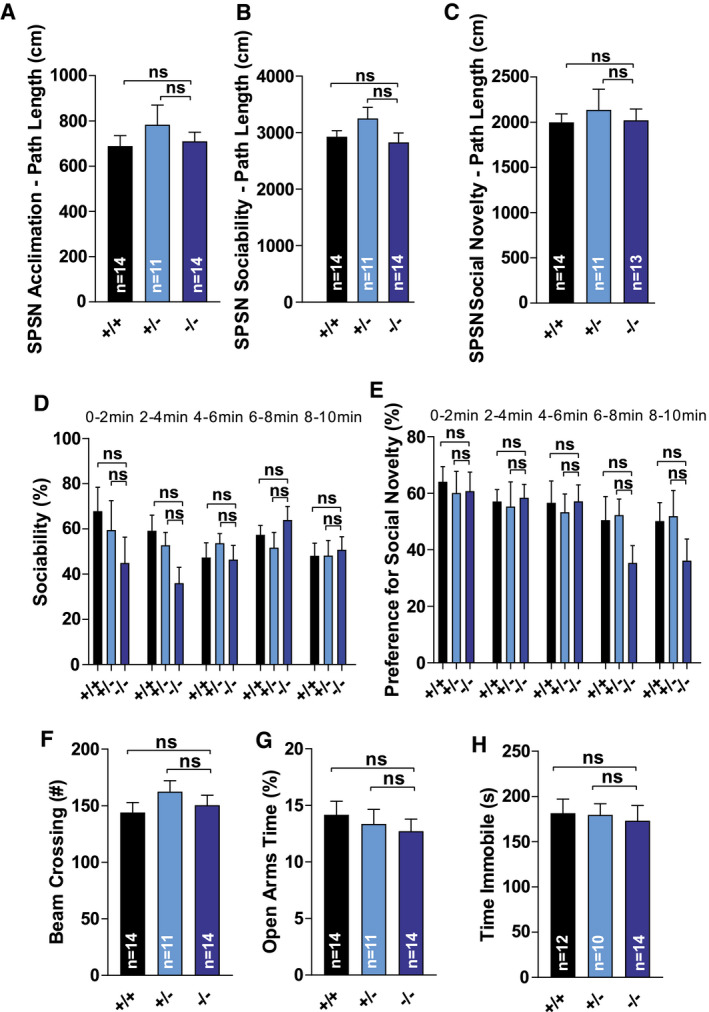
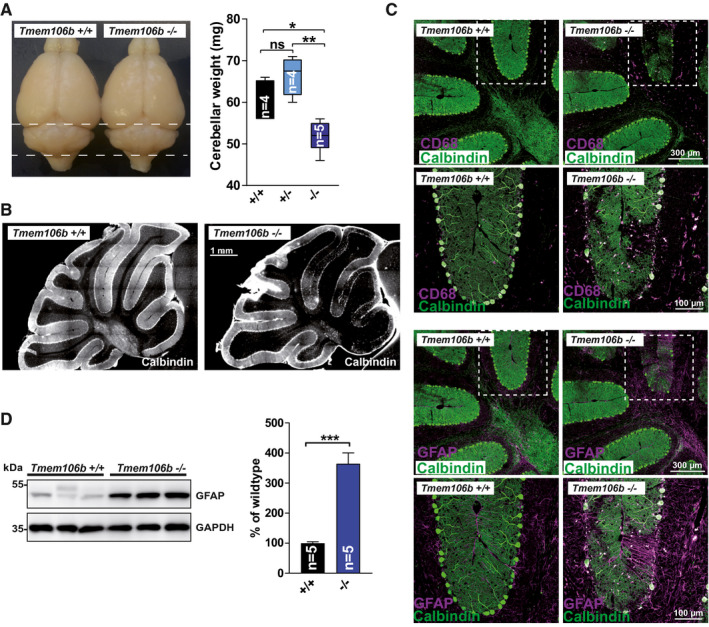
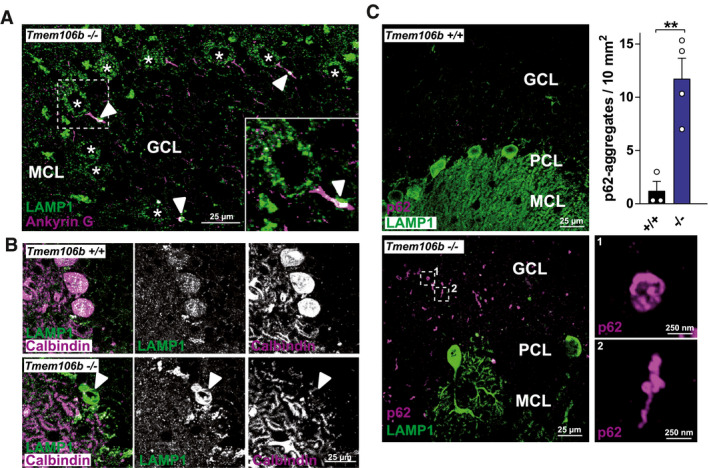
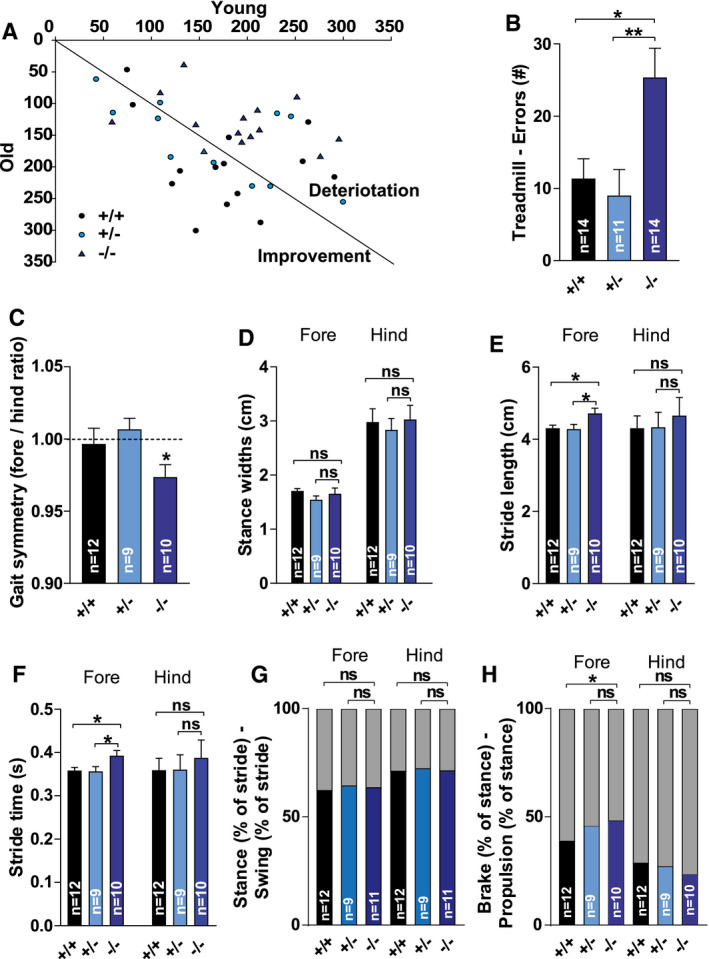
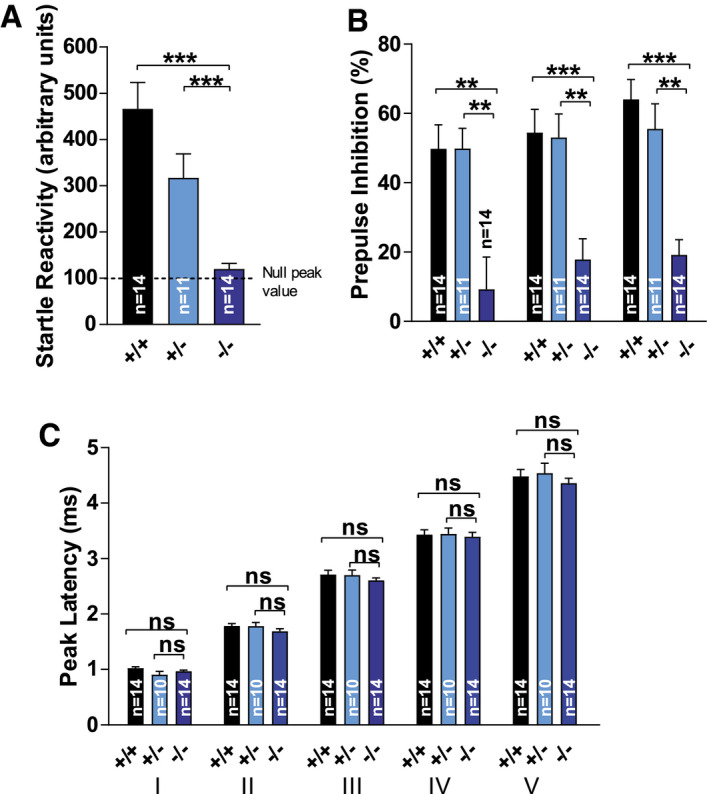
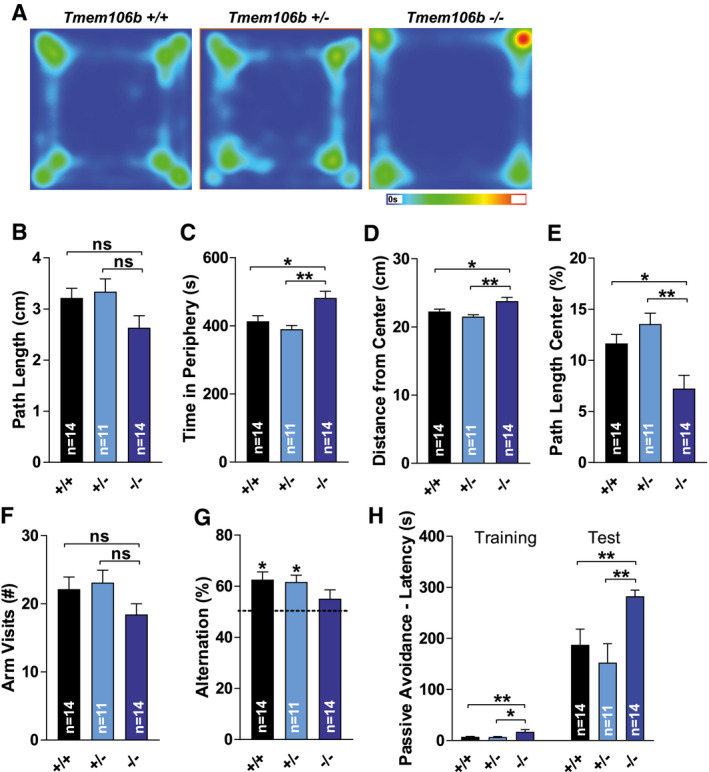
Genetic variants in TMEM106B are a major risk factor for several neurodegenerative diseases including frontotemporal degeneration, limbic-predominant age-related TDP-43 encephalopathy, Parkinson's disease, late-onset-Alzheimer's disease and constitute a genetic determinant of differential aging. TMEM106B encodes an integral lysosomal membrane protein but its precise physiological function in the central nervous system remains enigmatic. Presently, we aimed to increase understanding of TMEM106B contribution to general brain function and aging. We analyzed an aged cohort of Tmem106b knockout-, heterozygote and wild-type mice in a behavioral test battery including assessments of motor function as well as, social, emotional and cognitive function. Aged Tmem106b knockout (KO) mice displayed diverse behavioral deficits including motor impairment, gait defects and reduced startle reactivity. In contrast, no prominent deficits were observed in social, emotional or cognitive behaviors. Histologically, we observed late-onset loss of Purkinje cells followed by reactive gliosis in the cerebellum, which likely contributed to progressive decline in motor function and gait defects in particular. Reactive gliosis was not restricted to the cerebellum but observed in different areas of the brain including the brain stem and parts of the cerebral cortex. Surviving Purkinje cells showed vacuolated lysosomes in the axon initial segment, implicating TMEM106B-dependent lysosomal trafficking defects as the underlying cause of axonal and more general neuronal dysfunction contributing to behavioral impairments. Our experiments help to elucidate how TMEM106B affects spatial neuronal homeostasis and exemplifies a critical role of TMEM106B in neuronal cells for survival.
TMEM106B 中的遗传变异是包括额颞叶变性、边缘为主的与年龄相关的 TDP-43 脑病、帕金森病、迟发性阿尔茨海默病在内的几种神经退行性疾病的主要危险因素,也是差异老化的遗传决定因素。TMEM106B 编码一种完整的溶酶体膜蛋白,但它在中枢神经系统中的精确生理功能仍然是个谜。目前,我们旨在增加对 TMEM106B 对大脑一般功能和衰老贡献的理解。我们分析了一组年龄较大的 Tmem106b 敲除型、杂合型和野生型小鼠,在一个行为测试组合中进行评估,包括运动功能以及社交、情感和认知功能。年龄较大的 Tmem106b 敲除(KO)小鼠表现出多种行为缺陷,包括运动障碍、步态缺陷和惊吓反应性降低。相比之下,在社交、情感或认知行为中没有观察到明显的缺陷。组织学上,我们观察到浦肯野细胞的迟发性丢失,随后小脑出现反应性神经胶质增生,这可能导致运动功能的逐渐下降和步态缺陷。反应性神经胶质增生不仅局限于小脑,还观察到大脑的不同区域,包括脑干和部分大脑皮层。存活的浦肯野细胞在轴突起始段显示有空泡化的溶酶体,表明 TMEM106B 依赖性溶酶体运输缺陷是导致轴突和更广泛神经元功能障碍的潜在原因,从而导致行为障碍。我们的实验有助于阐明 TMEM106B 如何影响空间神经元的内稳态,并例证了 TMEM106B 在神经元细胞中的生存中的关键作用。