Doctorate Program of Medical and Health Science, Faculty of Medicine, Public Health, and Nursing, Universitas Gadjah Mada, Yogyakarta, Indonesia.
Department of Neurology, Faculty of Medicine, Public Health and Nursing, Universitas Gadjah Mada, Yogyakarta, Indonesia.
PLoS One. 2020 Oct 5;15(10):e0239370. doi: 10.1371/journal.pone.0239370. eCollection 2020.
Serum vascular endothelial growth factor (VEGF) and infarct volume detected by brain imaging have been associated with stroke outcome. However, the relationship of these two variables with post-stroke cognitive impairment (PSCI) remains unclear. We aimed to investigate the association between acute serum VEGF levels and infarct volume with PSCI in ischemic stroke patients.
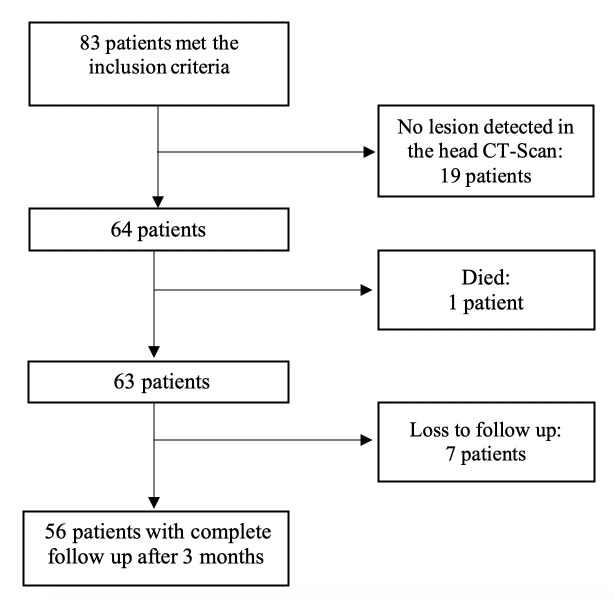
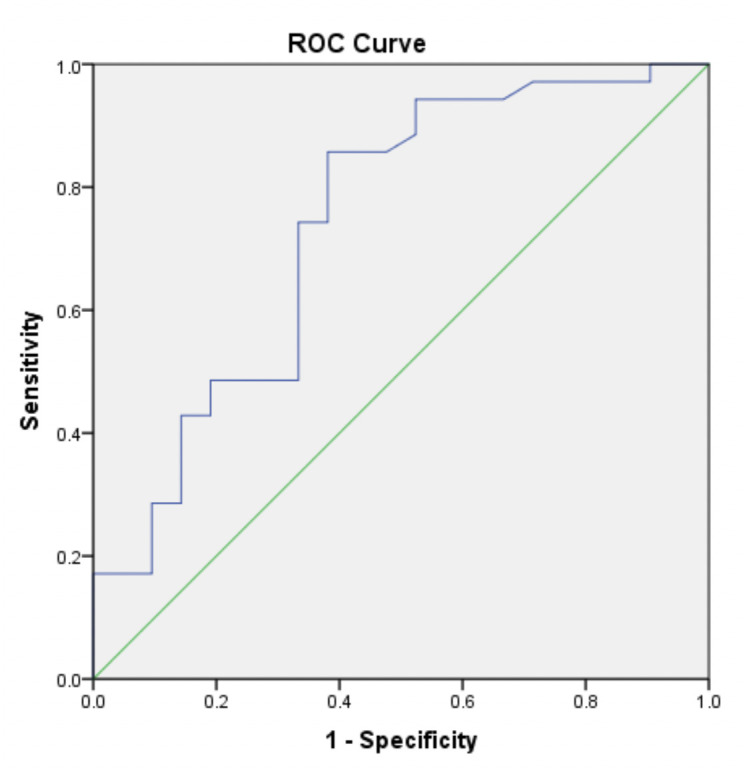
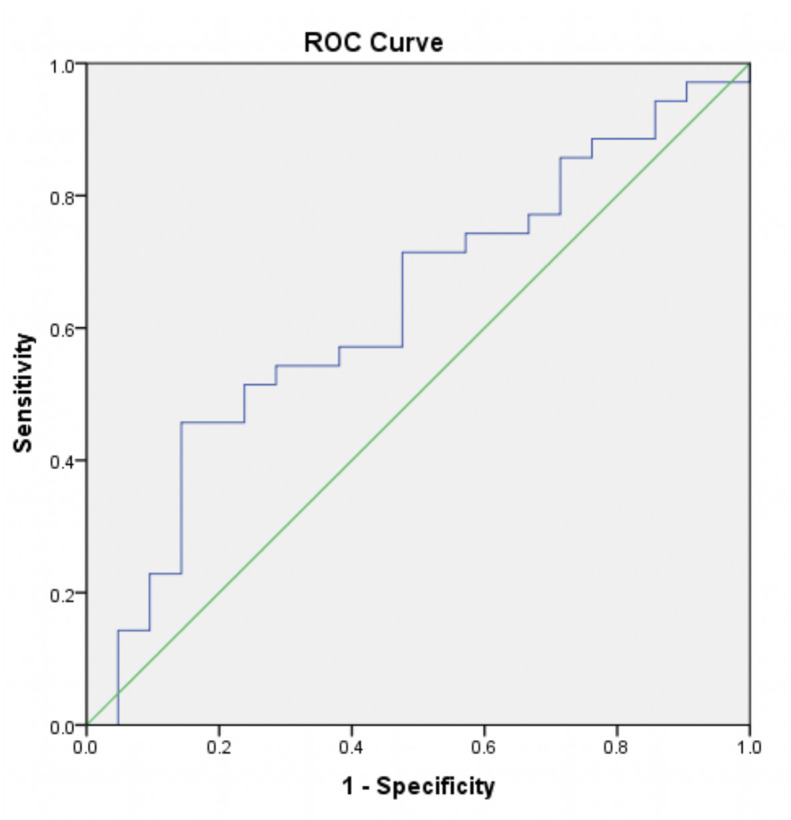
Fifty-six first-ever ischemic stroke patients who were hospitalized in Dr. Sardjito General Hospital Yogyakarta, Indonesia were prospectively recruited. Serum VEGF level was taken on day 5 of stroke onset and measured by ELISA. Infarct volume was calculated manually from head CT scan by expert radiologist. PSCI was assessed after 3 months follow up by using Montreal Cognitive Assessment-Indonesian version (MoCA-INA). We performed a ROC curve analysis to determine the cut-off point of VEGF level and infarct volume. Multivariate logistic regression analysis was performed to measure the contribution of VEGF level and infarct volume to PSCI after controlling covariates (demographic and clinical data).
The mean age of PSCI and non-PSCI patients was 61.63% ± 8.47 years and 58.67% ± 9.01 years, respectively (p = 0.221). No differences observed for vascular risk factors, infarct location, and NIHSS in both groups. Multivariate logistic regression showed that patients with higher VEGF level alone (≥519.8 pg/ml) were 4.99 times more likely to have PSCI than those with lower VEGF level (OR = 4.99, 95% CI = 1.01-24.7, p = 0.048). In addition, patients with larger infarct volume alone (≥0.054 ml) were also more frequently associated with PSCI (OR = 7.71, 95% CI = 1.39-42.91, p = 0.019).
Acute ischemic stroke patients with higher serum VEGF level (≥519.8 pg/ml) and larger infarct volume (≥0.054 ml) were more likely to have PSCI 3 months after stroke. These findings may contribute to predict PSCI earlier and thus better prevention strategy could be made.
血清血管内皮生长因子(VEGF)和脑影像学检测的梗死体积与卒中结局相关。然而,这两个变量与卒中后认知障碍(PSCI)的关系尚不清楚。我们旨在研究急性血清 VEGF 水平和梗死体积与缺血性卒中患者 PSCI 的关系。
本研究前瞻性纳入了 56 例首次发生缺血性卒中并在印度尼西亚日惹的 Sardjito 综合医院住院的患者。在卒中发病第 5 天采集血清 VEGF 水平,并通过 ELISA 进行测量。梗死体积由专家放射科医生手动从头部 CT 扫描中计算得出。在 3 个月的随访后,使用蒙特利尔认知评估-印度尼西亚版本(MoCA-INA)评估 PSCI。我们进行了 ROC 曲线分析,以确定 VEGF 水平和梗死体积的截断值。在控制了协变量(人口统计学和临床数据)后,多变量逻辑回归分析用于测量 VEGF 水平和梗死体积对 PSCI 的贡献。
PSCI 和非 PSCI 患者的平均年龄分别为 61.63%±8.47 岁和 58.67%±9.01 岁(p=0.221)。两组患者的血管危险因素、梗死部位和 NIHSS 无差异。多变量逻辑回归显示,仅 VEGF 水平较高(≥519.8 pg/ml)的患者发生 PSCI 的可能性是 VEGF 水平较低的患者的 4.99 倍(OR=4.99,95%CI=1.01-24.7,p=0.048)。此外,仅梗死体积较大(≥0.054 ml)的患者也更常与 PSCI 相关(OR=7.71,95%CI=1.39-42.91,p=0.019)。
急性缺血性卒中患者血清 VEGF 水平较高(≥519.8 pg/ml)和梗死体积较大(≥0.054 ml)更有可能在卒中后 3 个月发生 PSCI。这些发现可能有助于更早地预测 PSCI,从而制定更好的预防策略。