Mechanical Engineering, University of Colorado Boulder, Boulder, CO.
Mechanical Engineering, University of Colorado Boulder, Boulder, CO.
Am J Infect Control. 2021 Apr;49(4):438-446. doi: 10.1016/j.ajic.2020.09.014. Epub 2020 Oct 3.
Isolation space must be expanded during pandemics involving airborne transmission. Little to no work has been done to establish optimal design strategies and implementation plans to ease surge capacity and expand isolation capacity over long periods in congregate living facilities. The COVID-19 pandemic has an airborne transmission component and requires isolation, which is difficult to accomplish in skilled nursing facilities.
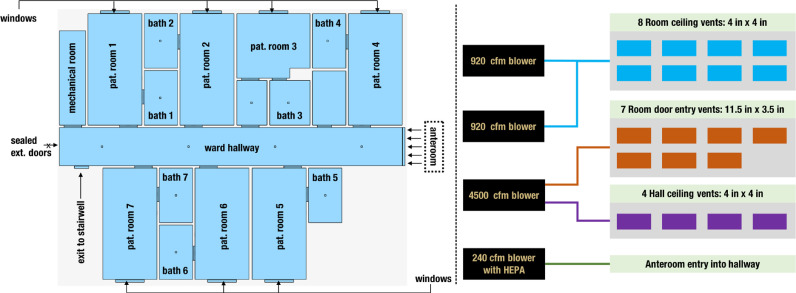
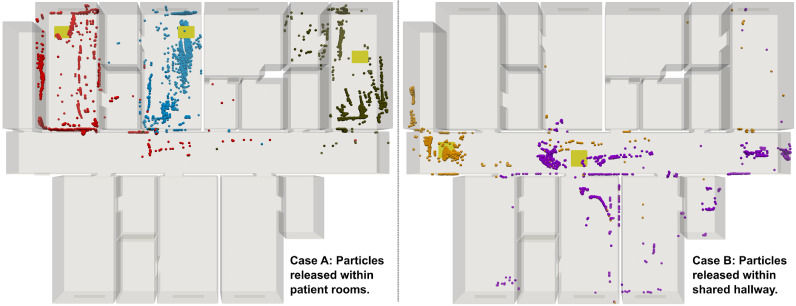
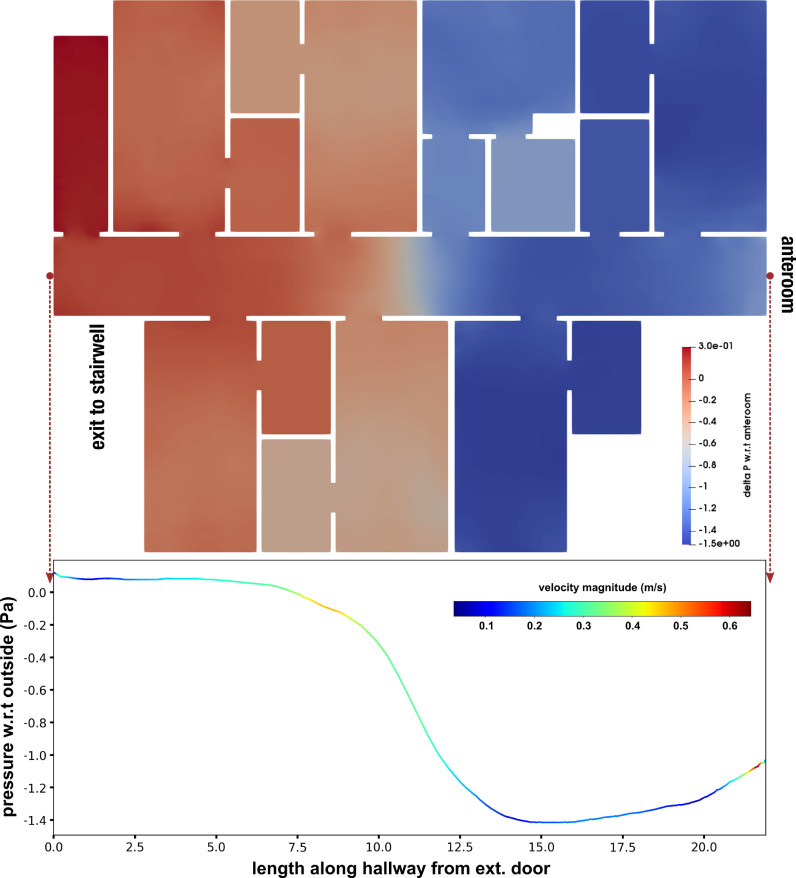
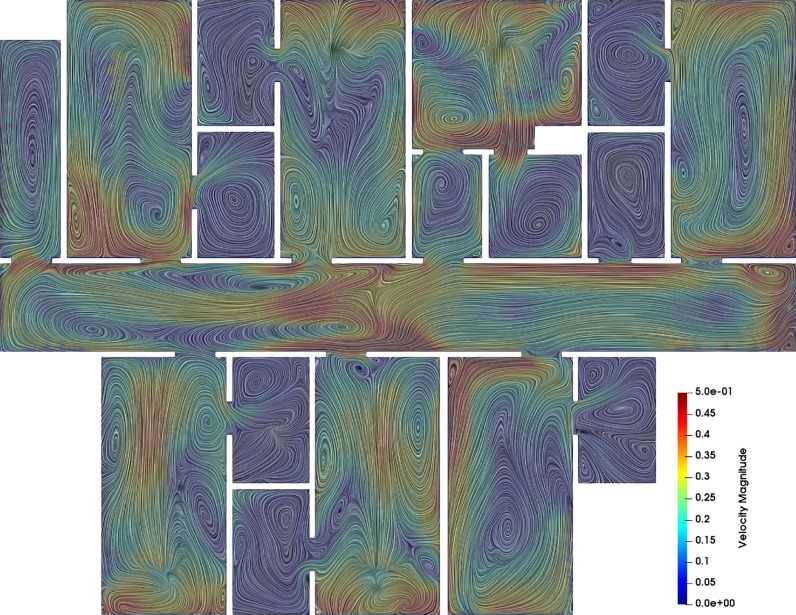
In this study we designed, implemented, and validated an isolation space at a skilled nursing facility in Lancaster, PA. The overall goal was to minimize disease transmission between residents and staff within the facility. We created an isolation space by modifying an existing HVAC system of the SNF. We measured pressure on-site and performed computational fluid dynamics and Lagrangian particle-based modeling to test containment and possible transmission extent given the isolation space is considered negative rather than individual rooms.
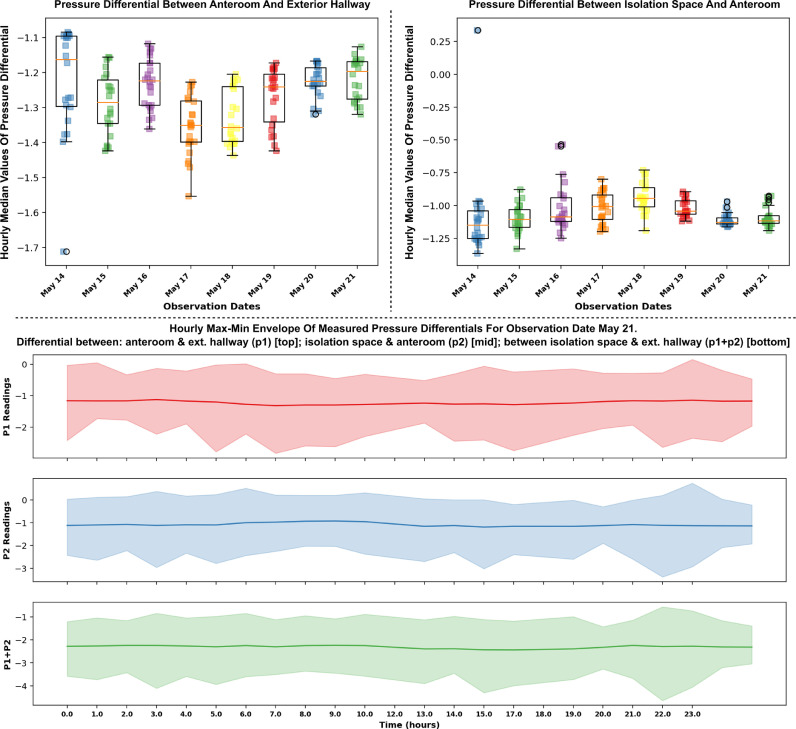
Pressure data shows the isolation space maintained an average (standard deviation) hourly value of -2.3 Pa (0.12 Pa) pressure differential between it and the external hallway connected to the rest of the facility. No transmission of SARS-CoV-2 between residents isolated to the space occurred, nor did any transmission to the staff or other residents occur. The isolation space was successfully implemented and, as of writing, continues to be operational through the pandemic.
Skilled nursing facilities can be retrofitted to provide negative pressure isolation space in a reasonable time frame and a cost effective manner to minimize airborne disease transmission within that space.
涉及空气传播的大流行期间,必须扩大隔离空间。在集体居住设施中,很少有工作致力于建立最佳设计策略和实施计划,以缓解长期的需求高峰和扩大隔离能力。COVID-19 大流行具有空气传播的成分,需要隔离,这在熟练护理设施中很难实现。
在这项研究中,我们在宾夕法尼亚州兰开斯特的一家熟练护理设施中设计、实施和验证了一个隔离空间。总体目标是最大限度地减少设施内居民和工作人员之间的疾病传播。我们通过修改 SNF 的现有 HVAC 系统来创建隔离空间。我们进行了现场压力测量,并进行了计算流体动力学和拉格朗日粒子基建模,以测试隔离空间被认为是负压而不是单独房间时的容纳能力和可能的传播程度。
压力数据显示,隔离空间与连接到设施其余部分的外部走廊之间保持了平均(标准差)每小时-2.3 Pa(0.12 Pa)的压力差。被隔离到该空间的居民之间没有发生 SARS-CoV-2 的传播,也没有向工作人员或其他居民传播。隔离空间已成功实施,并在撰写本文时继续在大流行期间运行。
熟练护理设施可以进行改造,以在合理的时间内以具有成本效益的方式提供负压隔离空间,以最大程度地减少该空间内空气传播疾病的传播。