Nguyen-Truong Michael, Li Yan Vivian, Wang Zhijie
School of Biomedical Engineering, Colorado State University, Fort Collins, CO 80523, USA.
Department of Design and Merchandising, Colorado State University, Fort Collins, CO 80523, USA.
Bioengineering (Basel). 2020 Oct 3;7(4):122. doi: 10.3390/bioengineering7040122.
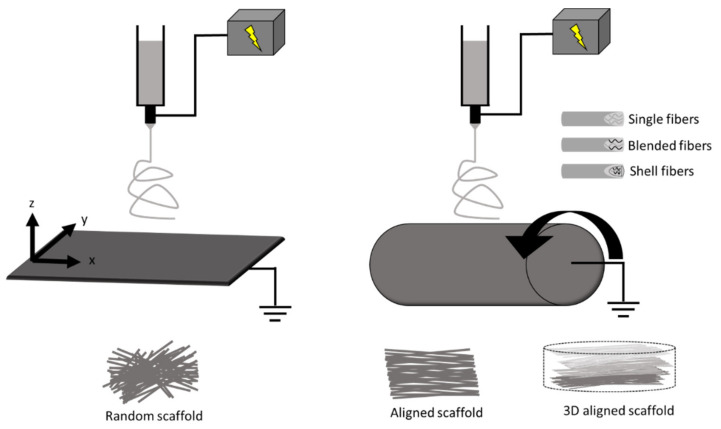
Biomaterials to facilitate the restoration of cardiac tissue is of emerging importance. While there are many aspects to consider in the design of biomaterials, mechanical properties can be of particular importance in this dynamically remodeling tissue. This review focuses on one specific processing method, electrospinning, that is employed to generate materials with a fibrous microstructure that can be combined with material properties to achieve the desired mechanical behavior. Current methods used to fabricate mechanically relevant micro-/nanofibrous scaffolds, in vivo studies using these scaffolds as therapeutics, and common techniques to characterize the mechanical properties of the scaffolds are covered. We also discuss the discrepancies in the reported elastic modulus for physiological and pathological myocardium in the literature, as well as the emerging area of in vitro mechanobiology studies to investigate the mechanical regulation in cardiac tissue engineering. Lastly, future perspectives and recommendations are offered in order to enhance the understanding of cardiac mechanobiology and foster therapeutic development in myocardial regenerative medicine.
促进心脏组织修复的生物材料正变得越来越重要。虽然在生物材料设计中有许多方面需要考虑,但在这种动态重塑的组织中,机械性能可能尤为重要。本综述聚焦于一种特定的加工方法——静电纺丝,该方法用于制备具有纤维微观结构的材料,这种结构可与材料性能相结合以实现所需的机械性能。文中涵盖了目前用于制造具有机械相关性的微/纳米纤维支架的方法、将这些支架用作治疗手段的体内研究,以及表征支架机械性能的常用技术。我们还讨论了文献中报道的生理和病理心肌弹性模量的差异,以及用于研究心脏组织工程中机械调节的体外力学生物学新兴研究领域。最后,为了增进对心脏力学生物学的理解并推动心肌再生医学的治疗发展,我们给出了未来展望和建议。