Santos Daniel Wagner C L, Vicente Vania Aparecida, Weiss Vinicius Almir, de Hoog G Sybren, Gomes Renata R, Batista Edith M M, Marques Sirlei Garcia, Queiroz-Telles Flávio de, Colombo Arnaldo Lopes, Azevedo Conceição de Maria Pedrozo E Silva de
Special Mycology Laboratory-LEMI, Division of Infectious Diseases, Federal University of São Paulo, São Paulo, 04039-032 SP, Brazil.
Division of Infectious Diseases, Federal University of São Paulo, São Paulo, 04024-002 SP, Brazil.
J Fungi (Basel). 2020 Oct 3;6(4):204. doi: 10.3390/jof6040204.
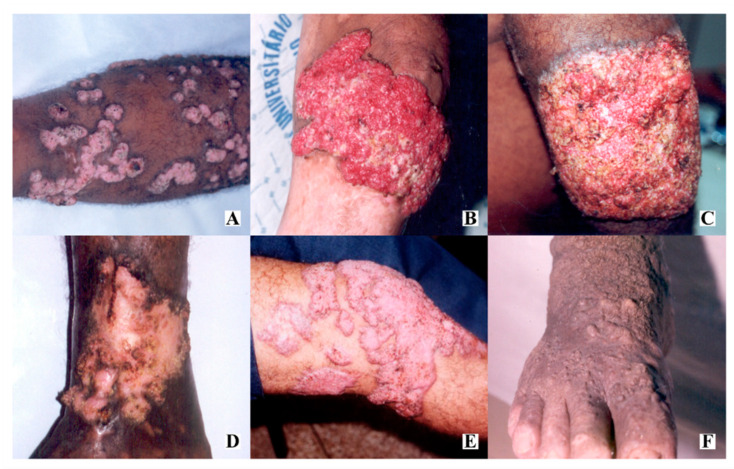
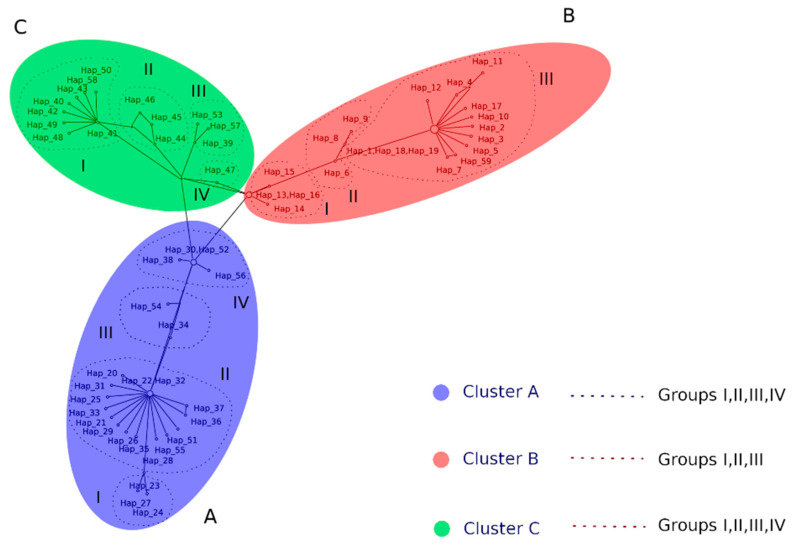
Chromoblastomycosis (CBM) is a neglected implantation mycosis prevalent in tropical climate zones, considered an occupational disease that affects impoverished rural populations. This retrospective study described clinical aspects of CBM in a hyperendemic area in Brazil and constructed a worldwide haplotype network of spp. strains. The variables were collected from medical records using a standard report form, reporting 191 patients with CBM from Maranhão, Brazil. The mean age was 56.1 years, 168 (88%) patients were male and predominantly farmers (85.8%). The mean time of evolution of the disease until diagnosis was 9.4 years. Lower limbs (81.2%) and upper limbs (14.2%) were the main sites affected. Most patients exhibited verrucous (55%) and infiltrative plaque (48.2%). spp. were identified in 136 cases and a haplotype network constructed with ITS sequences of 185 global strains revealed a total of 59 haplotypes exhibiting high haplotypic and low nucleotide diversities. No correlation was observed between the different haplotypes of species and dermatological patterns, severity of disease or geographic distribution inside Maranhão. Data from this area contributed to better understanding the epidemiology of CBM. For the first time, a robust haplotype network with strains reveals an evolutionary history with a recent population expansion.
着色芽生菌病(CBM)是一种在热带气候区流行的被忽视的植入性真菌病,被认为是一种影响贫困农村人口的职业病。这项回顾性研究描述了巴西一个高度流行地区CBM的临床特征,并构建了一个全球 spp. 菌株的单倍型网络。使用标准报告表从医疗记录中收集变量,报告了来自巴西马拉尼昂州的191例CBM患者。平均年龄为56.1岁,168名(88%)患者为男性,主要是农民(85.8%)。疾病至诊断的平均演变时间为9.4年。下肢(81.2%)和上肢(14.2%)是主要受累部位。大多数患者表现为疣状(55%)和浸润性斑块(48.2%)。136例中鉴定出 spp.,用185株全球菌株的ITS序列构建的单倍型网络显示共有59个单倍型,表现出高单倍型多样性和低核苷酸多样性。在马拉尼昂州内, 物种的不同单倍型与皮肤病学模式、疾病严重程度或地理分布之间未观察到相关性。该地区的数据有助于更好地了解CBM的流行病学。首次,一个包含 菌株的强大单倍型网络揭示了具有近期种群扩张的进化历史。