Faculty of Science and Engineering, Waseda University, 2-2 Wakamatsu-cho, Shinjuku, Tokyo 162-8480, Japan.
Graduate School of Advanced Science and Engineering, Waseda University, 2-2 Wakamatsu-cho Shinjuku, Tokyo 1628480, Japan.
Nutrients. 2020 Oct 3;12(10):3035. doi: 10.3390/nu12103035.
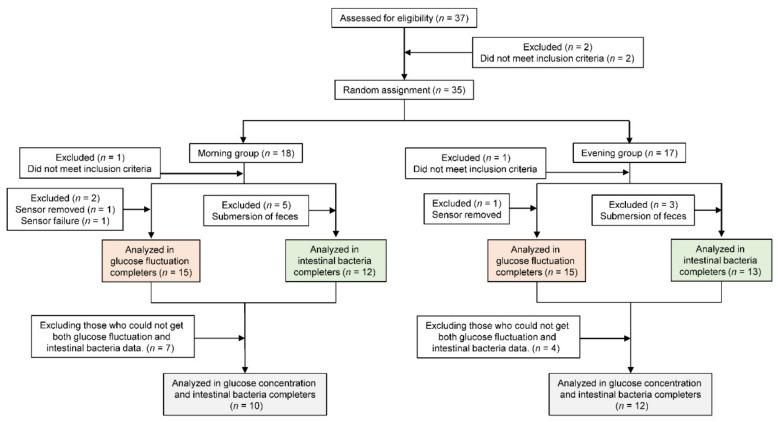
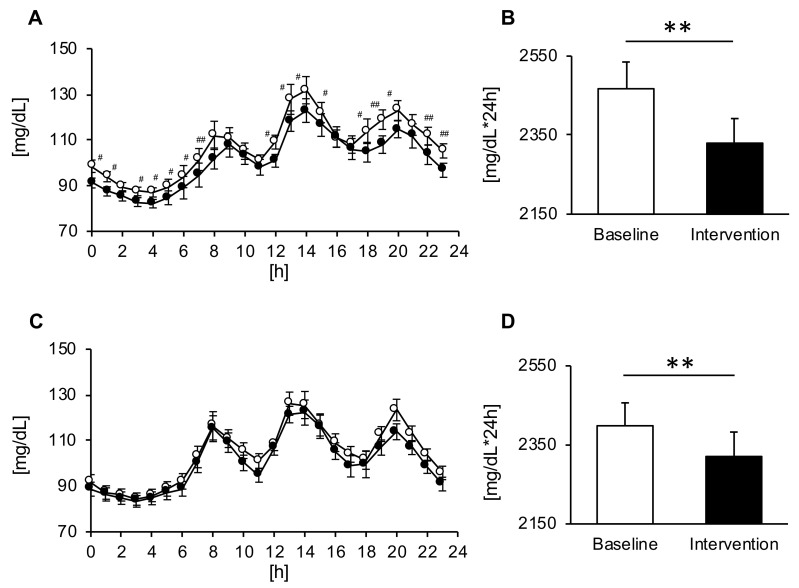
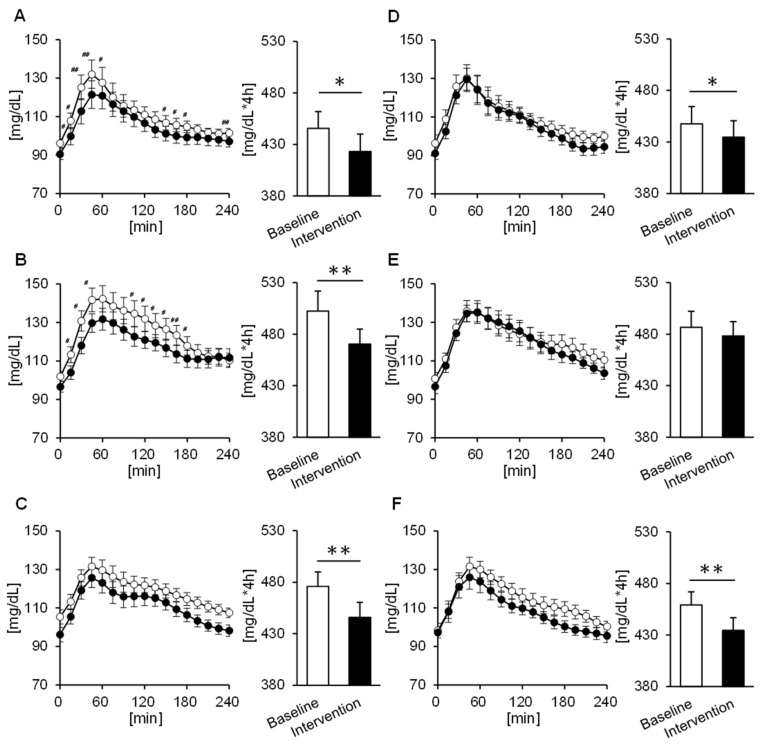
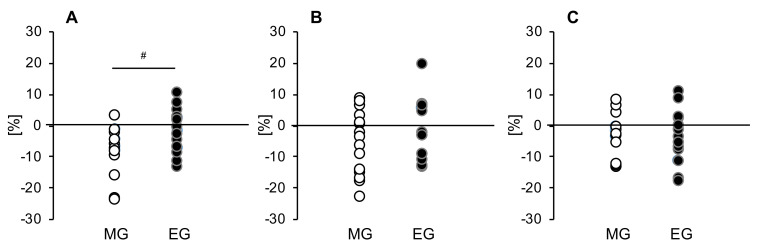
To date, nutritional studies have focused on the total intake of dietary fiber rather than intake timing. In this study, we examined the effect of the timing of daily ingestion on postprandial and 24 h glucose levels, as well as on intestinal microbiota in older adults. In total, 37 healthy older adults (age = 74.9 ± 0.8 years) were recruited. The participants were randomly assigned to either a morning group (MG, = 18) or an evening group (EG, = 17). The MG and EG groups were instructed to take powder (5 g/day) just before breakfast or dinner, respectively, for 1 week after the 1-week control period. The glucose levels of all participants were monitored using a continuous glucose monitoring system throughout the 2 weeks. The intestinal microbiota was analyzed by sequencing 16S rRNA genes from feces before and after the intervention. There were no significant differences in the physical characteristics or energy intake between groups. intake led to decreases in tissue glucose levels throughout the day in both groups ( < 0.01, respectively). As a result of examining the fluctuations in tissue glucose levels up to 4 hours after each meal, significant decreases in the areas under the curves (AUCs) were observed for all three meals after intervention, but only in the MG (breakfast: = 0.012, lunch: = 0.002, dinner: = 0.005). On the other hand, in the EG, there was a strong decrease in the AUC after dinner, but only slight decreases after breakfast and lunch (breakfast: = 0.017, lunch: = 0.427, dinner: = 0.002). Moreover, the rate of change in the peak tissue glucose level at breakfast was significantly decreased in the MG compared to the EG ( = 0.027). A greater decrease was observed in the change in the blood glucose level after the ingestion of in the MG than in the EG. Furthermore, the relative abundance of in the MG at the genus level was significantly higher at baseline than in the EG ( = 0.016) and it was also significantly lower after the intervention ( = 0.013). Our findings indicate that intake in the morning might have relatively stronger effects on the intestinal microbiota and suppress postprandial glucose levels to a greater extent than when taken in the evening.
迄今为止,营养研究主要集中在膳食纤维的总摄入量上,而不是摄入量的时间。在这项研究中,我们研究了老年人每天摄入时间对餐后和 24 小时血糖水平以及肠道微生物群的影响。共有 37 名健康老年人(年龄=74.9±0.8 岁)被招募。参与者被随机分为早餐组(MG,n=18)或晚餐组(EG,n=17)。MG 和 EG 组分别在控制期后 1 周内的早餐或晚餐前服用 5 g/d 的 粉。在两周内,所有参与者都使用连续血糖监测系统监测血糖水平。在干预前后,通过对粪便中的 16S rRNA 基因进行测序来分析肠道微生物群。两组之间的身体特征或能量摄入没有显著差异。 摄入导致两组全天组织血糖水平降低(分别<0.01)。由于检查每餐 4 小时内组织血糖水平的波动,干预后所有三顿饭的曲线下面积(AUC)均显著降低,但仅在 MG 中(早餐:=0.012,午餐:=0.002,晚餐:=0.005)。另一方面,在 EG 中,晚餐后的 AUC 急剧下降,但早餐和午餐后仅略有下降(早餐:=0.017,午餐:=0.427,晚餐:=0.002)。此外,与 EG 相比,MG 中早餐时组织血糖峰值的变化率明显降低(=0.027)。MG 中 摄入后血糖水平的变化幅度大于 EG。此外,MG 组在属水平上的 相对丰度在基线时明显高于 EG(=0.016),干预后也明显降低(=0.013)。我们的研究结果表明, 早上摄入可能对肠道微生物群有更强的影响,并在更大程度上抑制餐后血糖水平。