Department of Cell Biology, Faculty of Biology, Complutense University of Madrid, 28040 Madrid, Spain.
Health Research Institute, Hospital 12 de Octubre (imas12), 28041 Madrid, Spain.
Cells. 2020 Oct 2;9(10):2226. doi: 10.3390/cells9102226.
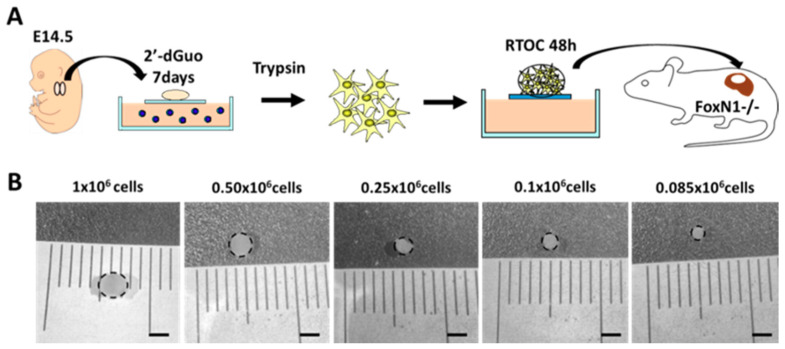
Intimate interactions between thymic epithelial cells (TECs) and thymocytes (T) have been repeatedly reported as essential for performing intrathymic T-cell education. Nevertheless, it has been described that animals exhibiting defects in these interactions were capable of a proper positive and negative T-cell selection. In the current review, we first examined distinct types of TECs and their possible role in the immune surveillance. However, EphB-deficient thymi that exhibit profound thymic epithelial (TE) alterations do not exhibit important immunological defects. Eph and their ligands, the ephrins, are implicated in cell attachment/detachment and govern, therefore, TEC-T interactions. On this basis, we hypothesized that a few normal TE areas could be enough for a proper phenotypical and functional maturation of T lymphocytes. Then, we evaluated in vivo how many TECs would be necessary for supporting a normal T-cell differentiation, concluding that a significantly low number of TEC are still capable of supporting normal T lymphocyte maturation, whereas with fewer numbers, T-cell maturation is not possible.
胸腺上皮细胞(TECs)与胸腺细胞(T)之间的密切相互作用已被反复报道对于执行胸腺内 T 细胞教育至关重要。尽管如此,已经描述了表现出这些相互作用缺陷的动物能够进行适当的阳性和阴性 T 细胞选择。在本综述中,我们首先检查了不同类型的 TEC 及其在免疫监视中的可能作用。然而, EphB 缺陷的胸腺表现出深刻的胸腺上皮(TE)改变,并没有表现出重要的免疫缺陷。Eph 及其配体,ephrin,参与细胞附着/分离,因此,调节 TEC-T 相互作用。在此基础上,我们假设少数正常的 TE 区域可能足以使 T 淋巴细胞进行适当的表型和功能成熟。然后,我们评估了体内需要多少 TEC 来支持正常的 T 细胞分化,得出的结论是,即使 TEC 的数量显著减少,仍能够支持正常 T 淋巴细胞的成熟,而 T 细胞的成熟则是不可能的。