Herbert Anthony, Pearn John, Wilson Stephen
Children's Health Queensland Hospital and Health Service, 4101 Brisbane, Australia.
Children's Health Queensland Clinical Unit, Faculty of Medicine, University of Queensland, 4101 Brisbane, Australia.
Children (Basel). 2020 Oct 2;7(10):160. doi: 10.3390/children7100160.
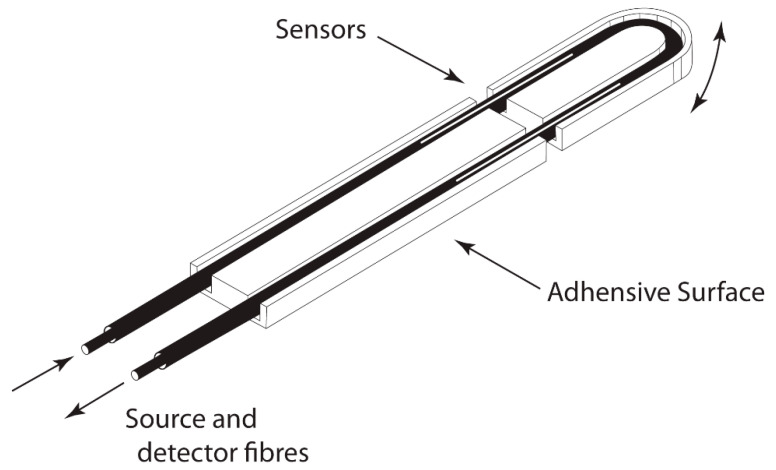
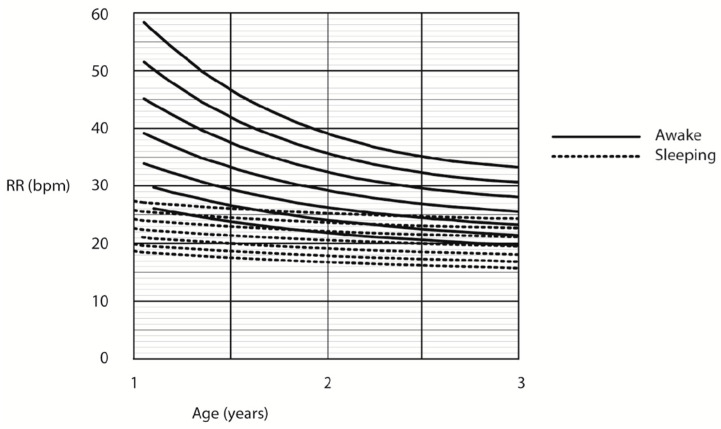
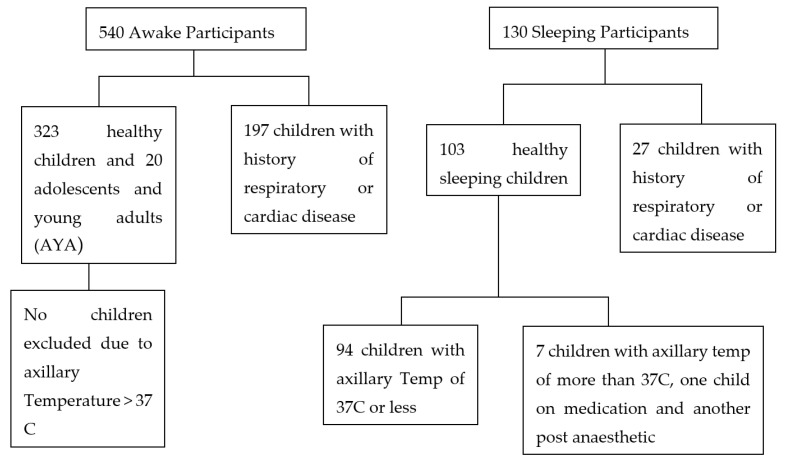
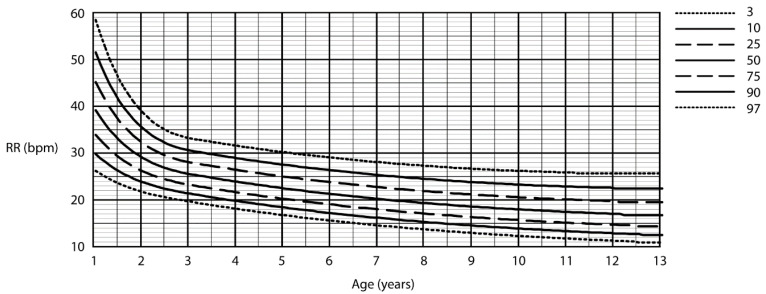
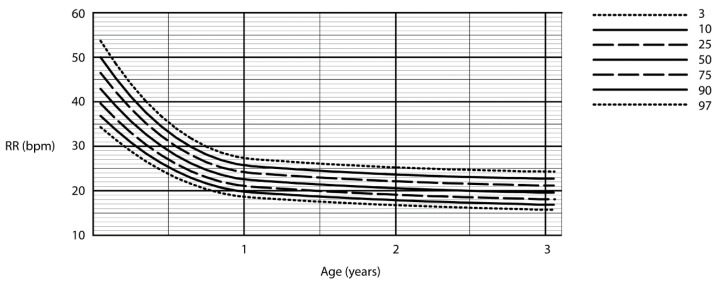
(1) Background: Increased respiratory rates (RRs) are described in several medical conditions, including pneumonia, bronchiolitis and asthma. There is variable methodology on how centiles for RR are derived in healthy children. Available age percentiles for RR have been generated using methods that have the potential themselves to alter the rate. (2) Methods: An optical respiratory sensor was used to measure RR. This technique enabled recording in awake children without the artefact of the observer's presence on the subject's RR. A cross-sectional sample of healthy children was obtained from maternity wards, childcare centres and schools in Brisbane, Queensland, Australia. (3) Results: RRs were observed in 560 awake and 103 sleeping children of which data from 320 awake and 94 sleeping children were used to develop centile charts for children from birth to 13 years of age. RR is higher when children are awake compared to asleep. There were significant differences between awake and sleeping RR in young children. The awake median RR was 59.3 at birth and 25.4 at 3 years of age. In comparison, the median sleeping RR was 41.4 at birth and 22.0 at 3 years. (4) Conclusions: The centile charts will assist in determining abnormal RRs in children and will contribute to further systematic reviews related to this important vital sign. This is particularly in relation to the data on children aged from 0 to 3 years, where data are presented on both the awake and sleeping state. Many studies in the literature fail to acknowledge the impact of sleep state in young children on RR.
(1) 背景:在包括肺炎、支气管炎和哮喘在内的多种病症中,呼吸频率(RR)会升高。关于如何得出健康儿童RR百分位数的方法存在差异。现有的RR年龄百分位数是使用本身有可能改变该频率的方法生成的。(2) 方法:使用光学呼吸传感器测量RR。该技术能够在清醒儿童中进行记录,而不会因观察者在场对受试者的RR产生人为干扰。从澳大利亚昆士兰州布里斯班的产科病房、儿童保育中心和学校获取了健康儿童的横断面样本。(3) 结果:观察了560名清醒儿童和103名睡眠儿童的RR,其中320名清醒儿童和94名睡眠儿童的数据用于绘制从出生到13岁儿童的百分位数图表。与睡眠时相比,儿童清醒时的RR更高。幼儿清醒和睡眠时的RR存在显著差异。清醒时RR的中位数在出生时为59.3,3岁时为25.4。相比之下,睡眠时RR的中位数在出生时为41.4,3岁时为22.0。(4) 结论:这些百分位数图表将有助于确定儿童的异常RR,并将有助于对这一重要生命体征进行进一步的系统评价。这尤其与0至3岁儿童的数据有关,其中呈现了清醒和睡眠状态下的数据。文献中的许多研究未能认识到幼儿睡眠状态对RR的影响。