Kim Minjeong, Lee Eugenia Jin, Lim Kyung-Min
College of Pharmacy, Ewha Womans University, Seoul 37060, Republic of Korea.
Department of Biological Sciences, Columbia College, Columbia University, NY 10027, USA.
Biomol Ther (Seoul). 2021 Mar 1;29(2):205-210. doi: 10.4062/biomolther.2020.108.
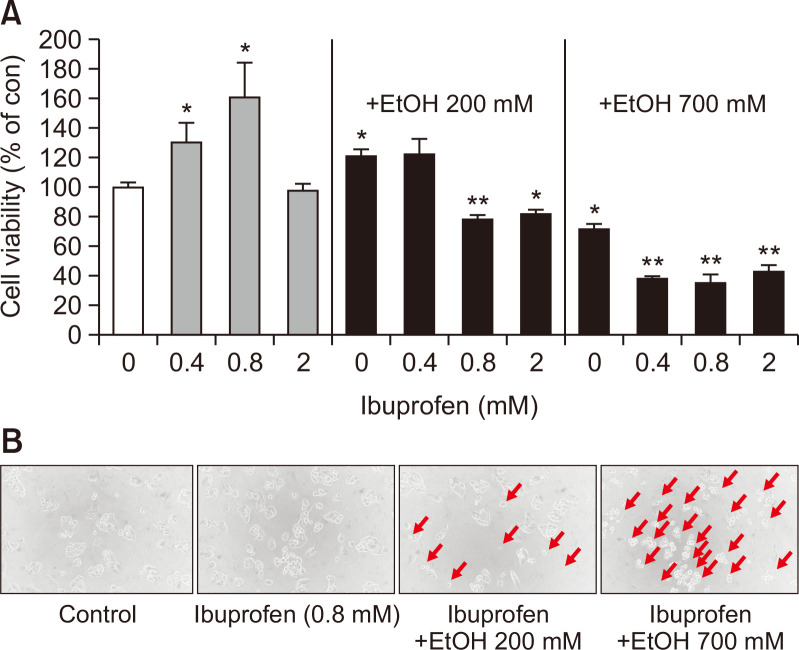
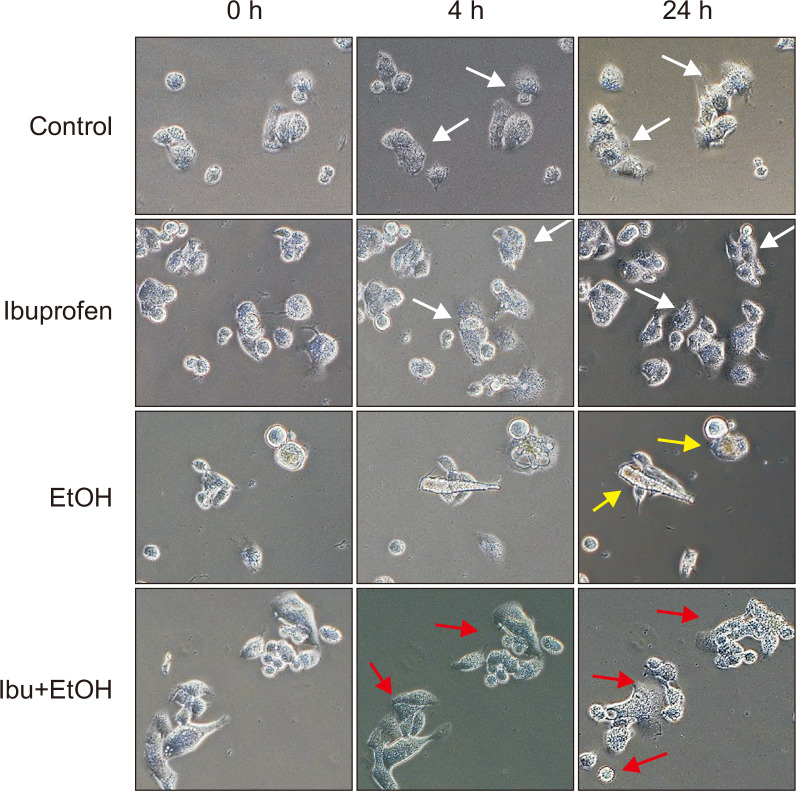
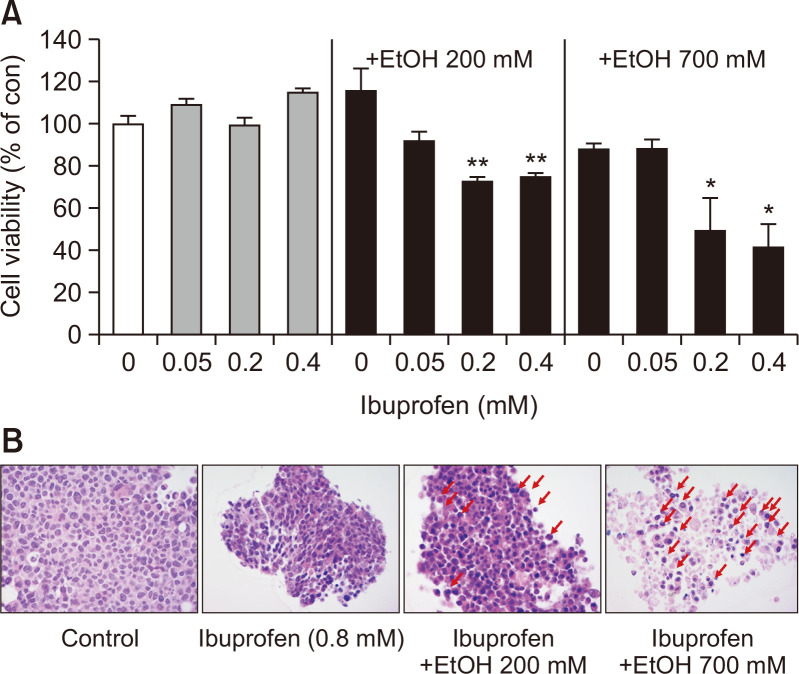
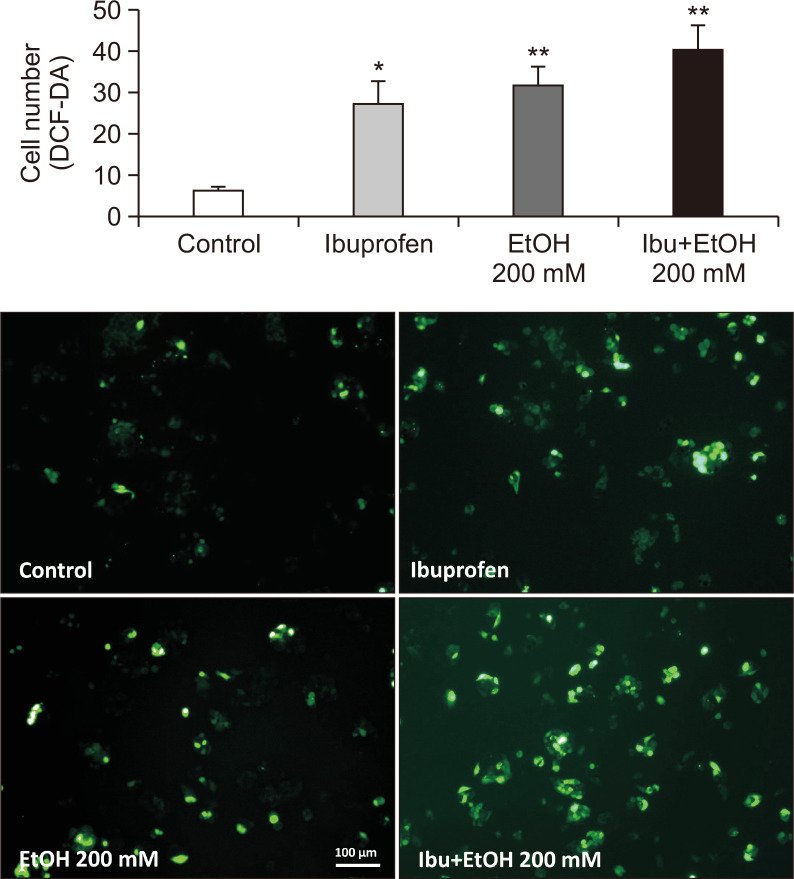
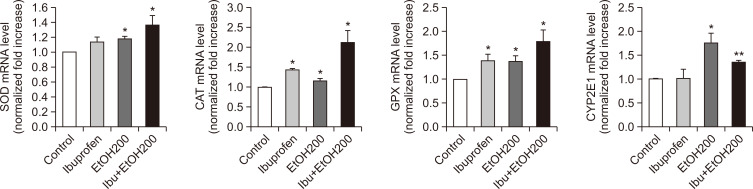
Over 30 million prescriptions of NSAIDs (non-steroidal anti-inflammatory drugs) are issued every year. Considering that these drugs are available without a prescription as over the counter (OTC) drugs, their use will be astronomical. With the increasing use of NSAIDs, their adverse effects are drawing attention. Especially, stomach bleeding, kidney toxicity, liver toxicity, and neurological toxicity are reported as common. Ibuprofen, one of the extensively used NSAIDs along with aspirin, can also induce liver toxicity, but few studies are addressing this point. Here we examined the liver toxicity of ibuprofen and investigated whether co-exposure to ethanol can manifest synergistic effects. We employed 2D and 3D cultured human hepatoma cells, HepG2 to examine the synergistic hepatotoxicity of ibuprofen and alcohol concerning cell viability, morphology, and histology of 3D spheroids. As a result, ibuprofen and alcohol provoked synergistic hepatotoxicity against hepatocytes, and their toxicity increased prominently in 3D culture upon extended exposure. Oxidative stress appeared to be the mechanisms underlying the synergistic toxicity of ibuprofen and alcohol as evidenced by increased production of ROS and expression of the endogenous antioxidant system. Collectively, this study has demonstrated that ibuprofen and EtOH can induce synergistic hepatotoxicity, providing a line of evidence for caution against the use of ibuprofen in combination with alcohol.
每年开出的非甾体抗炎药(NSAIDs)处方超过3000万份。鉴于这些药物作为非处方药无需处方即可获得,其使用量将是巨大的。随着NSAIDs使用的增加,它们的不良反应受到关注。特别是,胃出血、肾毒性、肝毒性和神经毒性被报道很常见。布洛芬是与阿司匹林一起广泛使用的NSAIDs之一,也可诱发肝毒性,但很少有研究涉及这一点。在这里,我们研究了布洛芬的肝毒性,并调查了同时接触乙醇是否会产生协同作用。我们使用二维和三维培养的人肝癌细胞HepG2来研究布洛芬和酒精对三维球体的细胞活力、形态和组织学的协同肝毒性。结果,布洛芬和酒精对肝细胞产生了协同肝毒性,并且在长时间暴露后,它们在三维培养中的毒性显著增加。活性氧的产生增加和内源性抗氧化系统的表达证明,氧化应激似乎是布洛芬和酒精协同毒性的潜在机制。总的来说,这项研究表明布洛芬和乙醇可诱导协同肝毒性,为谨慎使用布洛芬与酒精的组合提供了一系列证据。