Abdel Tawab Abdallah Mohamed, Said Hatem G, Ramadan Eslam Karam Allah, Abd El-Radi Mohamed, El-Assal Maher A
Resident of Orthopedic Surgery, Faculty of Medicine, Assiut University, 71515 Assiut, Egypt.
Professor of Orthopedics and Traumatology, Faculty of Medicine, Assiut University, 71515 Assiut, Egypt.
SICOT J. 2020;6:39. doi: 10.1051/sicotj/2020030. Epub 2020 Oct 7.
Evaluation of clinical and radiological outcomes following meniscal repair using different arthroscopic techniques for all meniscal tears amenable for repair.
Sixty-one patients were involved in a prospective study; all cases presented with meniscal tears underwent arthroscopic meniscal repair from December 2016 to December 2017. Outcomes involved the site of tear, the repair technique, and associated injuries. The International Knee Documentation Committee Score (IKDC) and Tegner Lysholm Knee Score were used to analyze the clinical and functional outcomes postoperatively.
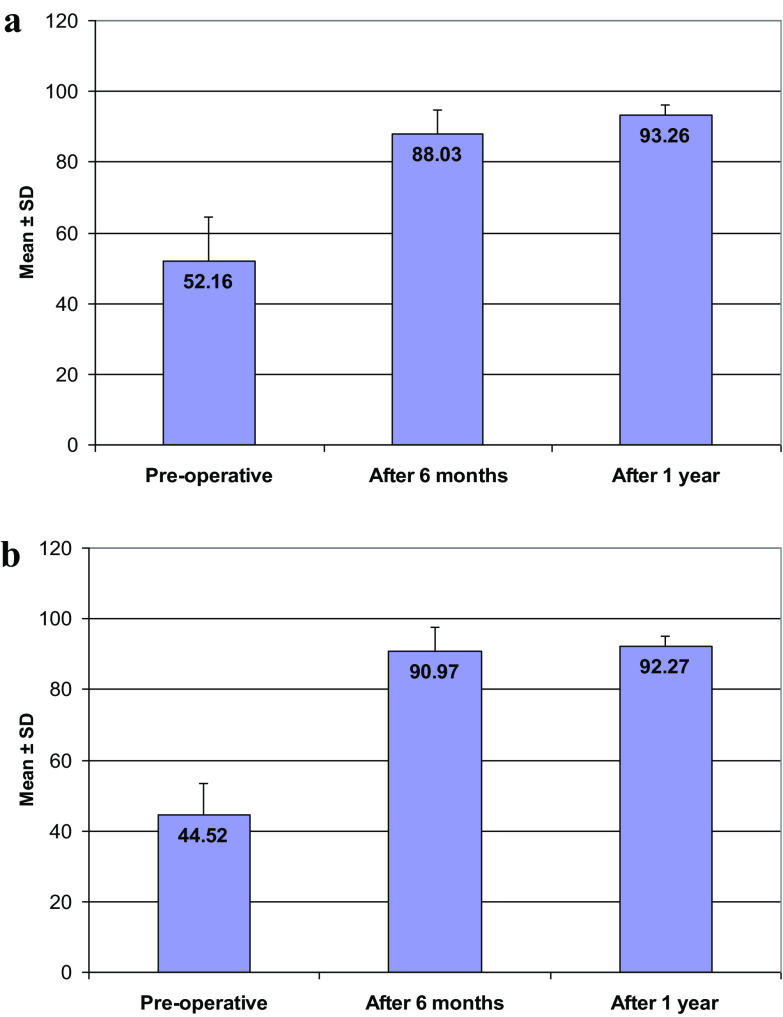
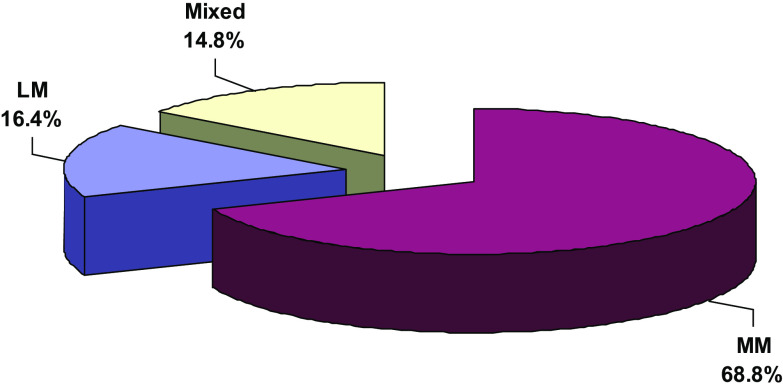
Of the 61 patients, 50 patients (81.9%) had meniscal tear associated with isolated ligamentous ACL injury, 6 cases had corrective osteotomy with ACL reconstruction to correct concomitant genu varus, 2 cases (3.3%) had meniscal tear associated with isolated ligamentous PCL injury, and 9 patients (14.8%) presented with isolated meniscal tear; IKDC was preoperatively (44.52 ± 8.79), postoperatively at 6 months (90.97 ± 6.75) and at 12 months (92.27 ± 2.68) with P-value (0.001). Tegner Lysholm score was preoperatively (52.16 ± 12.22), postoperatively at 6 months (88.03 ± 6.84) and at 12 months (93.26 ± 2.95) with P-value (0.001). Fifty eight patients (95.1%) had no postoperative symptoms at 6 and 12 months' follow-up. The remaining 3 cases (4.9%) underwent partial meniscectomy due to persistent postoperative clinical symptoms with no signs of healing in MRI.
Our study concluded that arthroscopic meniscal repair is an effective way in the management of meniscal tears regarding clinical and functional outcomes.
评估使用不同关节镜技术对所有适合修复的半月板撕裂进行半月板修复后的临床和影像学结果。
61例患者参与了一项前瞻性研究;2016年12月至2017年12月期间,所有出现半月板撕裂的病例均接受了关节镜下半月板修复。结果包括撕裂部位、修复技术及相关损伤。采用国际膝关节文献委员会评分(IKDC)和泰格纳·利霍尔姆膝关节评分来分析术后的临床和功能结果。
61例患者中,50例(81.9%)半月板撕裂合并孤立性韧带前交叉韧带损伤,6例进行了矫正截骨术并同时进行前交叉韧带重建以矫正合并的膝内翻,2例(3.3%)半月板撕裂合并孤立性韧带后交叉韧带损伤,9例(14.8%)为单纯半月板撕裂;IKDC术前为(44.52±8.79),术后6个月为(90.97±6.75),术后12个月为(92.27±2.68),P值为(0.001)。泰格纳·利霍尔姆评分术前为(52.16±12.22),术后6个月为(88.03±6.84),术后12个月为(93.26±2.95),P值为(0.001)。58例(95.1%)患者在6个月和12个月随访时无术后症状。其余3例(4.9%)因术后持续临床症状且磁共振成像无愈合迹象而接受了部分半月板切除术。
我们的研究得出结论,关节镜下半月板修复在半月板撕裂的临床和功能结果管理方面是一种有效的方法。