Department of Orthopaedic Surgery, Tokorozawa Chuo Hospital, Tokorozawa, Saitama, Japan.
Gunma Sports Medicine Research Center, Zenshukai Hospital, Maebashi, Gunma, Japan.
Orthop J Sports Med. 2014 Nov 10;2(11):2325967114555678. doi: 10.1177/2325967114555678. eCollection 2014 Nov.
Presently, the treatment options available for patients with horizontal degenerative cleavage tears of the meniscus are limited. These tears are considered an indication for partial or subtotal meniscectomy because when the tear is located within an avascular area, it is difficult to induce healing. However, meniscectomy is not ideal because it disrupts the normal anatomical structure and function of the meniscus.
To examine the clinical and arthroscopic outcomes following meniscal repair of degenerative horizontal cleavage tears using fibrin clots.
Case series; Level of evidence, 4.
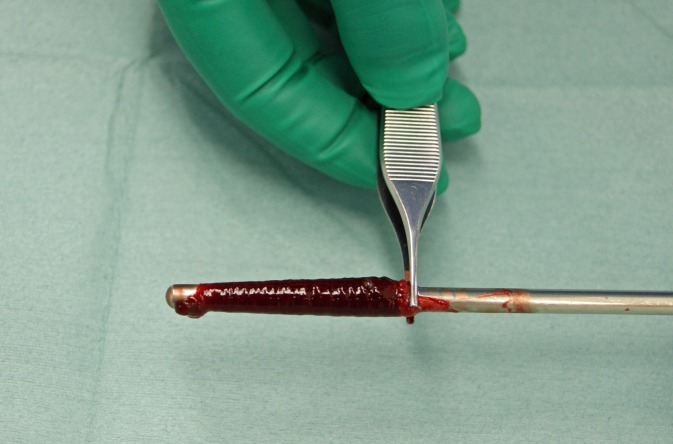
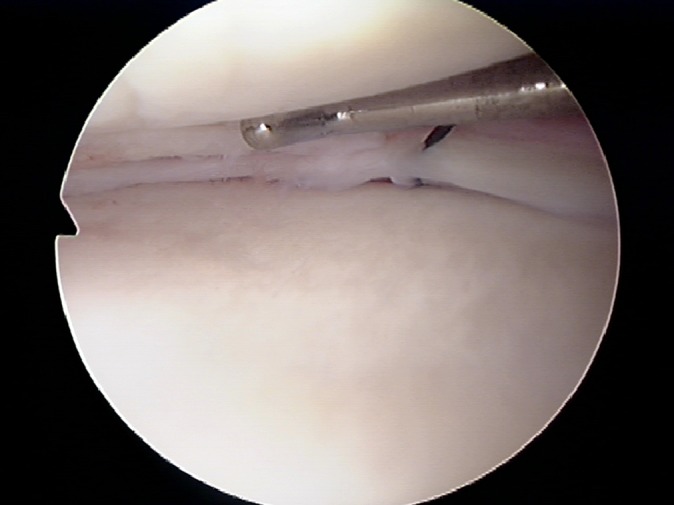
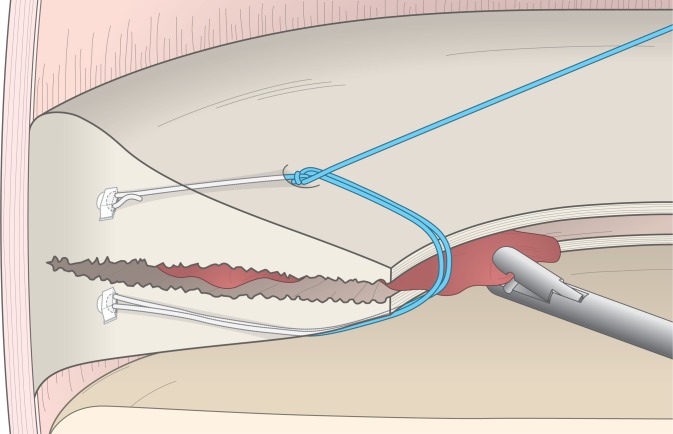
Vertical sutures were placed in the meniscal tear, and the cleft was filled with fibrin clots before the sutures were tightened. We repaired 18 menisci in 18 consecutive eligible patients using a previously described technique. Three patients with anterior cruciate ligament (ACL) injury who underwent simultaneous ACL reconstruction and 5 patients who did not undergo follow-up arthroscopy within 12 months were excluded. The remaining 10 menisci in 10 patients were evaluated in this study. The mean age of the patients was 35.8 ± 16.5 years, and the mean postoperative follow-up time was 40.8 ± 5.4 months. Pre- and postoperative Lysholm scores, International Knee Documentation Committee (IKDC) subjective scores, and Tegner activity levels were compared. The arthroscopy findings were evaluated at a mean postoperative time of 6.7 ± 2.9 months.
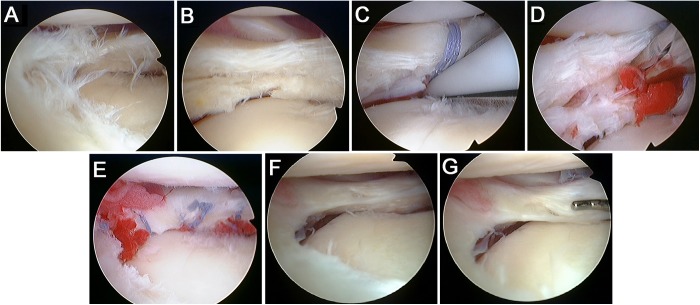
The mean Lysholm score improved significantly from 69.3 ± 16.3 points preoperatively to 95.4 ± 3.6 points postoperatively (P < .005). The mean IKDC subjective score also improved significantly from 26.5% ± 19.0% preoperatively to 87.8% ± 7.5% postoperatively (P < .001). The Tegner activity level recovered to the preinjury level in 6 patients and to 1 level below the preinjury level in 4 patients. The follow-up arthroscopies showed complete healing in 7 patients (70%) and incomplete healing in 3 patients (30%).
Meniscal repair of degenerative horizontal cleavage tears using fibrin clots resulted in improved Lysholm and IKDC subjective scores, but the complete healing rate on follow-up arthroscopy was only 70%.
If we are to prevent osteoarthritis, we should minimize resection and restore the contact area of the meniscus to preserve the original shape.
目前,对于半月板水平退行性撕裂的患者,治疗选择有限。这些撕裂被认为是半月板部分或次全切除术的指征,因为当撕裂位于无血管区域时,很难诱导愈合。然而,半月板切除术并不理想,因为它破坏了半月板的正常解剖结构和功能。
使用纤维蛋白凝块检查半月板修复退行性水平撕裂的临床和关节镜结果。
病例系列;证据水平,4 级。
在半月板撕裂处放置垂直缝线,缝线收紧前用纤维蛋白凝块填充裂隙。我们使用先前描述的技术修复了 18 名连续符合条件的患者的 18 个半月板。3 例前交叉韧带(ACL)损伤患者同时接受 ACL 重建,5 例患者在 12 个月内未行后续关节镜检查,排除在本研究之外。在这项研究中评估了 10 名患者的 10 个半月板。患者的平均年龄为 35.8 ± 16.5 岁,平均术后随访时间为 40.8 ± 5.4 个月。比较术前和术后 Lysholm 评分、国际膝关节文献委员会(IKDC)主观评分和 Tegner 活动水平。关节镜检查结果在平均术后 6.7 ± 2.9 个月进行评估。
Lysholm 评分从术前的 69.3 ± 16.3 分显著提高到术后的 95.4 ± 3.6 分(P <.005)。IKDC 主观评分也从术前的 26.5% ± 19.0%显著提高到术后的 87.8% ± 7.5%(P <.001)。6 例患者的 Tegner 活动水平恢复到术前水平,4 例患者恢复到术前水平以下 1 级。随访关节镜检查显示 7 例(70%)完全愈合,3 例(30%)不完全愈合。
使用纤维蛋白凝块修复退行性水平半月板撕裂可改善 Lysholm 和 IKDC 主观评分,但随访关节镜检查的完全愈合率仅为 70%。
如果要预防骨关节炎,就应尽量减少切除,并恢复半月板的接触面积,以保持其原始形状。