Scheible Raphael, Kadioglu Dennis, Ehl Stephan, Blum Marco, Boeker Martin, Folz Michael, Grimbacher Bodo, Göbel Jens, Klein Christoph, Nieters Alexandra, Rusch Stephan, Kindle Gerhard, Storf Holger
Institute of Medical Biometry and Statistics, Medical Center, Faculty of Medicine, University of Freiburg, Freiburg, Germany.
Institute for Immunodeficiency, Center for Chronic Immunodeficiency, Medical Center, Faculty of Medicine, University of Freiburg, Freiburg, Germany.
JMIR Med Inform. 2020 Oct 7;8(10):e17420. doi: 10.2196/17420.
The German Network on Primary Immunodeficiency Diseases (PID-NET) utilizes the European Society for Immunodeficiencies (ESID) registry as a platform for collecting data. In the context of PID-NET data, we show how registries based on custom software can be made interoperable for better collaborative access to precollected data. The Open Source Registry System for Rare Diseases (Open-Source-Registersystem für Seltene Erkrankungen [OSSE], in German) provides patient organizations, physicians, scientists, and other parties with open source software for the creation of patient registries. In addition, the necessary interoperability between different registries based on the OSSE, as well as existing registries, is supported, which allows those registries to be confederated at both the national and international levels.
Data from the PID-NET registry should be made available in an interoperable manner without losing data sovereignty by extending the existing custom software of the registry using the OSSE registry framework.
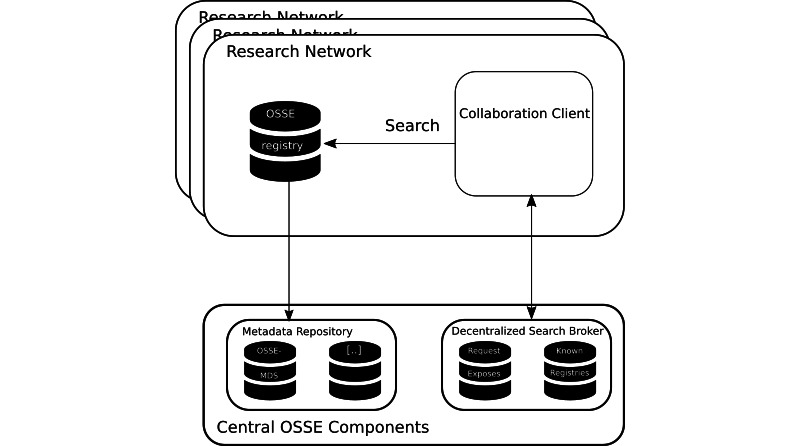
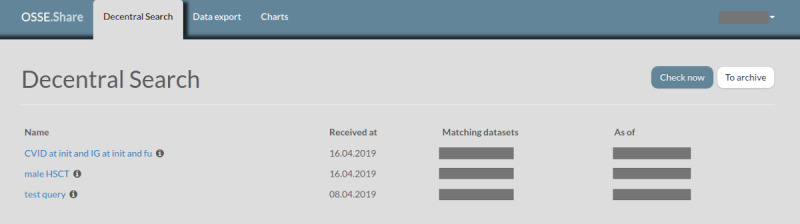
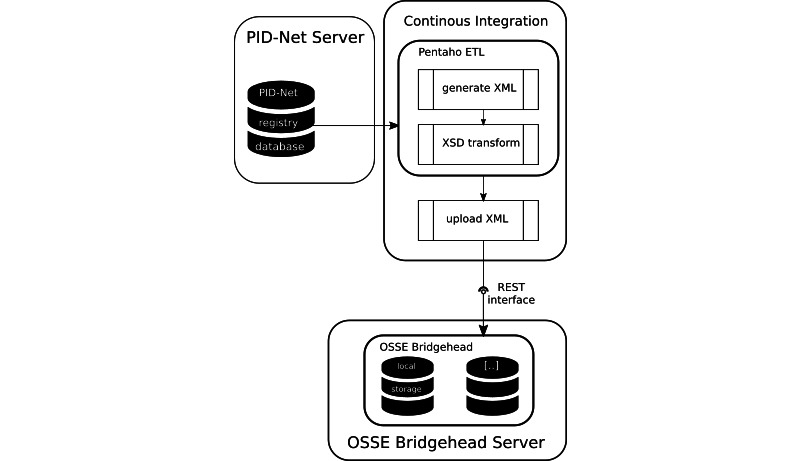
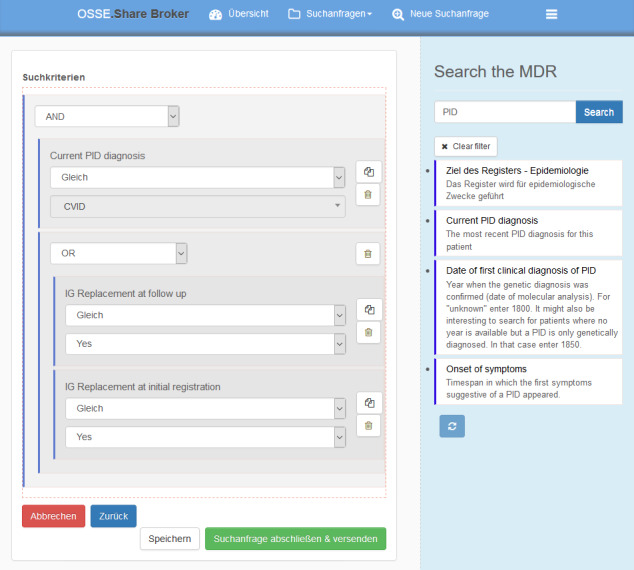
This paper describes the following: (1) the installation and configuration of the OSSE bridgehead, (2) an approach using a free toolchain to set up the required interfaces to connect a registry with the OSSE bridgehead, and (3) the decentralized search, which allows the formulation of inquiries that are sent to a selected set of registries of interest.
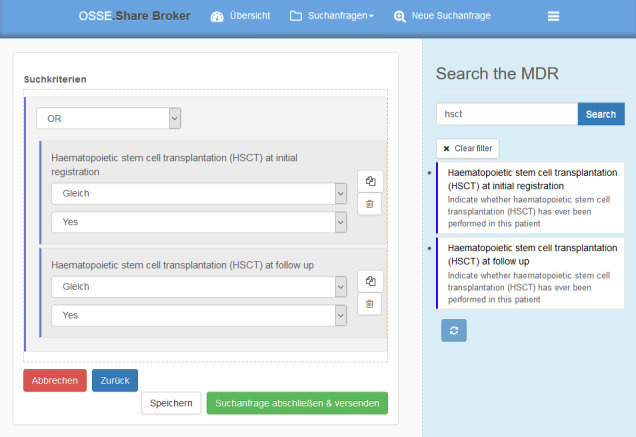
PID-NET uses the established and highly customized ESID registry software. By setting up a so-called OSSE bridgehead, PID-NET data are made interoperable according to a federated approach, and centrally formulated inquiries for data can be received. As the first registry to use the OSSE bridgehead, the authors introduce an approach using a free toolchain to efficiently implement and maintain the required interfaces. Finally, to test and demonstrate the system, two inquiries are realized using the graphical query builder. By establishing and interconnecting an OSSE bridgehead with the underlying ESID registry, confederated queries for data can be received and, if desired, the inquirer can be contacted to further discuss any requirements for cooperation.
The OSSE offers an infrastructure that provides the possibility of more collaborative and transparent research. The decentralized search functionality includes registries into one search application while still maintaining data sovereignty. The OSSE bridgehead enables any registry software to be integrated into the OSSE network. The proposed toolchain to set up the required interfaces consists of freely available software components that are well documented. The use of the decentralized search is uncomplicated to use and offers a well-structured, yet still improvable, graphical user interface to formulate queries.
德国原发性免疫缺陷病网络(PID-NET)利用欧洲免疫缺陷学会(ESID)登记系统作为数据收集平台。在PID-NET数据的背景下,我们展示了基于定制软件的登记系统如何实现互操作性,以便更好地协作访问预先收集的数据。开源罕见病登记系统(德语:Open-Source-Registersystem für Seltene Erkrankungen [OSSE])为患者组织、医生、科学家和其他各方提供用于创建患者登记册的开源软件。此外,它支持基于OSSE的不同登记系统以及现有登记系统之间必要的互操作性,这使得这些登记系统能够在国家和国际层面联合起来。
通过使用OSSE登记框架扩展登记系统现有的定制软件,以一种互操作的方式提供PID-NET登记系统的数据,同时不丧失数据主权。
本文描述了以下内容:(1)OSSE桥头堡的安装和配置;(2)使用免费工具链设置所需接口以将登记系统与OSSE桥头堡连接的方法;(3)分散式搜索,它允许制定发送到选定的一组感兴趣登记系统的查询。
PID-NET使用已建立且高度定制的ESID登记软件。通过设置所谓的OSSE桥头堡,PID-NET数据根据联合方法实现互操作性,并且可以接收集中制定的数据查询。作为第一个使用OSSE桥头堡的登记系统,作者介绍了一种使用免费工具链来有效实现和维护所需接口的方法。最后,为了测试和演示该系统,使用图形查询构建器实现了两个查询。通过建立OSSE桥头堡并将其与底层的ESID登记系统互连,可以接收联合数据查询,并且如果需要,可以联系查询者进一步讨论任何合作要求。
OSSE提供了一种基础设施,使得更具协作性和透明度的研究成为可能。分散式搜索功能将各个登记系统纳入一个搜索应用程序,同时仍保持数据主权。OSSE桥头堡使任何登记软件都能集成到OSSE网络中。所提议的用于设置所需接口的工具链由文档完善的免费软件组件组成。分散式搜索的使用简单易懂,并提供了一个结构良好但仍可改进的图形用户界面来制定查询。