Division of Navigation and Information Systems, Mokpo National Maritime University, Mokpo 58628, Korea.
Department of Physical Education, Kyung Hee University, Yongin 17104, Korea.
Int J Environ Res Public Health. 2020 Oct 5;17(19):7266. doi: 10.3390/ijerph17197266.
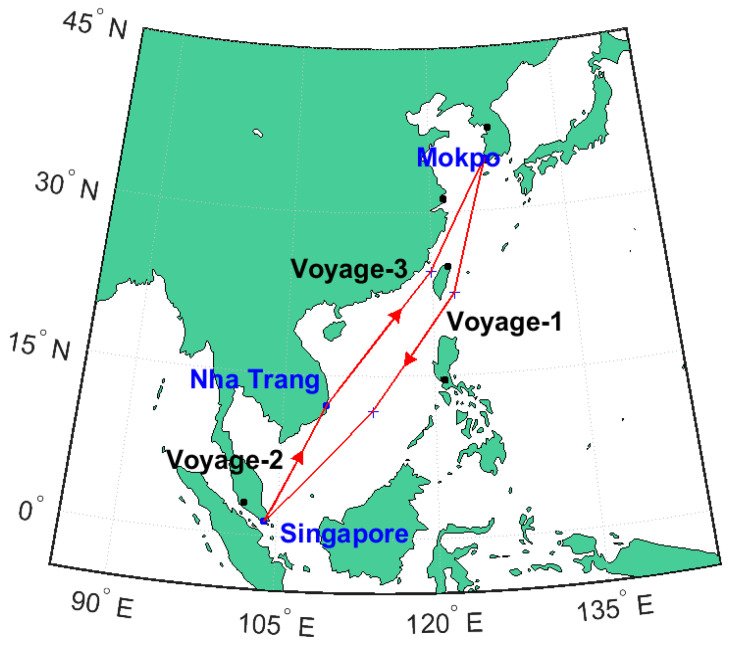
Prolonged ocean voyages constrain the regular physical activity and sleep patterns of seafarers. However, there is a lack of information on seafarers' physical activity and sleep behavior. The purpose of this study was to systematically examine physical activity and sleep patterns among seafarers using a single wrist-worn accelerometer. Fifty-one senior maritime students (mean age = 22.8 years; 80.0% male) in a university navigation department participated in the study. Data were collected from participants on three sea voyages in the Asia-Pacific region. Indicators of moderate to vigorous intensity physical activity (MVPA) and sleep patterns were compared between several conditions: (1) moored versus sailing, (2) on-navigation duty and off- navigation duty, and (3) day versus night navigation duty. Regardless of conditions, low levels of physical activity and short sleep durations were observed. Independent sample t-tests revealed that time spent doing MVPA was significantly higher when participants were off-duty than when they were on-duty ( < 0.001). Physical activity did not significantly differ between the other two conditions. While total sleep duration was not significantly different between mooring and sailing, the results showed that participants awakened more frequently ( = 0.007) and their sleep was more restless ( < 0.001) while sailing. The results demonstrated that developing effective programs to promote physical activity should be a public health priority for the seafaring population, and serious consideration is required to mitigate sleep disruption during sailing.
远洋航行限制了海员的常规身体活动和睡眠模式。然而,关于海员身体活动和睡眠行为的信息却很匮乏。本研究旨在通过单个腕戴式加速度计系统地检查海员的身体活动和睡眠模式。在一所航海系,有 51 名高级航海专业学生(平均年龄=22.8 岁;80.0%为男性)参与了这项研究。数据是在亚太地区的三次航海中从参与者那里收集的。比较了几种情况下的中度至剧烈强度身体活动(MVPA)和睡眠模式指标:(1)停泊与航行,(2)航海值班和非航海值班,(3)白天和夜间航海值班。无论在什么情况下,观察到的身体活动水平和睡眠时间都很短。独立样本 t 检验显示,参与者在非值班时进行 MVPA 的时间明显高于值班时( < 0.001)。其他两种情况下,身体活动没有明显差异。虽然停泊和航行时的总睡眠时间没有显著差异,但结果表明,参与者在航行时更频繁地醒来( = 0.007),睡眠更不安( < 0.001)。结果表明,为海员人群制定促进身体活动的有效计划应成为公共卫生的重点,同时需要认真考虑减轻航行时的睡眠中断问题。