Sadler Sean, Spink Martin, de Jonge Xanne Janse, Chuter Vivienne
Discipline of Podiatry, University of Newcastle, Ourimbah, NSW, 2258, Australia.
Priority Research Centre for Physical Activity and Nutrition, University of Newcastle, Newcastle, NSW, 2308, Australia.
BMC Musculoskelet Disord. 2020 Oct 7;21(1):655. doi: 10.1186/s12891-020-03683-7.
Abnormal gluteus medius muscle activity is associated with a number of musculoskeletal conditions. Research investigating the effect of foot type and foot orthoses on gluteus medius muscle activity is both conflicting and limited. The primary aim was to investigate the relationship between foot type and gluteus medius muscle activity during shod walking. The secondary aims of this study were to explore the effect and amount of usage of a pair of unmodified prefabricated foot orthoses on gluteus medius muscle activity during shod walking.
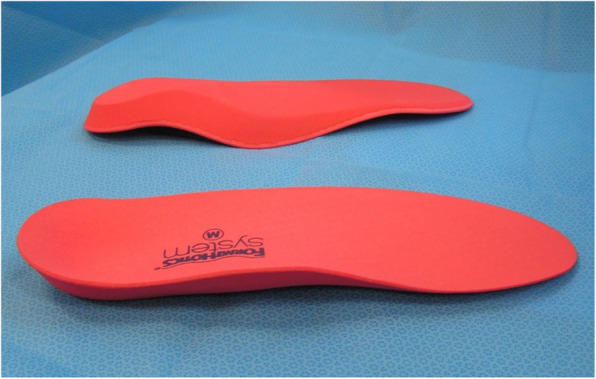
Foot type was determined using the foot posture index and gluteus medius muscle activity was measured with surface electromyography in 50 healthy adults during shod walking. Participants were then fitted with prefabricated foot orthoses and required to return after 4 weeks. Pearson's correlation and one-way ANOVA were used to determine effect of foot type. Paired t-tests and ANCOVA were used to determine effect of foot orthoses.
Participants with a cavus foot type demonstrated significantly more gluteus medius mean (p = 0.04) and peak amplitude (p = 0.01), and a greater range in amplitude (p = 0.01) compared to participants with a neutral foot type. Compared to a planus foot type, participants with a cavus foot type demonstrated significantly larger mean (p = 0.02) and peak amplitude (p = 0.01), and a greater range in amplitude (p = 0.01). Prefabricated foot orthoses did not change the gluteus medius muscle activity.
When assessing healthy adults with a cavus foot type, clinicians and researchers should be aware that these participants may display higher levels of gluteus medius muscle activity during gait compared to neutral and planus type feet. Additionally, clinicians and researchers should be aware that the type of prefabricated foot orthoses used did not change gluteus medius muscle activity over 4 weeks. Future research should aim to explore this relationship between foot type and gluteus medius muscle activity in larger sample sizes, consider the potential role of other lower extremity muscles and biomechanical variables, and investigate if these findings also occur in people with pathology.
臀中肌异常活动与多种肌肉骨骼疾病相关。关于足型和足矫形器对臀中肌活动影响的研究结果相互矛盾且有限。主要目的是研究穿鞋行走时足型与臀中肌活动之间的关系。本研究的次要目的是探讨一对未改良的预制足矫形器在穿鞋行走时对臀中肌活动的影响及使用量。
采用足姿势指数确定足型,并在50名健康成年人穿鞋行走时用表面肌电图测量臀中肌活动。然后为参与者佩戴预制足矫形器,并要求他们在4周后返回。使用Pearson相关性分析和单因素方差分析来确定足型的影响。配对t检验和协方差分析用于确定足矫形器的影响。
与正常足型参与者相比,高弓足型参与者的臀中肌平均活动(p = 0.04)、峰值幅度(p = 0.01)显著更高,且幅度范围更大(p = 0.01)。与扁平足型相比,高弓足型参与者的平均活动(p = 0.02)、峰值幅度(p = 0.01)显著更大,且幅度范围更大(p = 0.01)。预制足矫形器未改变臀中肌活动。
在评估高弓足型的健康成年人时,临床医生和研究人员应意识到,与正常足型和扁平足型相比,这些参与者在步态中可能表现出更高水平的臀中肌活动。此外,临床医生和研究人员应意识到,所使用的预制足矫形器类型在4周内未改变臀中肌活动。未来的研究应旨在以更大的样本量探索足型与臀中肌活动之间的这种关系,考虑其他下肢肌肉和生物力学变量的潜在作用,并研究这些发现是否也出现在患有疾病的人群中。