Chew Nicholas W S, Ngiam Jinghao Nicholas, Tan Benjamin Yong-Qiang, Tham Sai-Meng, Tan Celine Yan-Shan, Jing Mingxue, Sagayanathan Renarebecca, Chen Jin Tao, Wong Lily Y H, Ahmad Aftab, Khan Faheem Ahmed, Marmin Maznah, Hassan Fadhlina Binte, Sharon Tai Mei-Ling, Lim Chin Han, Mohaini Mohamad Iqbal Bin, Danuaji Rivan, Nguyen Thang H, Tsivgoulis Georgios, Tsiodras Sotirios, Fragkou Paraskevi C, Dimopoulou Dimitra, Sharma Arvind K, Shah Kenam, Patel Bhargesh, Sharma Suktara, Komalkumar R N, Meenakshi R V, Talati Shikha, Teoh Hock Luen, Ho Cyrus S, Ho Roger C, Sharma Vijay K
Department of Medicine, National University Health System, Singapore.
Division of Neurology, Department of Medicine, National University Health System, Singapore; and Department of Medicine, Yong Loo Lin School of Medicine, National University of Singapore,Singapore.
BJPsych Open. 2020 Oct 8;6(6):e116. doi: 10.1192/bjo.2020.98.
The coronavirus disease 2019 (COVID-19) pandemic has led to significant strain on front-line healthcare workers.
In this multicentre study, we compared the psychological outcomes during the COVID-19 pandemic in various countries in the Asia-Pacific region and identified factors associated with adverse psychological outcomes.
From 29 April to 4 June 2020, the study recruited healthcare workers from major healthcare institutions in five countries in the Asia-Pacific region. A self-administrated survey that collected information on prior medical conditions, presence of symptoms, and scores on the Depression Anxiety Stress Scales and the Impact of Events Scale-Revised were used. The prevalence of depression, anxiety, stress and post-traumatic stress disorder (PTSD) relating to COVID-19 was compared, and multivariable logistic regression identified independent factors associated with adverse psychological outcomes within each country.
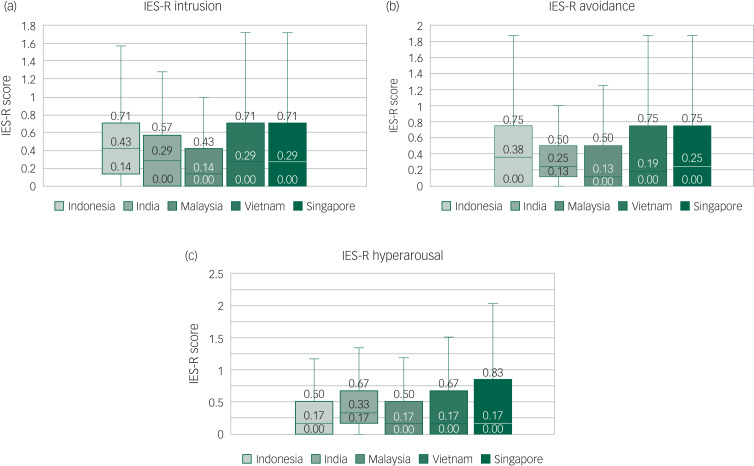
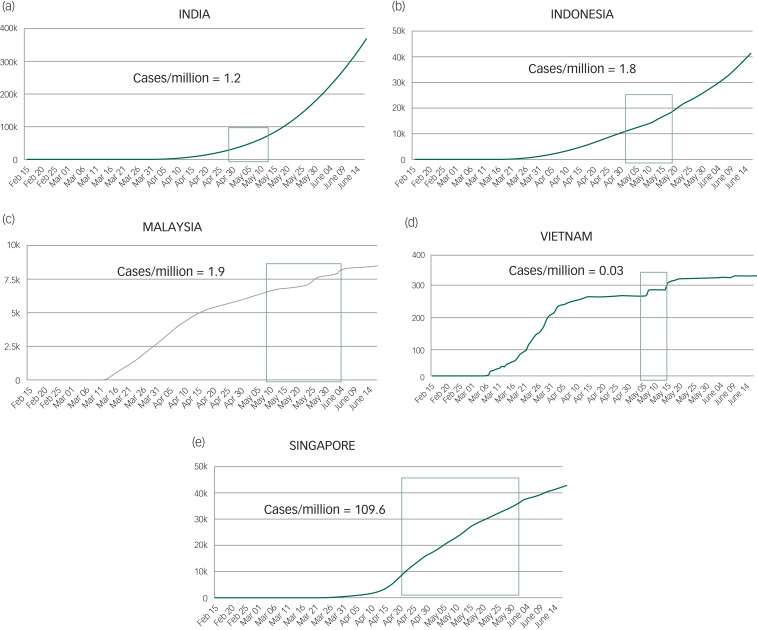
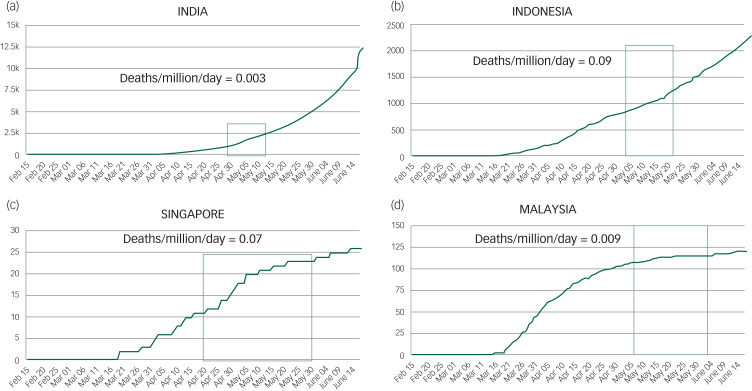
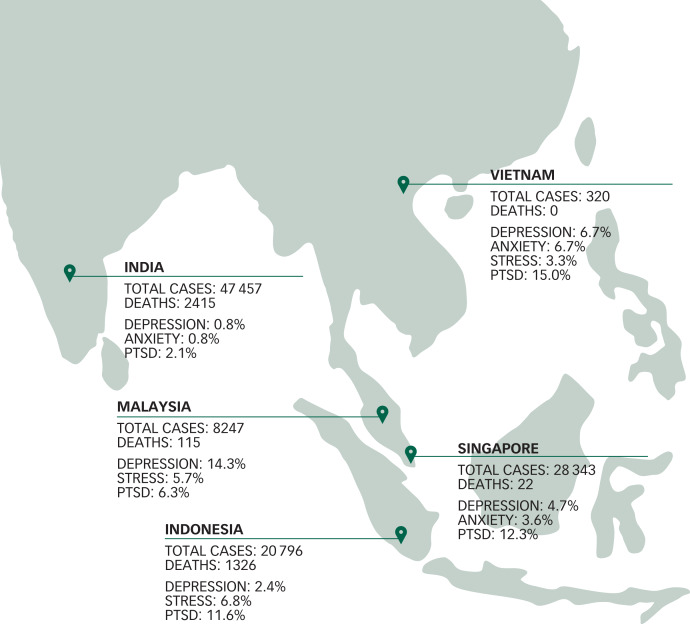
A total of 1146 participants from India, Indonesia, Singapore, Malaysia and Vietnam were studied. Despite having the lowest volume of cases, Vietnam displayed the highest prevalence of PTSD. In contrast, Singapore reported the highest case volume, but had a lower prevalence of depression and anxiety. In the multivariable analysis, we found that non-medically trained personnel, the presence of physical symptoms and presence of prior medical conditions were independent predictors across the participating countries.
This study highlights that the varied prevalence of psychological adversity among healthcare workers is independent of the burden of COVID-19 cases within each country. Early psychological interventions may be beneficial for the vulnerable groups of healthcare workers with presence of physical symptoms, prior medical conditions and those who are not medically trained.
2019年冠状病毒病(COVID-19)大流行给一线医护人员带来了巨大压力。
在这项多中心研究中,我们比较了亚太地区不同国家在COVID-19大流行期间的心理状况,并确定了与不良心理状况相关的因素。
2020年4月29日至6月4日,该研究从亚太地区五个国家的主要医疗机构招募医护人员。采用了一项自我管理的调查问卷,收集有关既往病史、症状表现以及抑郁焦虑压力量表和事件影响量表修订版得分的信息。比较了与COVID-19相关的抑郁、焦虑、压力和创伤后应激障碍(PTSD)的患病率,并通过多变量逻辑回归确定了每个国家内与不良心理状况相关的独立因素。
共对来自印度、印度尼西亚、新加坡、马来西亚和越南的1146名参与者进行了研究。尽管病例数最少,但越南的PTSD患病率最高。相比之下,新加坡报告的病例数最多,但其抑郁和焦虑的患病率较低。在多变量分析中,我们发现未接受过医学培训的人员、身体症状的存在以及既往病史是所有参与国家的独立预测因素。
本研究强调,医护人员中心理逆境的患病率各不相同,且与每个国家内COVID-19病例的负担无关。早期心理干预可能对有身体症状、既往病史的医护人员弱势群体以及未接受过医学培训的人员有益。