Gastrointestinal Medicine, Affiliated Hospital of YouJiang Medical University For Nationalities, Baise, Guangxi, 533000, P. R. China.
Laboratory Medicine, Affiliated Hospital of YouJiang Medical University For Nationalities, Baise, Guangxi, 533000, P. R. China.
Cell Death Dis. 2020 Oct 7;11(10):832. doi: 10.1038/s41419-020-2584-z.
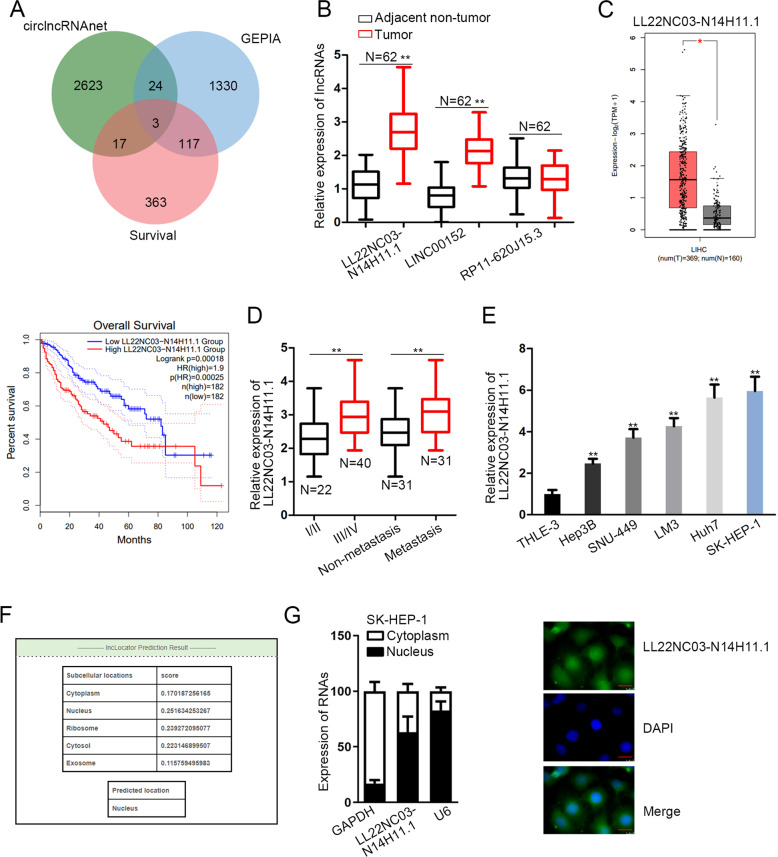
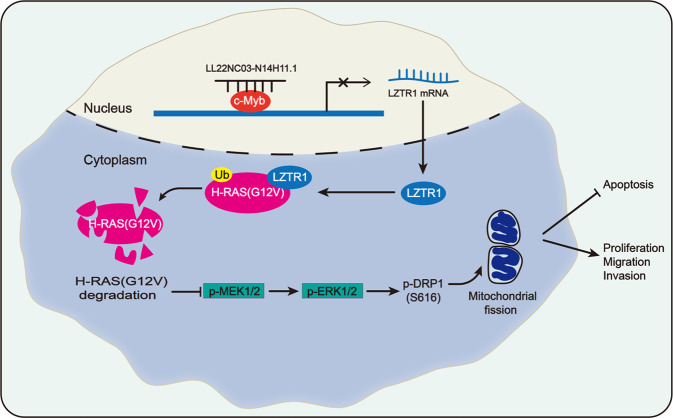
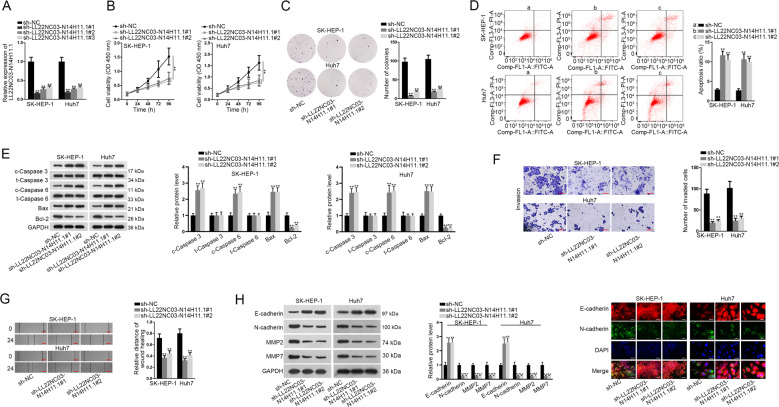
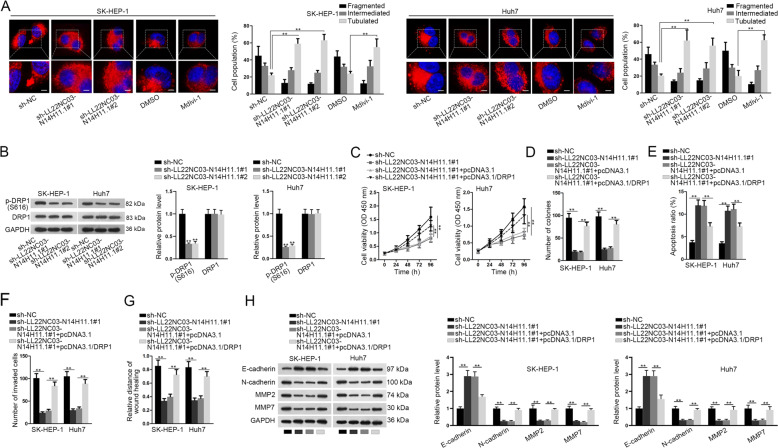
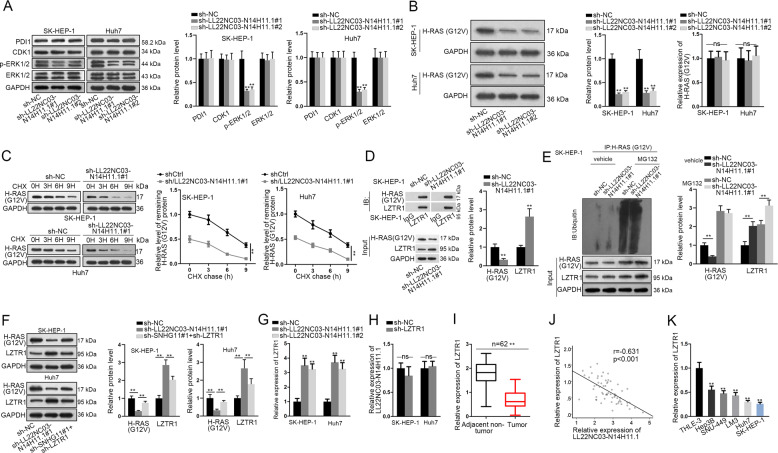
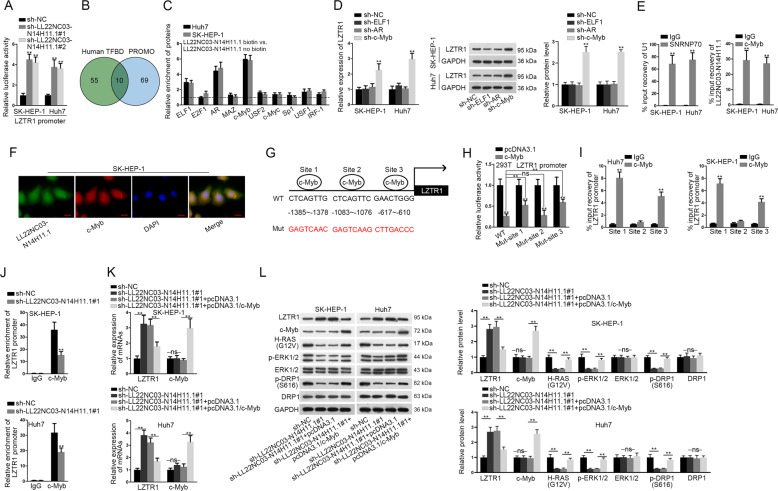
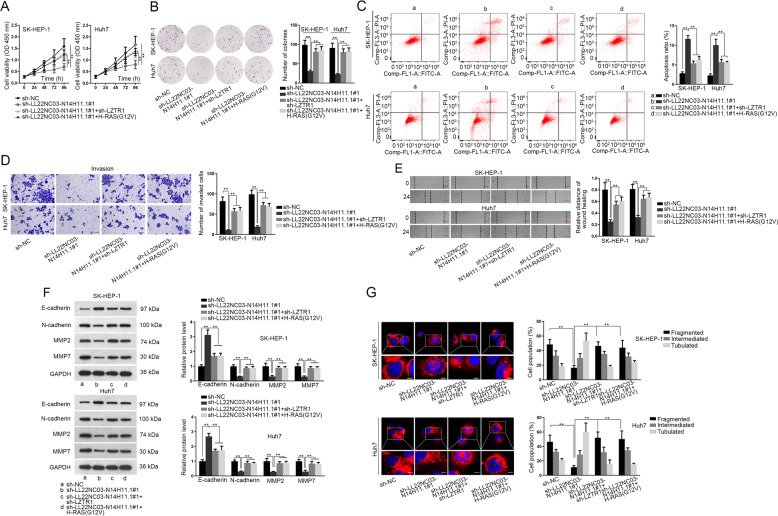
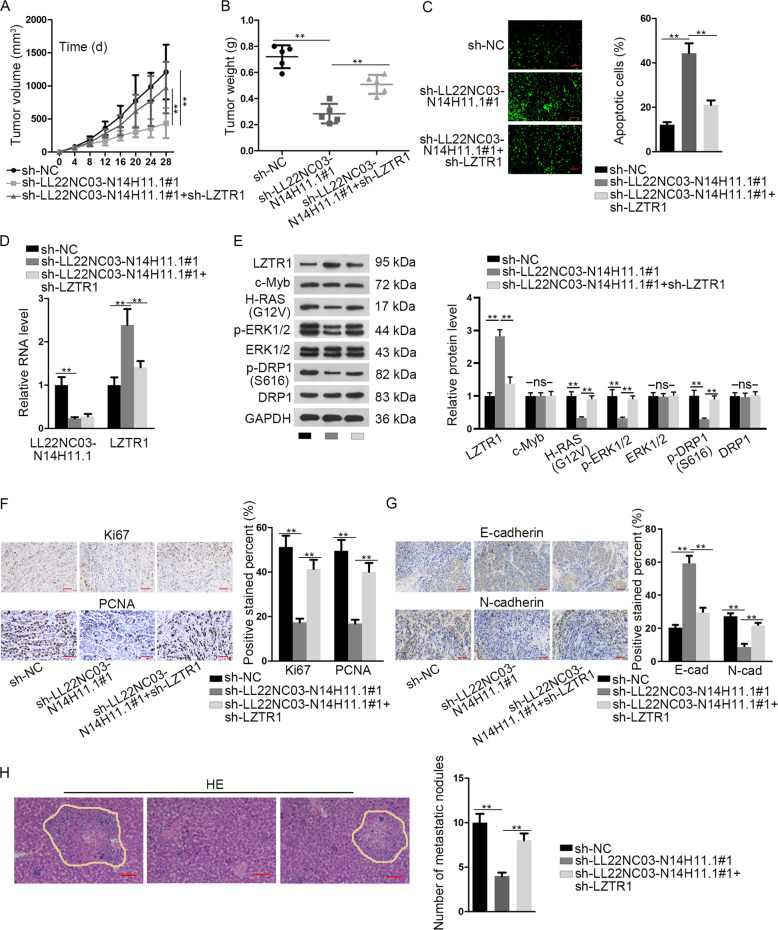
Involvement of long non-coding RNAs (lncRNAs) in hepatocarcinogenesis has been largely documented. Mitochondrial dynamics is identified to impact survival and metastasis in tumors including hepatocellular carcinoma (HCC), but the underlying mechanism remains poorly understood. This study planned to explore the regulation of lncRNA LL22NC03-N14H11.1 on HCC progression and mitochondrial fission. Dysregulated lncRNAs in HCC are identified through circlncRNAnet and GEPIA bioinformatics tools. Biological function of LL22NC03-N14H11.1 in HCC was detected by CCK-8 assay, flow cytometry analysis, transwell invasion, and wound healing assays. Molecular interactions were determined by RNA immunoprecipitation, RNA pull-down, and co-immunoprecipitation assays. Results showed that LL22NC03-N14H11.1 was upregulated in HCC tissues and cells. Functionally, LL22NC03-N14H11.1 contributed to cell proliferation, migration, invasion, and epithelial-to-mesenchymal transition (EMT) in HCC. Moreover, LL22NC03-N14H11.1 facilitated mitochondrial fission in HCC cells. Mechanistically, LL22NC03-N14H11.1 recruited Myb proto-oncogene (c-Myb) to repress the transcription of leucine zipper-like transcription regulator 1 (LZTR1), so as to inhibit LZTR1-mediated ubiquitination of H-RAS (G12V), leading to the activation of mitogen-activated protein kinase (MAPK) signaling and induction of p-DRP1 (Serine 616). In conclusion, this study firstly revealed that lncRNA LL22NC03-N14H11.1 promoted HCC progression through activating H-RAS/MAPK pathway to induce mitochondrial fission, indicating LL22NC03-N14H11.1 as a novel potential biomarker for HCC treatment.
长链非编码 RNA(lncRNA)在肝癌发生中的作用已得到广泛证实。线粒体动力学已被确定会影响包括肝细胞癌(HCC)在内的肿瘤的存活和转移,但潜在的机制仍知之甚少。本研究计划探讨 lncRNA LL22NC03-N14H11.1 对 HCC 进展和线粒体分裂的调节作用。通过 circlncRNAnet 和 GEPIA 生物信息学工具鉴定 HCC 中失调的 lncRNA。通过 CCK-8 测定、流式细胞术分析、Transwell 侵袭和划痕愈合测定检测 LL22NC03-N14H11.1 在 HCC 中的生物学功能。通过 RNA 免疫沉淀、RNA 下拉和共免疫沉淀测定确定分子相互作用。结果表明,LL22NC03-N14H11.1 在 HCC 组织和细胞中上调。功能上,LL22NC03-N14H11.1 促进 HCC 细胞的增殖、迁移、侵袭和上皮间质转化(EMT)。此外,LL22NC03-N14H11.1 促进 HCC 细胞中线粒体分裂。机制上,LL22NC03-N14H11.1 募集 Myb 原癌基因(c-Myb)抑制亮氨酸拉链样转录因子 1(LZTR1)的转录,从而抑制 LZTR1 介导的 H-RAS(G12V)泛素化,导致丝裂原激活蛋白激酶(MAPK)信号的激活和 p-DRP1(丝氨酸 616)的诱导。总之,本研究首次揭示 lncRNA LL22NC03-N14H11.1 通过激活 H-RAS/MAPK 通路诱导线粒体分裂促进 HCC 进展,表明 LL22NC03-N14H11.1 可作为 HCC 治疗的新型潜在生物标志物。