Max Planck Institute for Terrestrial Microbiology, Karl-von-Frisch Str. 10, 35043, Marburg, Germany.
Division of Biology and Biological Engineering, California Institute of Technology, 1200 E California Boulevard, Pasadena, CA, 91125, USA.
Nat Commun. 2020 Oct 7;11(1):5054. doi: 10.1038/s41467-020-18803-z.
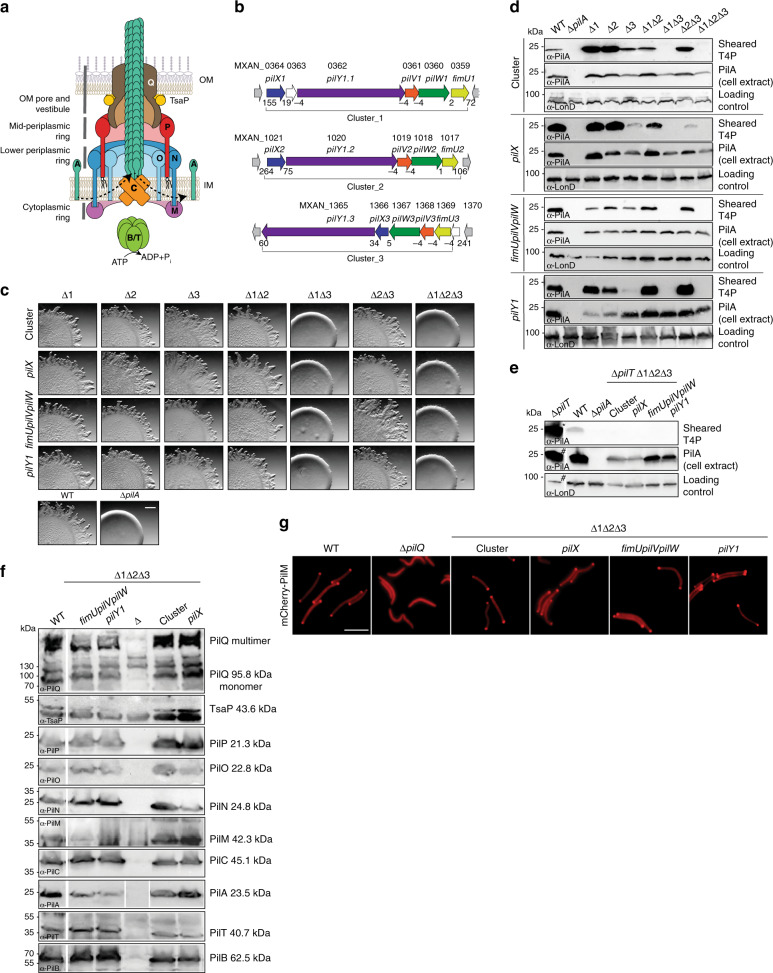
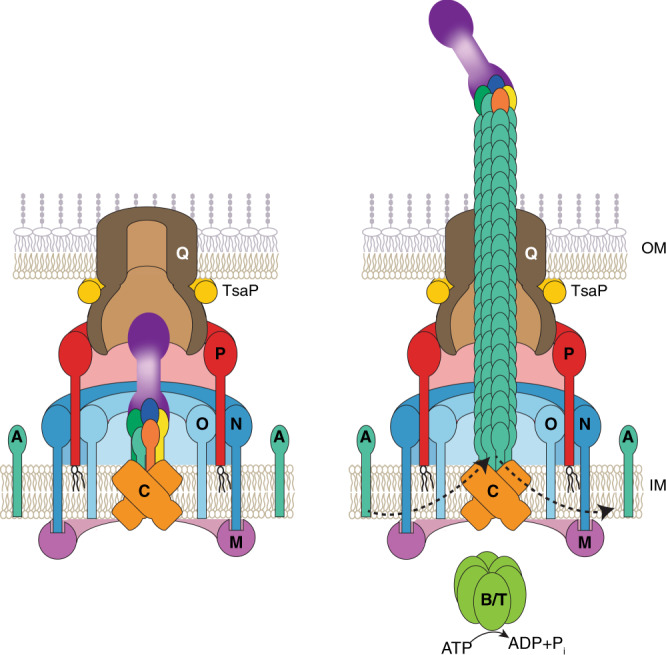
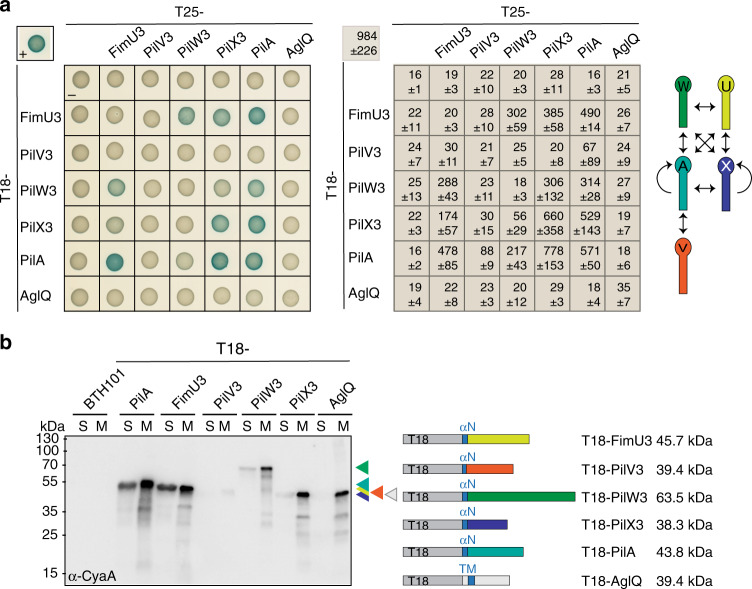
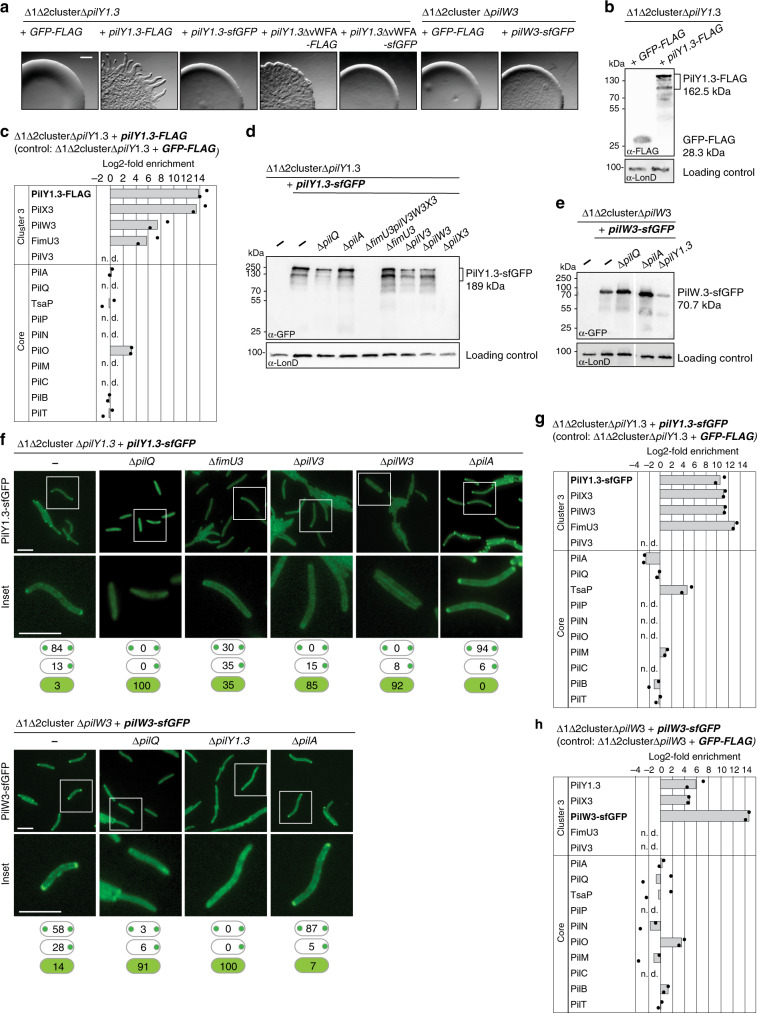
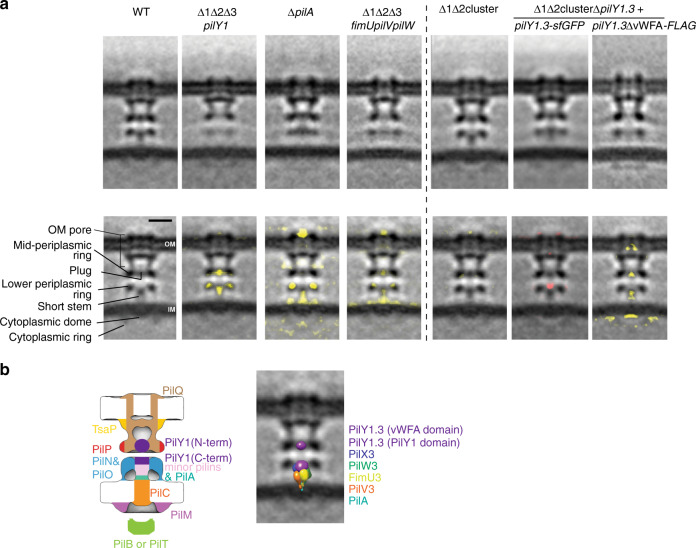
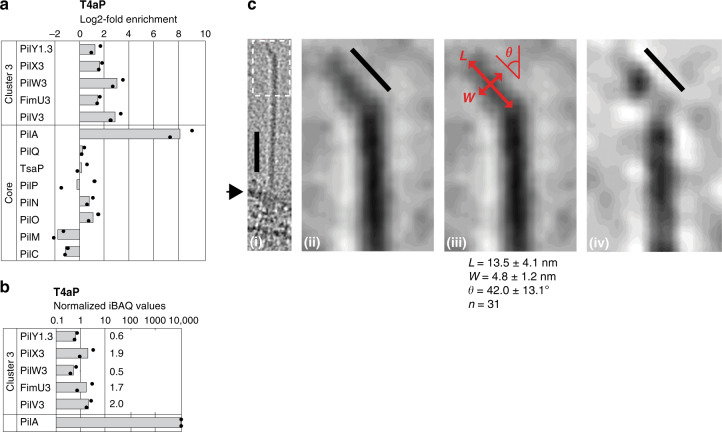
Type IVa pili are ubiquitous and versatile bacterial cell surface filaments that undergo cycles of extension, adhesion and retraction powered by the cell-envelope spanning type IVa pilus machine (T4aPM). The overall architecture of the T4aPM and the location of 10 conserved core proteins within this architecture have been elucidated. Here, using genetics, cell biology, proteomics and cryo-electron tomography, we demonstrate that the PilY1 protein and four minor pilins, which are widely conserved in T4aP systems, are essential for pilus extension in Myxococcus xanthus and form a complex that is an integral part of the T4aPM. Moreover, these proteins are part of the extended pilus. Our data support a model whereby the PilY1/minor pilin complex functions as a priming complex in T4aPM for pilus extension, a tip complex in the extended pilus for adhesion, and a cork for terminating retraction to maintain a priming complex for the next round of extension.
IVa 型菌毛是普遍存在且多功能的细菌细胞表面丝,通过细胞包膜跨越 IVa 型菌毛机器 (T4aPM) 驱动的延伸、粘附和缩回循环。已经阐明了 T4aPM 的整体结构以及该结构中 10 个保守核心蛋白的位置。在这里,我们使用遗传学、细胞生物学、蛋白质组学和低温电子断层扫描技术,证明了广泛存在于 T4aP 系统中的 PilY1 蛋白和四个次要菌毛对于粘球菌的菌毛延伸是必不可少的,并且形成了 T4aPM 的一个组成部分。此外,这些蛋白质是延伸菌毛的一部分。我们的数据支持这样一种模型,即 PilY1/次要菌毛复合物作为 T4aPM 中菌毛延伸的引发复合物,作为延伸菌毛中的尖端复合物用于粘附,以及作为终止缩回的塞子,以维持下一轮延伸的引发复合物。