Thapa Sudip, Sun Huihui, Pokhrel Gaurab, Wang Bangyan, Dahal Sanuja, Yu Shiying
Cancer Center of Tongji Hospital, Tongji Medical College, Huazhong University of Science and Technology, Wuhan 430030, China.
Department of Urology, Tongji Hospital, Tongji Medical College, Huazhong University of Science and Technology, Wuhan 430030, China.
J Oncol. 2020 Sep 22;2020:3293589. doi: 10.1155/2020/3293589. eCollection 2020.
We aimed to examine the performance of the distress thermometer (DT) and identify the prevalence and risk factors associated with psychological distress (PD) in heterogeneous cancer patients.
This cross-sectional study enrolled 1496 heterogeneous cancer patients from the inpatient and outpatient departments. Receiver operating characteristic analysis (ROC) of DT was evaluated against the Hospital Anxiety and Depression Scale-Total (HADS-T ≥15). An area under the curve (AUC), sensitivity, specificity, positive predictive value (PPV), negative predictive value (NPV), and clinical utility index were calculated. Multiple binary logistic regression was used to identify the factors associated with PD.
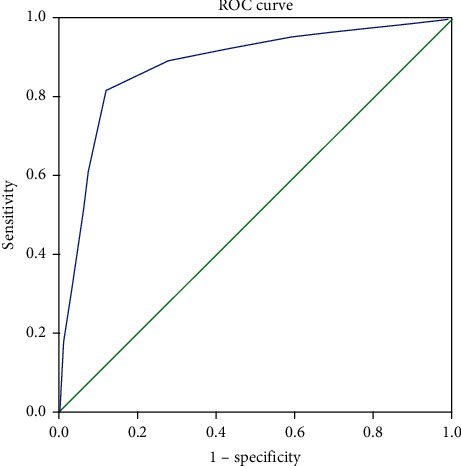
Referring to ROC analysis, DT showed good discriminating accuracy (AUC = 0.88). A cutoff score of 4 was established, and it yielded sensitivity (0.81), specificity (0.88), PPV (0.87), NPV (0.82), and clinical utility indexes (screening utility = 0.71 and case-finding utility = 0.73). 46.5% of our participants was distressed. Lower education levels (odd ratio (OR) = 1.39), advanced stage (OR = 1.85), active disease status (OR = 1.82), lack of exercise (OR = 3.03), diagnosis known (OR = 0.64), emotional problems (OR = 3.54), and physical problems (OR = 8.62) were the predictive factors for PD.
DT with a cutoff score (≥4) is a comprehensive, appropriate, and practical initial screener for PD in cancer patients. Predicting factors should be considered together for effective management of PD in such population.
我们旨在研究 distress thermometer(DT)的性能,并确定异质性癌症患者中与心理困扰(PD)相关的患病率及风险因素。
这项横断面研究纳入了来自住院部和门诊部的 1496 名异质性癌症患者。以医院焦虑抑郁量表总分(HADS-T≥15)为对照,对 DT 进行受试者操作特征分析(ROC)。计算曲线下面积(AUC)、灵敏度、特异度、阳性预测值(PPV)、阴性预测值(NPV)和临床效用指数。采用多因素二元逻辑回归分析确定与 PD 相关的因素。
根据 ROC 分析,DT 显示出良好的鉴别准确性(AUC = 0.88)。确定临界值为 4,其灵敏度为 0.81,特异度为 0.88,PPV 为 0.87,NPV 为 0.82,临床效用指数(筛查效用 = 0.71,病例发现效用 = 0.73)。46.5%的参与者存在心理困扰。较低的教育水平(比值比(OR)= 1.39)、晚期(OR = 1.85)、疾病活动状态(OR = 1.82)、缺乏运动(OR = 3.03)、已知诊断(OR = 0.64)、情绪问题(OR = 3.54)和身体问题(OR = 8.62)是 PD 的预测因素。
临界值(≥4)的 DT 是癌症患者中 PD 的一种全面、合适且实用的初始筛查工具。对于此类人群中 PD 的有效管理,应综合考虑预测因素。