Zhao Yunqi, Cheng Xianliang, Wang Guohui, Liao Yuan, Qing Chen
School of Pharmaceutical Sciences and Yunnan Key Laboratory of Pharmacology for Natural Products, Kunming Medical University, Kunming, Yunnan 650500, P.R. China.
College of Science and Technology, Wenzhou-Kean University, Wenzhou, Zhejiang 325060, P.R. China.
Oncol Lett. 2020 Dec;20(6):289. doi: 10.3892/ol.2020.12152. Epub 2020 Sep 24.
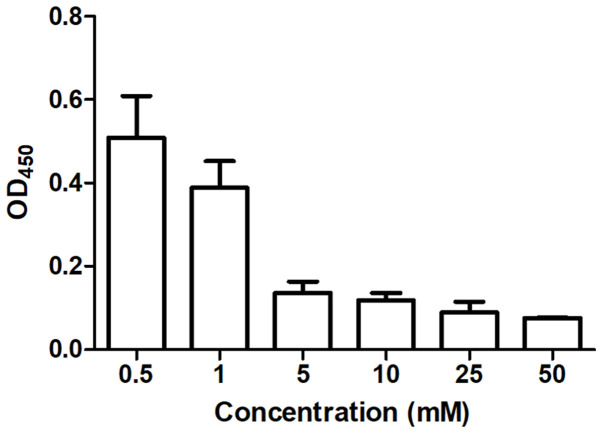
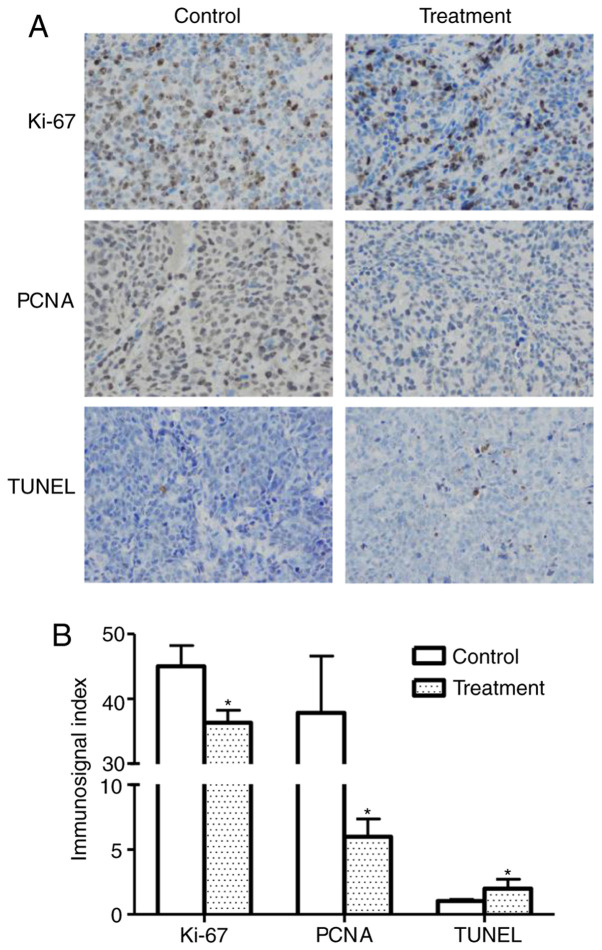
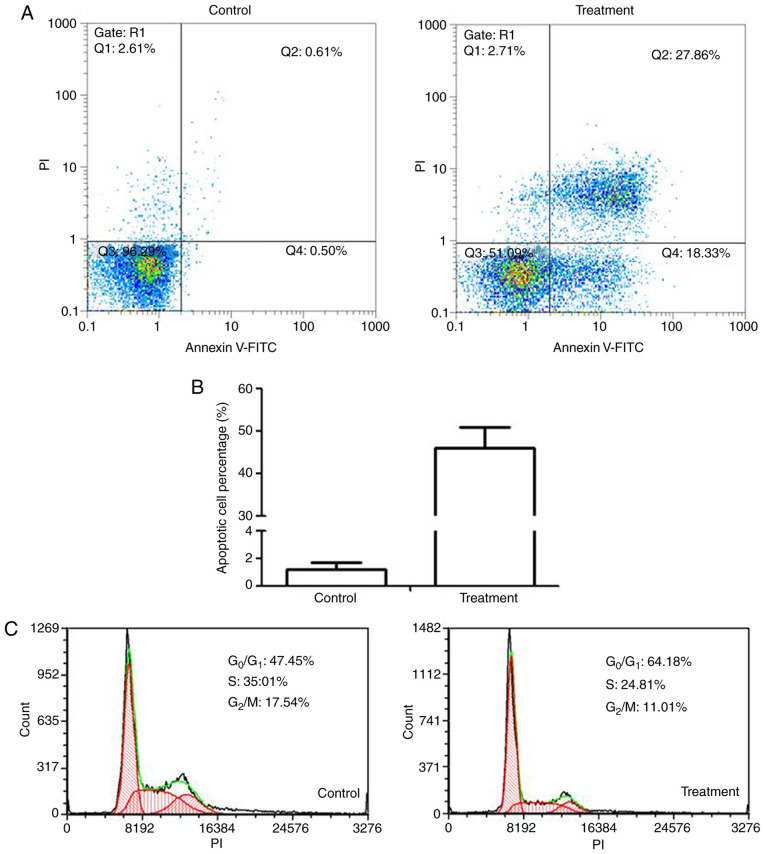
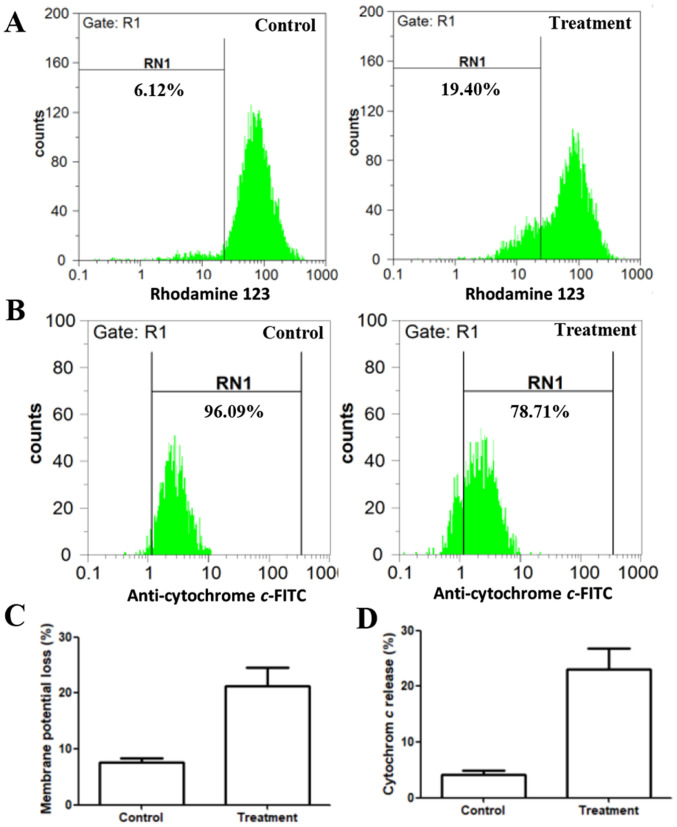
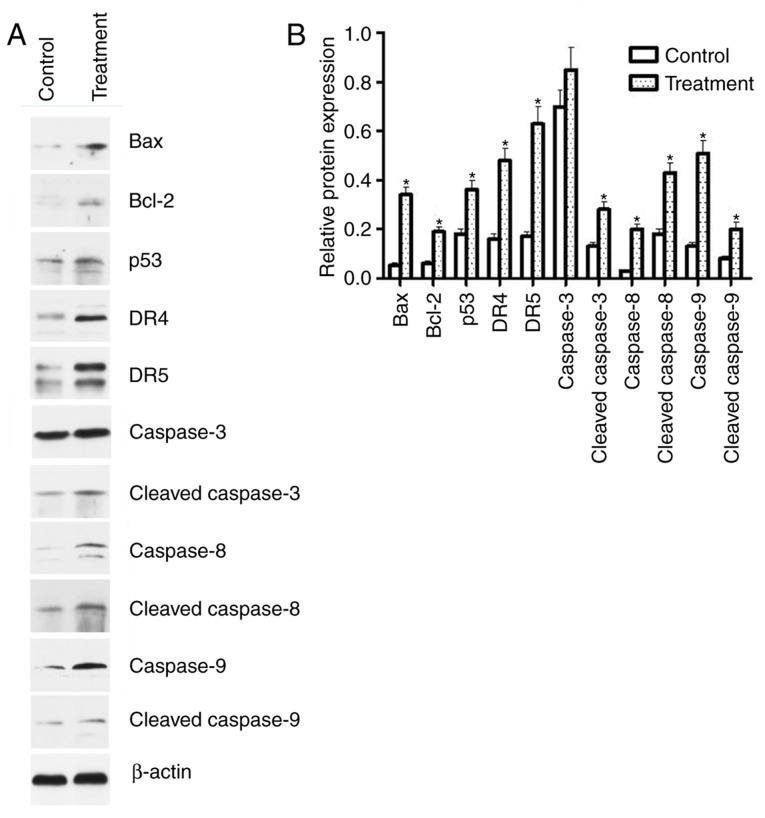
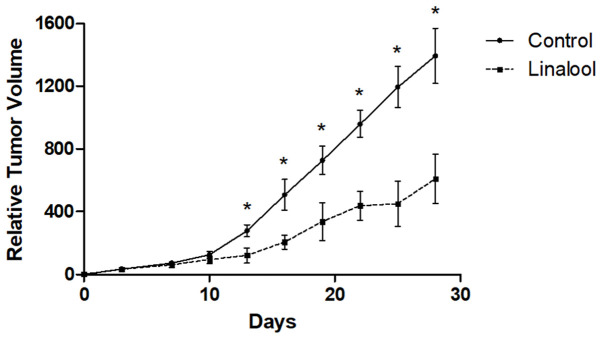
Linalool is an unsaturated terpene that can be found in several plants and exhibits various biological activities. The aim of the present study was to investigate the anticancer activity of linalool using the human prostate cancer 22Rv1 cell line. Flow cytometry was employed to study the effects of linalool on the induction of apoptosis, cell cycle progression, loss of mitochondrial membrane potential and cytochrome release, whereas the effects of linalool on apoptosis-associated proteins were investigated by western blot analysis. An efficacy study was conducted using 22Rv1 tumor-bearing mice. The expression of the cell proliferation markers Ki-67 and proliferating cell nuclear antigen (PCNA) in xenograft tumors was evaluated by immunohistochemistry. Terminal deoxynucleotidyl transferase dUTP nick end labeling (TUNEL) assay was used to study the induction of apoptosis in an model. Linalool exerted an inhibitory effect on 22Rv1 cell proliferation and induced apoptosis in both and models. Western blot analysis indicated that both the mitochondria-mediated intrinsic and death-receptor-mediated extrinsic pathways were involved in the induction of apoptosis. Furthermore, linalool significantly reduced the expression of Ki-67 and PCNA in the 22Rv1 ×enograft model. The findings of the present study provide evidence supporting the anti-proliferative effects of linalool on 22Rv1 human prostate cancer cells, and suggest that linalool may be an effective agent for prostate cancer treatment.
芳樟醇是一种不饱和萜烯,可在多种植物中找到,并具有多种生物活性。本研究的目的是使用人前列腺癌22Rv1细胞系研究芳樟醇的抗癌活性。采用流式细胞术研究芳樟醇对细胞凋亡诱导、细胞周期进程、线粒体膜电位丧失和细胞色素释放的影响,而通过蛋白质免疫印迹分析研究芳樟醇对凋亡相关蛋白的影响。使用荷22Rv1肿瘤的小鼠进行疗效研究。通过免疫组织化学评估异种移植瘤中细胞增殖标志物Ki-67和增殖细胞核抗原(PCNA)的表达。末端脱氧核苷酸转移酶dUTP缺口末端标记(TUNEL)测定法用于研究在动物模型中细胞凋亡的诱导情况。芳樟醇对22Rv1细胞增殖具有抑制作用,并在体外和体内模型中诱导细胞凋亡。蛋白质免疫印迹分析表明线粒体介导的内源性途径和死亡受体介导的外源性途径均参与了细胞凋亡的诱导。此外,芳樟醇显著降低了22Rv1异种移植模型中Ki-67和PCNA的表达。本研究结果提供了证据支持芳樟醇对22Rv1人前列腺癌细胞的抗增殖作用,并表明芳樟醇可能是一种有效的前列腺癌治疗药物。