Morey Rajendra A, Garrett Melanie E, Stevens Jennifer S, Clarke Emily K, Haswell Courtney C, van Rooij Sanne J H, Fani Negar, Lori Adriana, Mirecc Workgroup Va Mid-Atlantic, Kimbrel Nathan A, Dennis Michelle F, Marx Christine E, Beckham Jean C, McCarthy Gregory, Hauser Michael A, Ashley-Koch Allison E
VA Mid-Atlantic Mental Illness Research Education and Clinical Center, Durham VAMC, Durham, NC, USA.
Department of Psychiatry and Behavioral Sciences, Duke University, Durham, NC, USA.
Eur J Psychotraumatol. 2020 Jul 29;11(1):1785994. doi: 10.1080/20008198.2020.1785994.
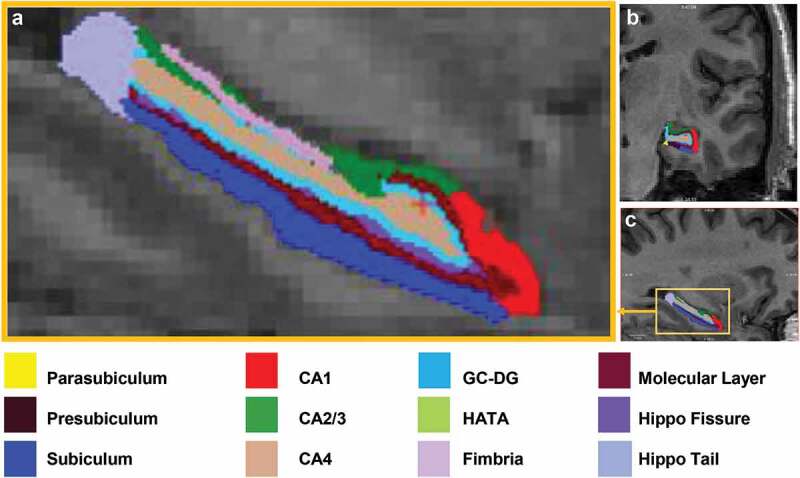
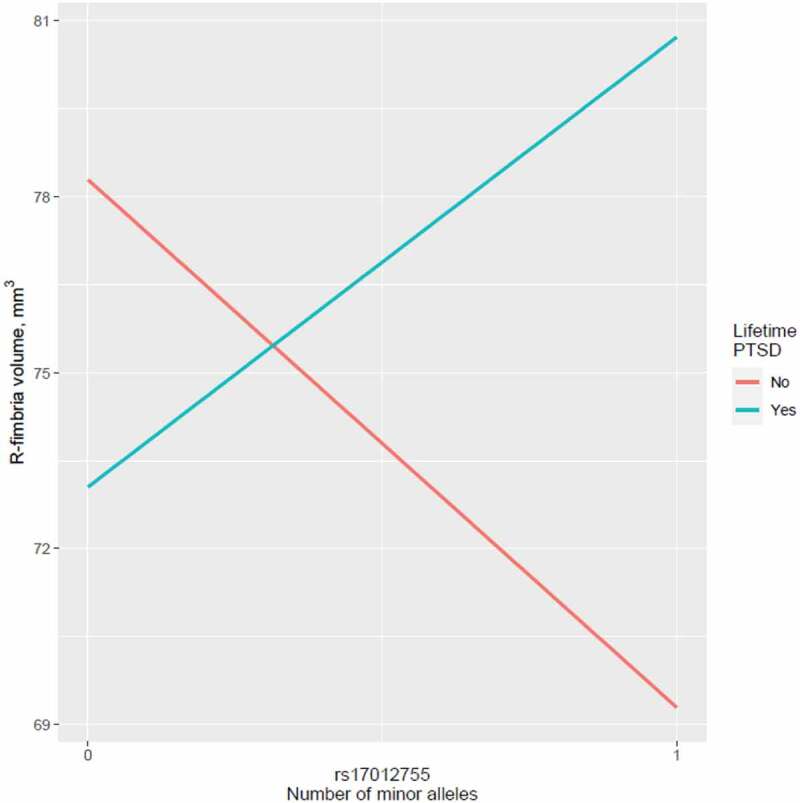
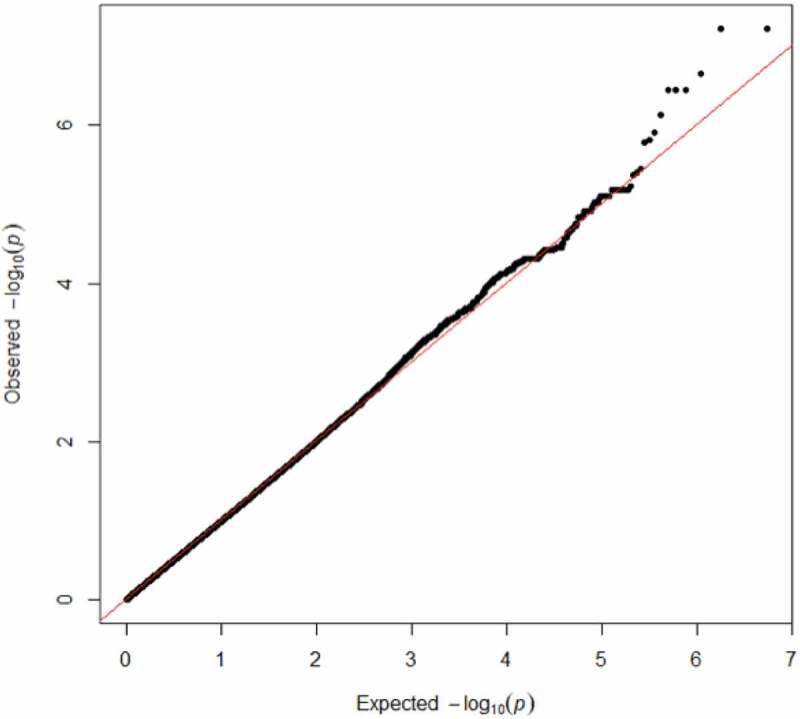
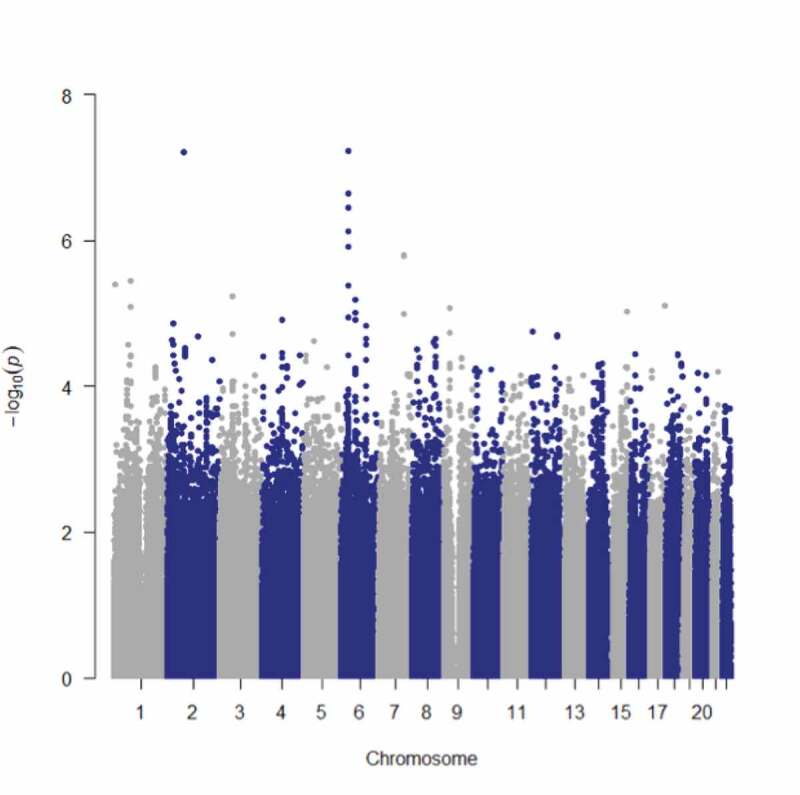
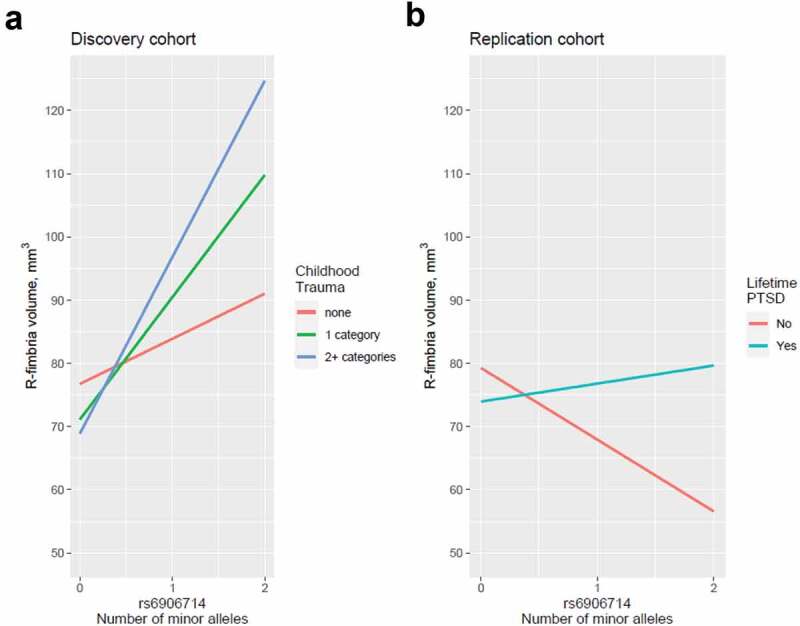
Behavioural, structural, and functional neuroimaging have implicated the hippocampus as a critical brain region in posttraumatic stress disorder (PTSD) pathogenesis. Recent work in a normative, primarily European, sample identified 15 unique genetic loci contributing to structural variability in six hippocampal subfield volumes. We explored the relevance of these loci in two samples (Mental Illness Research Education and Clinical Centre [MIRECC] and Grady; = 290) of trauma-exposed individuals enriched for PTSD and of diverse ancestry. Four of the previous loci demonstrated nominal evidence of replication in the MIRECC dataset, primarily within non-Hispanic whites (NHW). One locus replicated in the Grady cohort, which was composed exclusively of non-Hispanic blacks (NHB). Our data supported genetic interactions with diagnosis of lifetime PTSD and genetic interactions with childhood trauma in the MIRECC sample, but not the Grady sample. Given the racial, diagnostic, and trauma-exposure differences with the original genome-wide association study (GWAS) report, we conducted a full GWAS in the MIRECC and Grady datasets. Interactions between genetic variants and lifetime PTSD or childhood trauma were interrogated for single nucleotide polymorphisms (SNPs) with evidence of main effects. Genetic associations surpassed false discovery rate (FDR)-correction within hippocampal subfields in fimbria, subiculum, cornu ammonis-1 (CA1), and hippocampal amygdala transition area (HATA). One association was replicated in the Grady cohort (rs12880795 in with left (L)-HATA volume). The most significant association in the MIRECC dataset was between rs6906714 in and right (R)-fimbria volume ( = 5.99×10, = 0.0056). Interestingly, the effect of rs6906714 on R-fimbria volume increased with exposure to childhood trauma (geneenvironment [GE] interaction = 0.022). These preliminary results argue for G*E interactions between genetic loci with PTSD and childhood trauma on hippocampal phenotypes. Our results underscore the need for larger neuroimaging-genetic studies in PTSD, trauma, and ancestrally diverse populations.
行为、结构和功能神经影像学研究表明,海马体是创伤后应激障碍(PTSD)发病机制中的关键脑区。最近在一个以欧洲人为主的正常样本中开展的研究,确定了15个独特的基因位点,这些位点导致六个海马亚区体积的结构变异。我们在两个富含PTSD且具有不同血统的创伤暴露个体样本(精神疾病研究教育与临床中心[MIRECC]和格雷迪;n = 290)中探究了这些基因位点的相关性。之前确定的15个基因位点中的4个在MIRECC数据集中显示出名义上的重复证据,主要是在非西班牙裔白人(NHW)中。一个位点在格雷迪队列中得到重复,该队列仅由非西班牙裔黑人(NHB)组成。我们的数据支持MIRECC样本中基因与终生PTSD诊断之间的相互作用以及基因与童年创伤之间的相互作用,但在格雷迪样本中未得到支持。鉴于与原始全基因组关联研究(GWAS)报告在种族、诊断和创伤暴露方面存在差异,我们在MIRECC和格雷迪数据集中进行了全面的GWAS。对于具有主效应证据的单核苷酸多态性(SNP),研究了基因变异与终生PTSD或童年创伤之间的相互作用。在海马亚区的伞部、下托、海马角1(CA1)和海马杏仁核过渡区(HATA)中,基因关联超过了错误发现率(FDR)校正。一个关联在格雷迪队列中得到重复(rs12880795与左侧(L)-HATA体积相关)。MIRECC数据集中最显著的关联是rs6906714与右侧(R)-伞部体积之间的关联(p = 5.99×10⁻⁶,q = 0.0056)。有趣的是,rs6906714对R-伞部体积的影响随着童年创伤暴露的增加而增强(基因环境[GE]相互作用p = 0.022)。这些初步结果表明,在PTSD相关基因位点与童年创伤之间存在关于海马表型的G*E相互作用。我们的结果强调了在PTSD、创伤和不同血统人群中开展更大规模神经影像学-遗传学研究的必要性。