Max Planck Institute of Psychiatry, Munich, Germany.
Centre for Medical Image Computing, University College London, London, UK.
Hum Brain Mapp. 2022 Jan;43(1):207-233. doi: 10.1002/hbm.25326. Epub 2020 Dec 27.
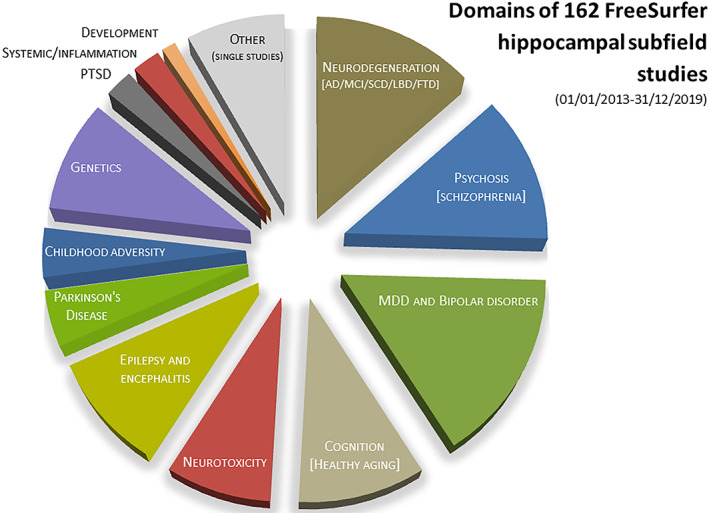
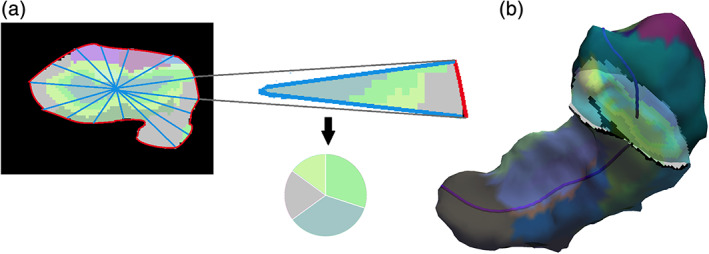
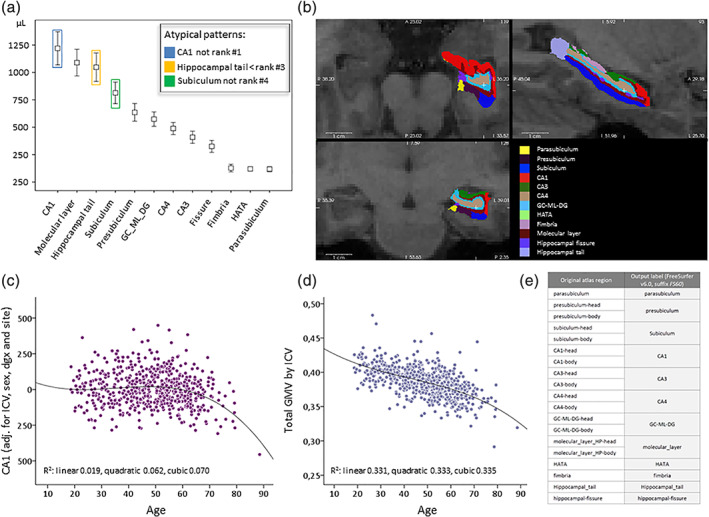
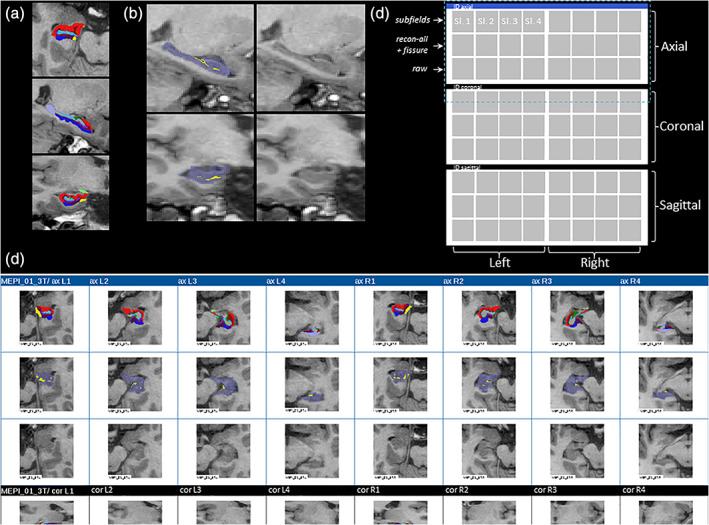
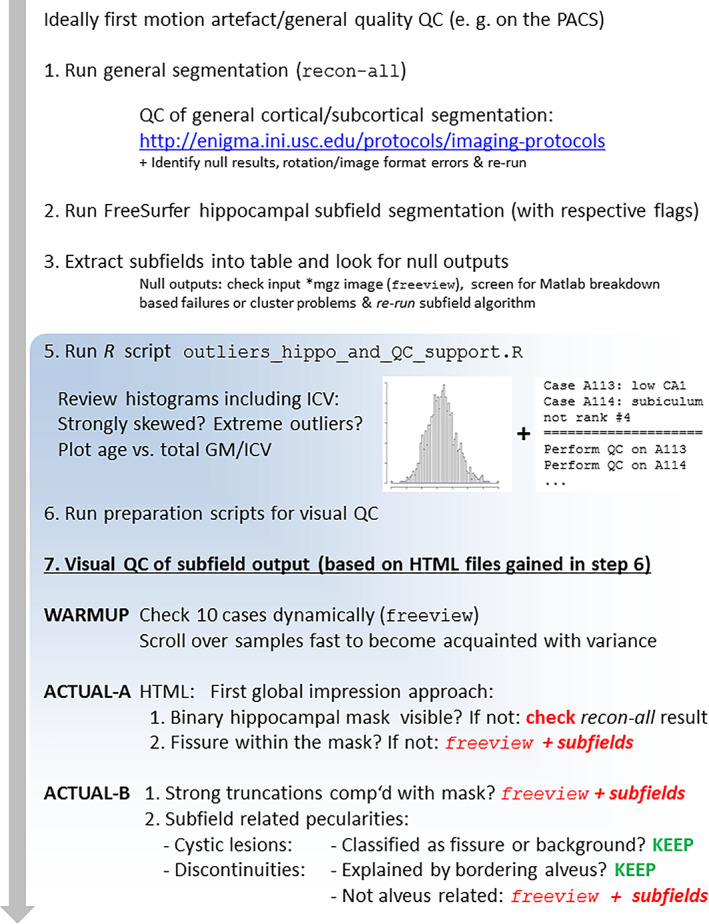
Structural hippocampal abnormalities are common in many neurological and psychiatric disorders, and variation in hippocampal measures is related to cognitive performance and other complex phenotypes such as stress sensitivity. Hippocampal subregions are increasingly studied, as automated algorithms have become available for mapping and volume quantification. In the context of the Enhancing Neuro Imaging Genetics through Meta Analysis Consortium, several Disease Working Groups are using the FreeSurfer software to analyze hippocampal subregion (subfield) volumes in patients with neurological and psychiatric conditions along with data from matched controls. In this overview, we explain the algorithm's principles, summarize measurement reliability studies, and demonstrate two additional aspects (subfield autocorrelation and volume/reliability correlation) with illustrative data. We then explain the rationale for a standardized hippocampal subfield segmentation quality control (QC) procedure for improved pipeline harmonization. To guide researchers to make optimal use of the algorithm, we discuss how global size and age effects can be modeled, how QC steps can be incorporated and how subfields may be aggregated into composite volumes. This discussion is based on a synopsis of 162 published neuroimaging studies (01/2013-12/2019) that applied the FreeSurfer hippocampal subfield segmentation in a broad range of domains including cognition and healthy aging, brain development and neurodegeneration, affective disorders, psychosis, stress regulation, neurotoxicity, epilepsy, inflammatory disease, childhood adversity and posttraumatic stress disorder, and candidate and whole genome (epi-)genetics. Finally, we highlight points where FreeSurfer-based hippocampal subfield studies may be optimized.
结构海马体异常在许多神经和精神疾病中很常见,海马体测量值的变化与认知表现和其他复杂表型(如应激敏感性)有关。随着自动算法的出现,用于绘制和体积量化的海马体亚区越来越受到研究。在增强神经影像学遗传学通过荟萃分析联盟的背景下,几个疾病工作组正在使用 FreeSurfer 软件分析神经和精神疾病患者的海马体亚区(子域)体积,以及来自匹配对照的数据。在这篇概述中,我们解释了算法的原理,总结了测量可靠性研究,并通过说明性数据展示了另外两个方面(子域自相关和体积/可靠性相关性)。然后,我们解释了标准化海马体亚区分割质量控制(QC)程序的基本原理,以提高管道协调。为了指导研究人员最佳使用该算法,我们讨论了如何对全局大小和年龄效应进行建模,如何纳入 QC 步骤以及如何将子域组合成复合体积。这一讨论基于对 162 篇已发表的神经影像学研究的综述(2013 年 1 月至 2019 年 12 月),这些研究应用了 FreeSurfer 海马体亚区分割在广泛的领域,包括认知和健康老化、大脑发育和神经退行性变、情感障碍、精神病、应激调节、神经毒性、癫痫、炎症性疾病、儿童逆境和创伤后应激障碍以及候选和全基因组(表观遗传学)遗传学。最后,我们强调了基于 FreeSurfer 的海马体亚区研究可以优化的方面。