Center for Disease Prevention Research and Department of Pharmacology and Toxicology, Medical College of Wisconsin, Milwaukee, WI, 53226, USA.
Nat Commun. 2020 Oct 8;11(1):5084. doi: 10.1038/s41467-020-18546-x.
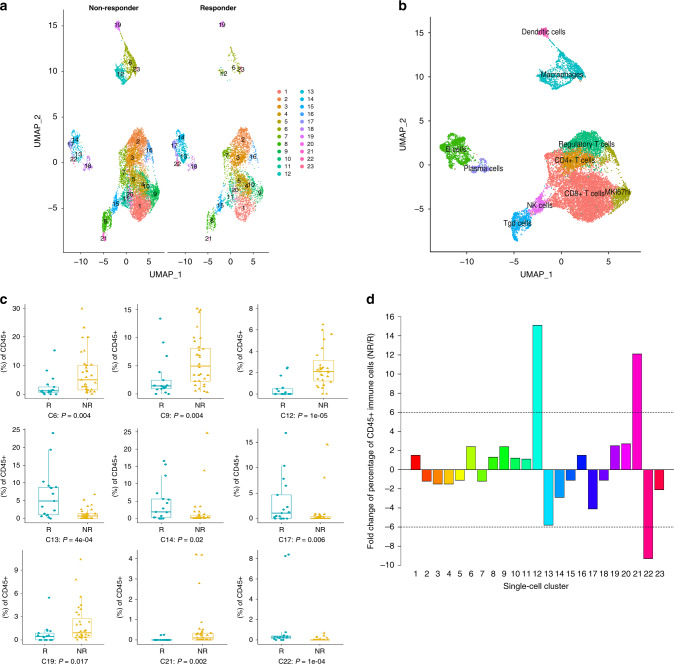
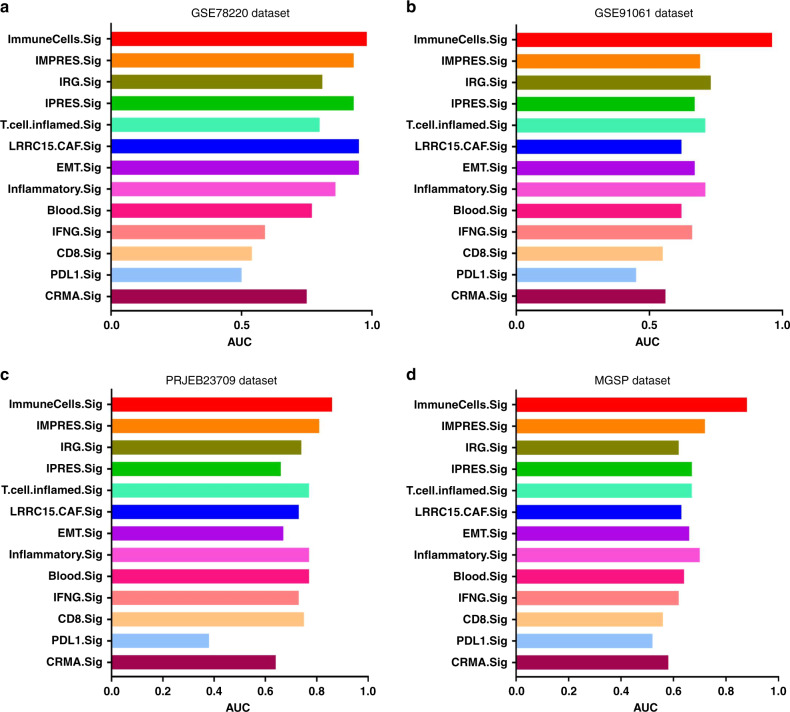
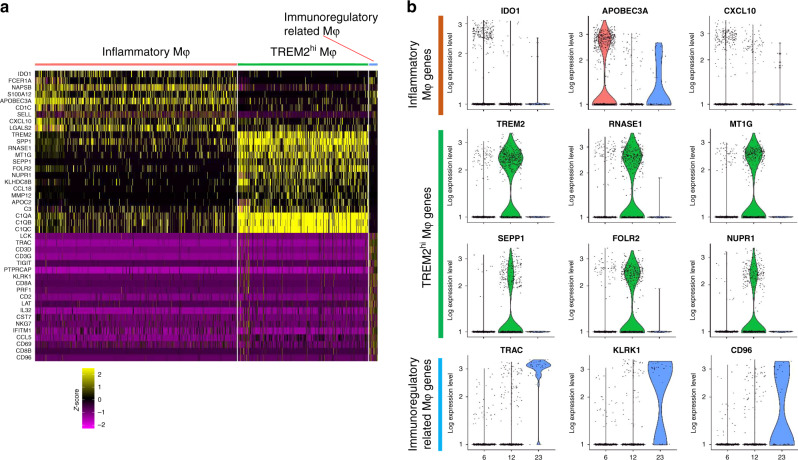
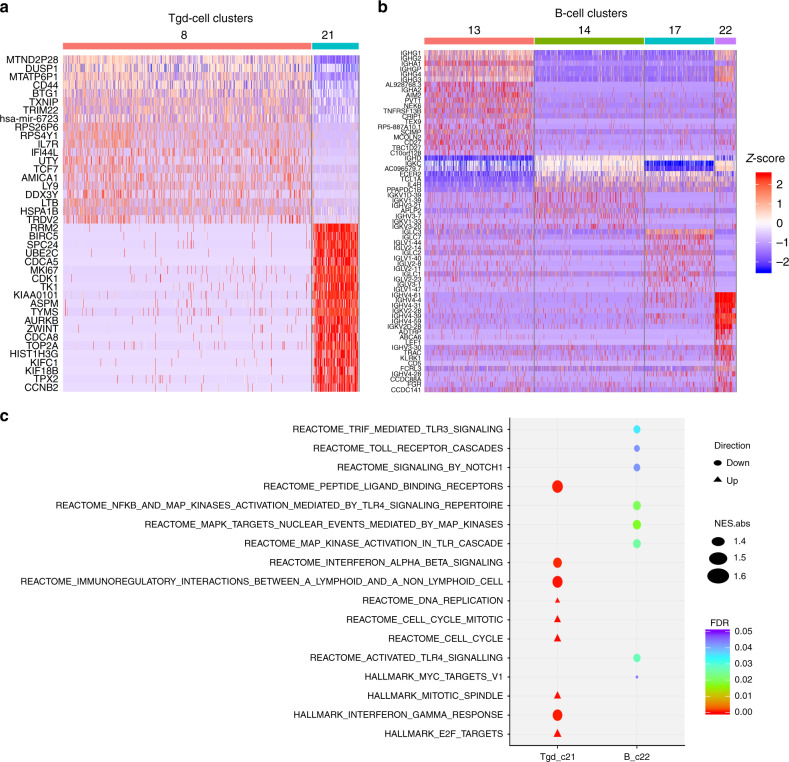
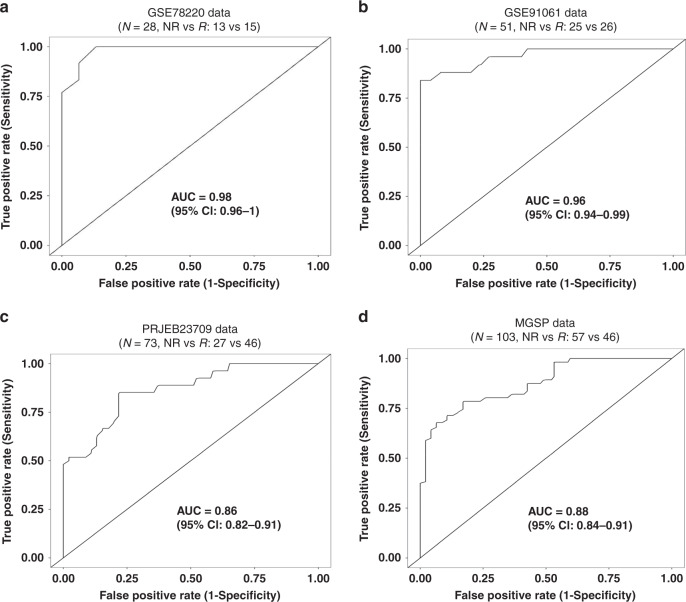
Identifying factors underlying resistance to immune checkpoint therapy (ICT) is still challenging. Most cancer patients do not respond to ICT and the availability of the predictive biomarkers is limited. Here, we re-analyze a publicly available single-cell RNA sequencing (scRNA-seq) dataset of melanoma samples of patients subjected to ICT and identify a subset of macrophages overexpressing TREM2 and a subset of gammadelta T cells that are both overrepresented in the non-responding tumors. In addition, the percentage of a B cell subset is significantly lower in the non-responders. The presence of these immune cell subtypes is corroborated in other publicly available scRNA-seq datasets. The analyses of bulk RNA-seq datasets of the melanoma samples identify and validate a signature - ImmuneCells.Sig - enriched with the genes characteristic of the above immune cell subsets to predict response to immunotherapy. ImmuneCells.Sig could represent a valuable tool for clinical decision making in patients receiving immunotherapy.
确定免疫检查点治疗 (ICT) 耐药的相关因素仍然具有挑战性。大多数癌症患者对 ICT 没有反应,且预测生物标志物的可用性有限。在这里,我们重新分析了一个公开的接受 ICT 的黑色素瘤样本的单细胞 RNA 测序 (scRNA-seq) 数据集,并鉴定出一组过度表达 TREM2 的巨噬细胞亚群和一组在非应答性肿瘤中过度表达的 gammadelta T 细胞亚群。此外,非应答者中 B 细胞亚群的比例显著降低。这些免疫细胞亚型的存在在其他公开的 scRNA-seq 数据集中得到了证实。对黑色素瘤样本的批量 RNA-seq 数据集的分析确定并验证了一个特征 - ImmuneCells.Sig,该特征富含上述免疫细胞亚群的特征基因,以预测对免疫治疗的反应。ImmuneCells.Sig 可能代表接受免疫治疗的患者临床决策的有价值工具。