Program in Molecular Medicine, The Hospital for Sick Children Research Institute, Toronto, ON, M5G 0A4, Canada.
Biofisika Institute (CSIC, UPV/EHU) and Department of Biochemistry and Molecular Biology, University of the Basque Country (UPV/EHU), P.O. Box 644, 48080, Bilbao, Spain.
Nat Commun. 2020 Oct 8;11(1):5066. doi: 10.1038/s41467-020-18828-4.
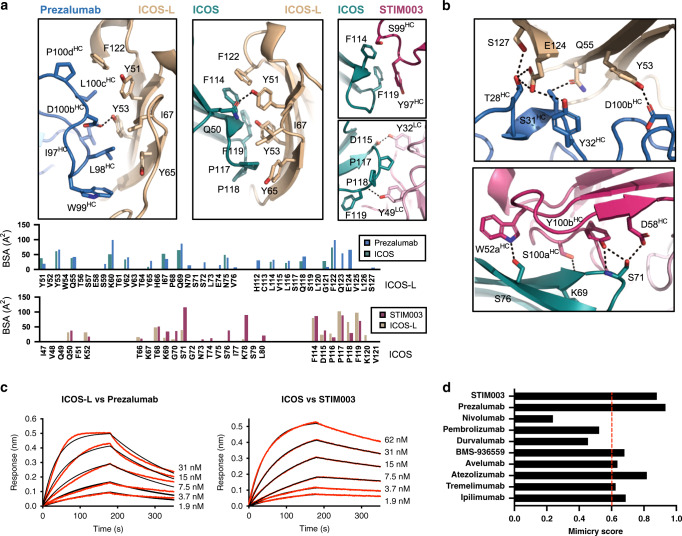
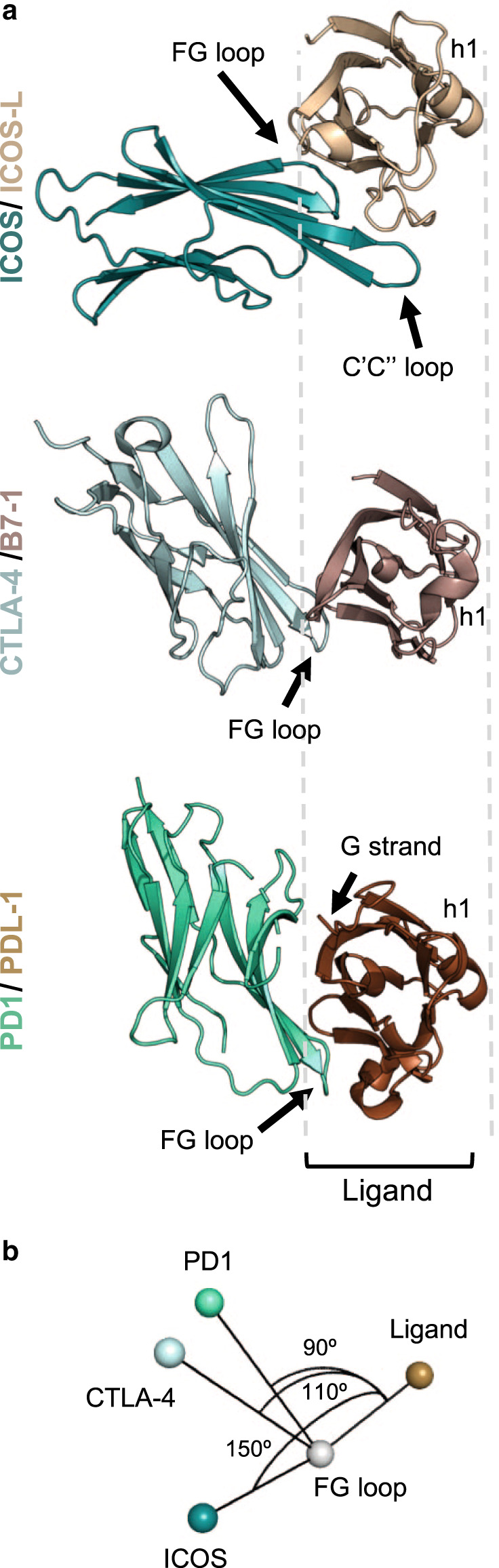
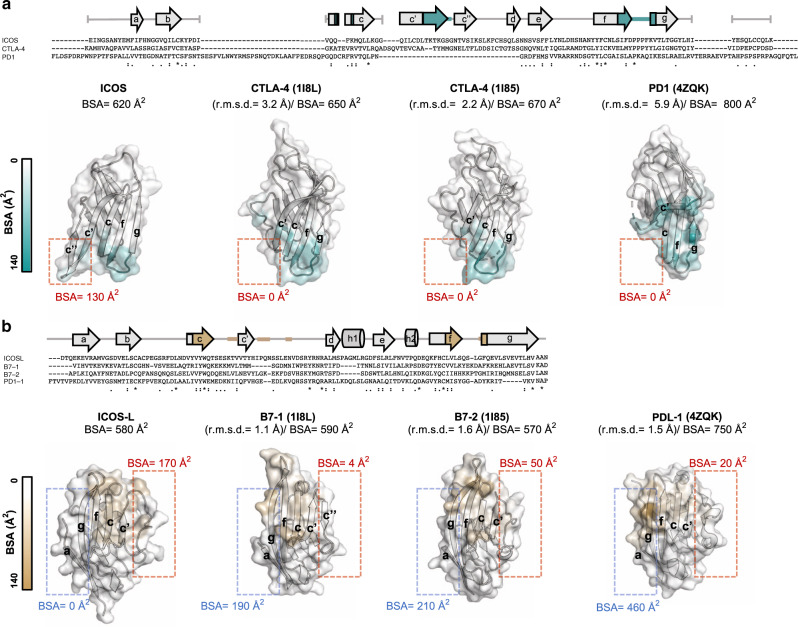
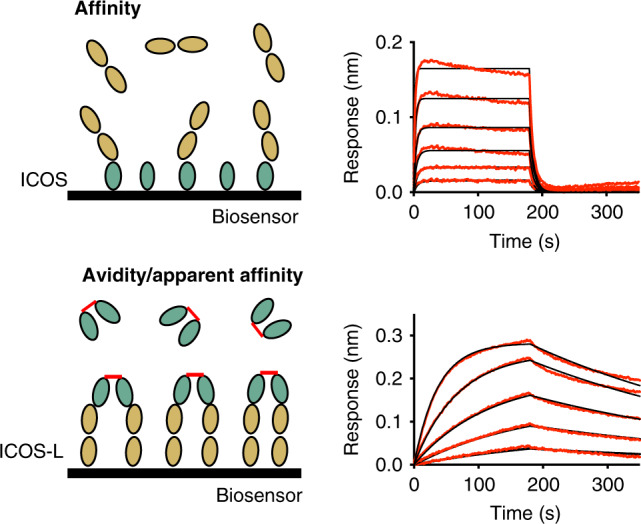
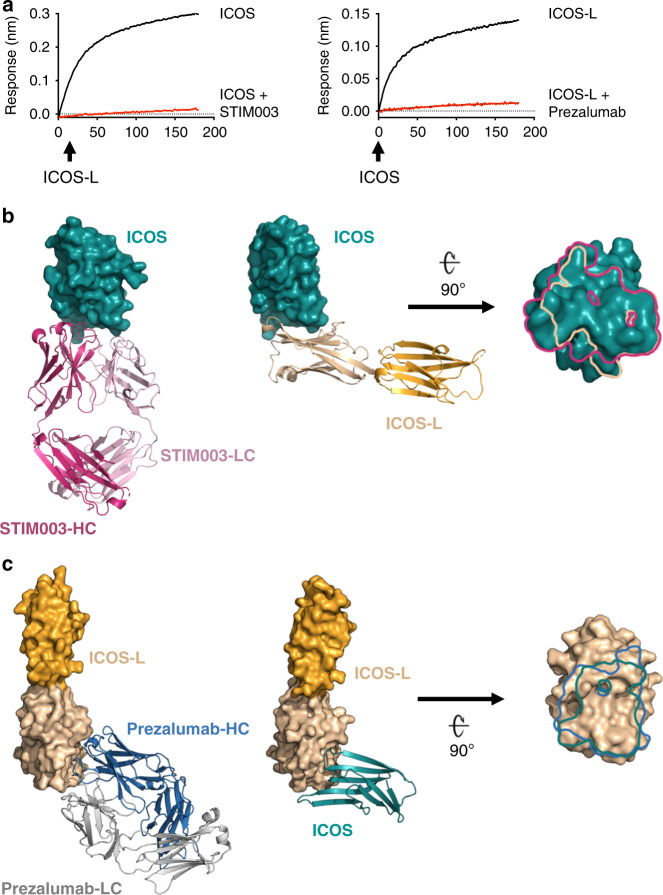
The inducible co-stimulator (ICOS) is a member of the CD28/B7 superfamily, and delivers a positive co-stimulatory signal to activated T cells upon binding to its ligand (ICOS-L). Dysregulation of this pathway has been implicated in autoimmune diseases and cancer, and is currently under clinical investigation as an immune checkpoint blockade. Here, we describe the molecular interactions of the ICOS/ICOS-L immune complex at 3.3 Å resolution. A central FDPPPF motif and residues within the CC' loop of ICOS are responsible for the specificity of the interaction with ICOS-L, with a distinct receptor binding orientation in comparison to other family members. Furthermore, our structure and binding data reveal that the ICOS N110 N-linked glycan participates in ICOS-L binding. In addition, we report crystal structures of ICOS and ICOS-L in complex with monoclonal antibodies under clinical evaluation in immunotherapy. Strikingly, antibody paratopes closely mimic receptor-ligand binding core interactions, in addition to contacting peripheral residues to confer high binding affinities. Our results uncover key molecular interactions of an immune complex central to human adaptive immunity and have direct implications for the ongoing development of therapeutic interventions targeting immune checkpoint receptors.
诱导共刺激分子(ICOS)是 CD28/B7 超家族的成员,在与配体(ICOS-L)结合后,向激活的 T 细胞传递正向共刺激信号。该途径的失调与自身免疫性疾病和癌症有关,目前正在作为免疫检查点阻断剂进行临床研究。在这里,我们在 3.3Å 分辨率下描述了 ICOS/ICOS-L 免疫复合物的分子相互作用。ICOS 中的中央 FDPPPF 基序和 CC'环内的残基负责与 ICOS-L 的特异性相互作用,与其他家族成员相比,具有独特的受体结合取向。此外,我们的结构和结合数据表明,ICOS 的 N110 N 连接聚糖参与 ICOS-L 结合。此外,我们还报告了处于临床评估阶段的免疫疗法中用于治疗的单克隆抗体与 ICOS 和 ICOS-L 复合物的晶体结构。引人注目的是,抗体的抗原结合部位模拟了受体-配体结合的核心相互作用,除了与外围残基结合以赋予高结合亲和力之外。我们的研究结果揭示了人类适应性免疫中至关重要的免疫复合物的关键分子相互作用,对正在开发的针对免疫检查点受体的治疗干预措施具有直接影响。