Department of Pediatrics, Medical University of Graz, Graz, Austria.
Center for Medical Research, Medical University of Graz, Graz, Austria.
PLoS One. 2020 Oct 9;15(10):e0240541. doi: 10.1371/journal.pone.0240541. eCollection 2020.
Ethyl pyruvate (EP), the ethyl ester of pyruvate, has proven antiinflammatory and antioxidative properties. Additionally, anticoagulant properties have been suggested recently. EP, therefore, is a potentially antiatherosclerotic drug. We aimed to investigate whether EP possesses antiplatelet and anticoagulant properties particularly in the physiological environment of whole blood.
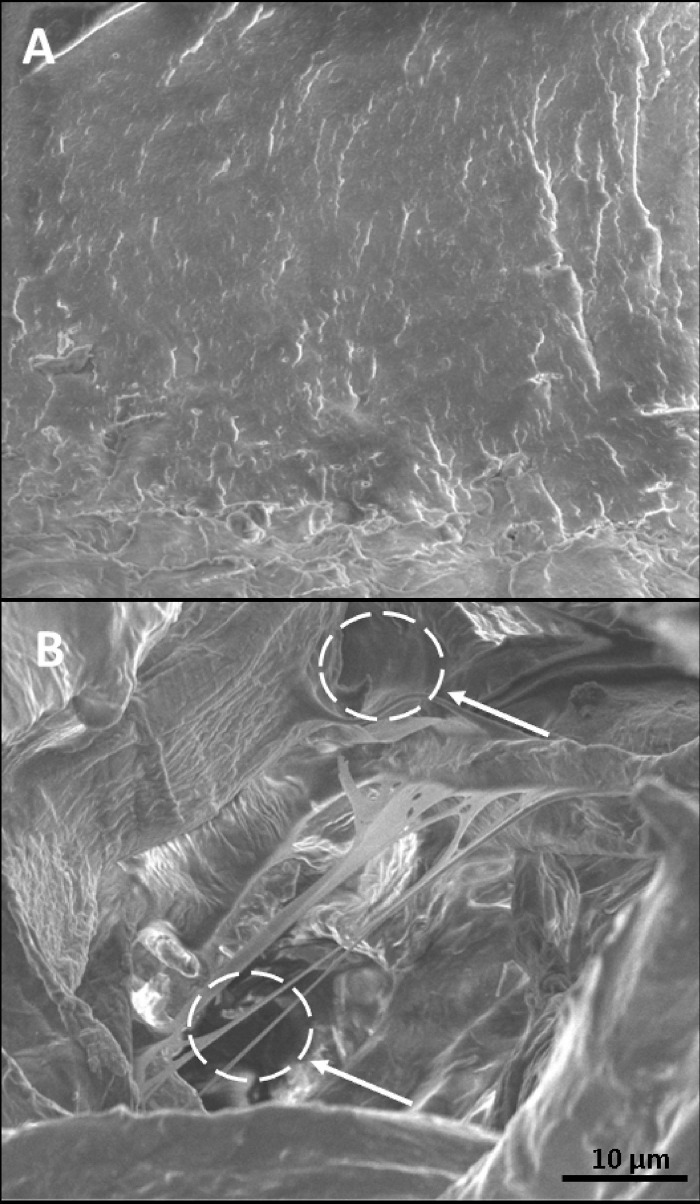
We investigated the effects of increasing concentrations of EP on platelet function, on the course of clot development, and on standard coagulation times. Additionally, clot ultrastructure using scanning electron microscopy was analysed.
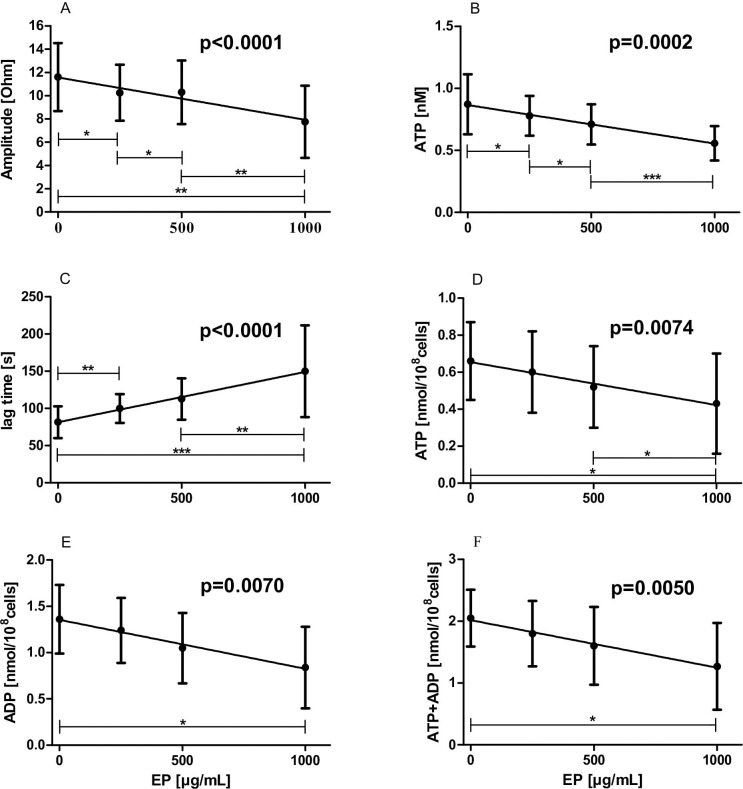
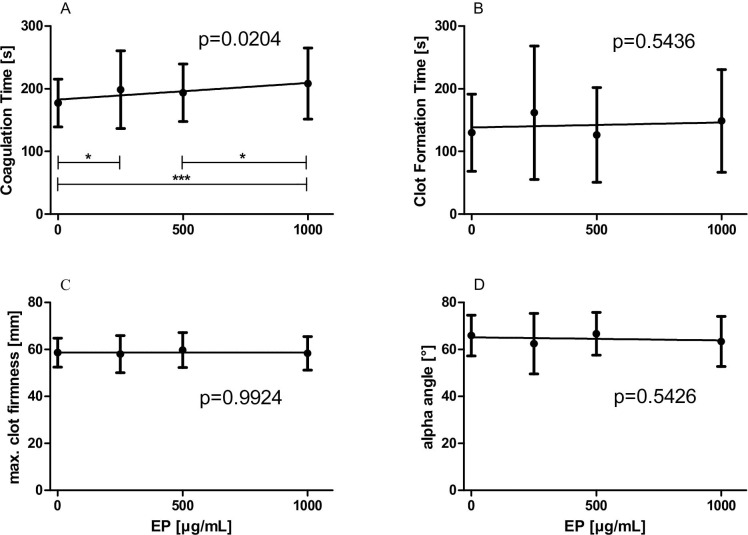
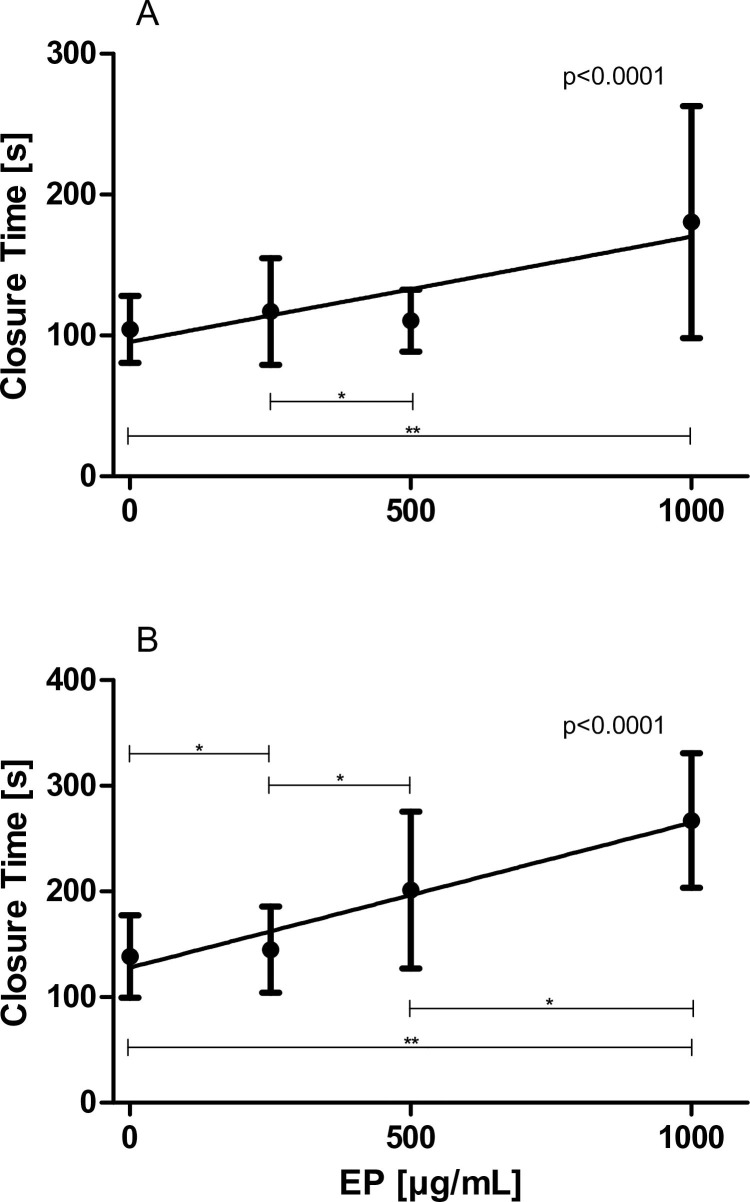
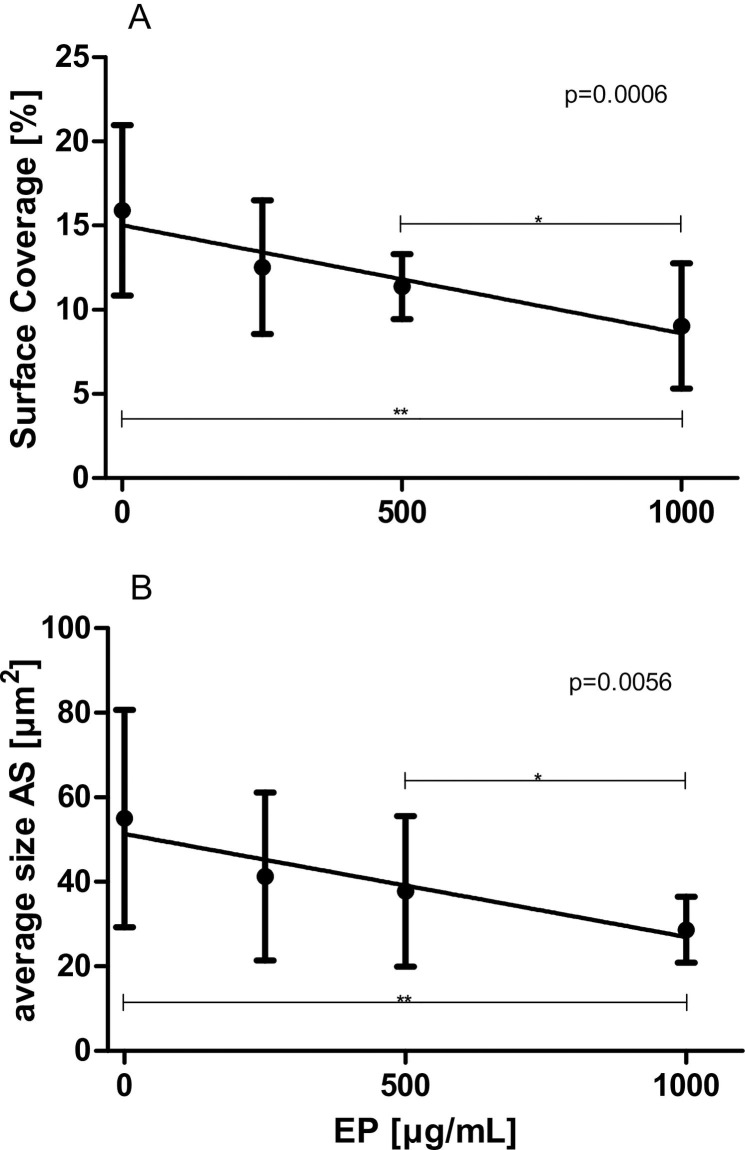
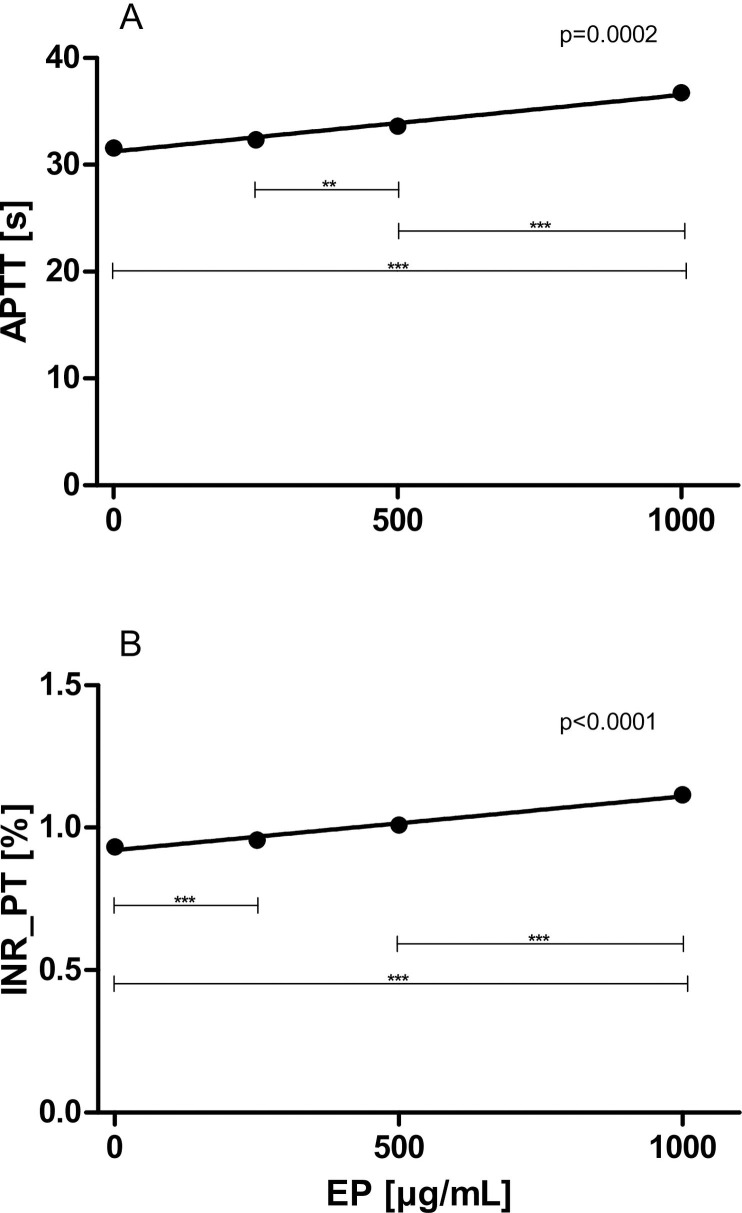
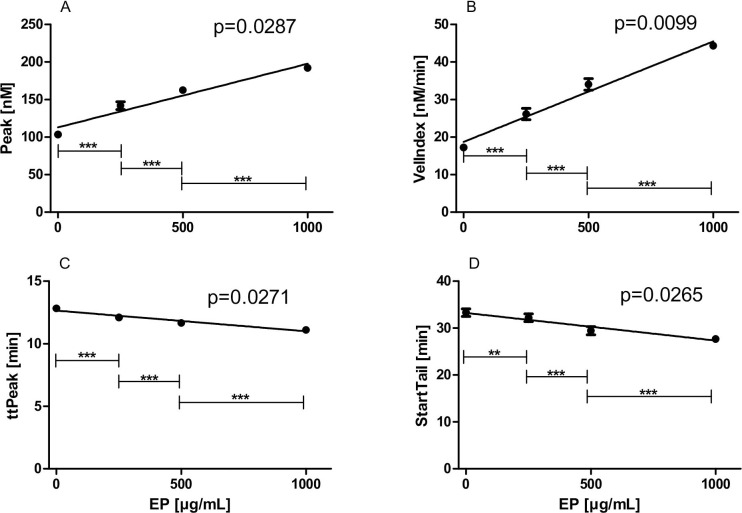
EP exerted significant antiplatelet actions: i) Impedance aggregometry amplitudes (11.7 ± 3.0 ohm, 0 μg/mL EP) dose dependently decreased (7.8 ± 3.1 ohm, 1000 μg/mL EP; -33.3%). ATP exocytosis (0.87 ± 0.24 nM, 0 μg/mL EP) measured by the luminiscent method dose-dependently decreased (0.56 ± 0.14 nM, 1000 μg/mL; -35.6%). ii) Closure times (104.4 ± 23.8 s, 0 μg/mL EP) using the Platelet function analyzer were dose-dependently prolonged (180.5 ± 82.5 s, 1000 μg/mL EP; +72.9%) using membranes coated with collagen/ADP. iii) Surface coverage (15.9 ± 5.1%, 0 μg/mL EP) dose-dependently decreased (9.0 ± 3.7%, 1000 μg/mL EP; -43.4%) using the Cone and Platelet analyzer. EP also exerted significant anticoagulant actions: Coagulation times (177.9 ± 37.8, 0 μg/mL EP) evaluated by means of thrombelastometry were dose-dependently prolonged (212.8 ± 57.7 s, 1000 μg/mL EP; +19.6%). Activated partial thromboplastin times (31.5 ± 1.8 s, 0 μg/mL EP) were dose-dependently prolonged (35.6 ± 2.3 s, 1000 μg/mL EP; +13.0%). Prothrombin times (0.94 ± 0.02 INR, 0 μg/mL EP) were dose-dependently prolonged (1.09 ± 0.04 INR, 1000 μg/mL EP; +16.0%).
We found that EP possesses antiplatelet and anticoagulant properties in whole blood. Together with its proven anti-inflammatory and antioxidative properties, EP is a potentially antiatherogenic drug.
丙酮酸乙酯(EP)是丙酮酸的乙酯,具有抗炎和抗氧化作用。此外,最近还发现了其具有抗凝作用。因此,EP 是一种具有潜在抗动脉粥样硬化作用的药物。我们旨在研究 EP 是否具有抗血小板和抗凝作用,特别是在全血的生理环境中。
我们研究了不同浓度的 EP 对血小板功能、血栓形成过程和标准凝血时间的影响。此外,还使用扫描电子显微镜分析了血栓的超微结构。
EP 表现出显著的抗血小板作用:i)阻抗聚集幅度(11.7 ± 3.0 欧姆,0 μg/mL EP)剂量依赖性降低(7.8 ± 3.1 欧姆,1000 μg/mL EP;-33.3%)。通过发光法测量的三磷酸腺苷外排(0.87 ± 0.24 nM,0 μg/mL EP)剂量依赖性降低(0.56 ± 0.14 nM,1000 μg/mL EP;-35.6%)。ii)使用胶原/ADP 包被的膜,血小板功能分析仪的闭合时间(104.4 ± 23.8 s,0 μg/mL EP)剂量依赖性延长(180.5 ± 82.5 s,1000 μg/mL EP;+72.9%)。iii)使用锥板分析仪,表面覆盖率(15.9 ± 5.1%,0 μg/mL EP)剂量依赖性降低(9.0 ± 3.7%,1000 μg/mL EP;-43.4%)。EP 还表现出显著的抗凝作用:通过血栓弹性描记法评估的凝血时间(177.9 ± 37.8,0 μg/mL EP)剂量依赖性延长(212.8 ± 57.7 s,1000 μg/mL EP;+19.6%)。活化部分凝血活酶时间(31.5 ± 1.8 s,0 μg/mL EP)剂量依赖性延长(35.6 ± 2.3 s,1000 μg/mL EP;+13.0%)。凝血酶原时间(0.94 ± 0.02 INR,0 μg/mL EP)剂量依赖性延长(1.09 ± 0.04 INR,1000 μg/mL EP;+16.0%)。
我们发现 EP 在全血中具有抗血小板和抗凝作用。结合其抗炎和抗氧化作用,EP 是一种具有潜在抗动脉粥样硬化作用的药物。