Emerg Infect Dis. 2020 Nov;26(11):2598-2606. doi: 10.3201/eid2611.202263. Epub 2020 Oct 9.
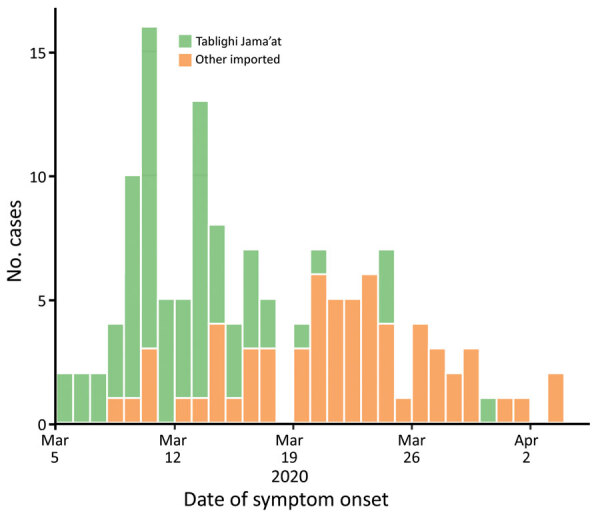
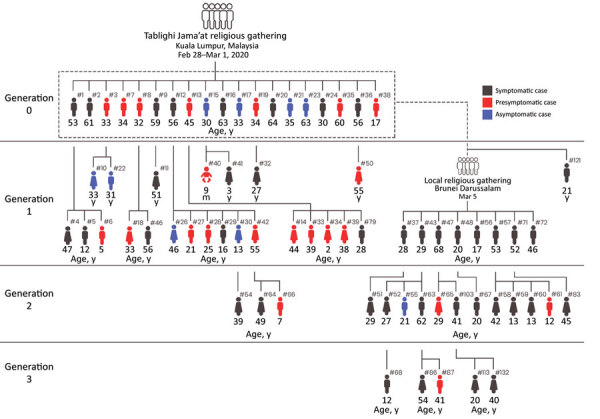
We report the transmission dynamics of severe acute respiratory syndrome coronavirus 2 (SARS-CoV-2) across different settings in Brunei. An initial cluster of SARS-CoV-2 cases arose from 19 persons who had attended the Tablighi Jama'at gathering in Malaysia, resulting in 52 locally transmitted cases. The highest nonprimary attack rates (14.8%) were observed from a subsequent religious gathering in Brunei and in households of attendees (10.6%). Household attack rates from symptomatic case-patients were higher (14.4%) than from asymptomatic (4.4%) or presymptomatic (6.1%) case-patients. Workplace and social settings had attack rates of <1%. Our analyses highlight that transmission of SARS-CoV-2 varies depending on environmental, behavioral, and host factors. We identify red flags for potential superspreading events, specifically densely populated gatherings with prolonged exposure in enclosed settings, persons with recent travel history to areas with active SARS-CoV-2 infections, and group behaviors. We propose differentiated testing strategies to account for differing transmission risk.
我们报告了文莱不同环境中严重急性呼吸综合征冠状病毒 2(SARS-CoV-2)的传播动态。最初的一组 SARS-CoV-2 病例是由 19 名参加马来西亚 Tablighi Jama'at 集会的人引起的,导致 52 例本地传播病例。随后在文莱举行的一次宗教集会以及与会者的家庭中观察到的非原发性攻击率最高(14.8%)。来自有症状病例患者的家庭攻击率(14.4%)高于无症状(4.4%)或出现症状前(6.1%)病例患者。工作场所和社交场所的攻击率<1%。我们的分析强调,SARS-CoV-2 的传播因环境、行为和宿主因素而异。我们确定了潜在超级传播事件的危险信号,特别是在封闭环境中长时间密集人群聚集、有近期前往有活跃 SARS-CoV-2 感染地区旅行史的人以及群体行为。我们建议采用差异化的检测策略,以应对不同的传播风险。