Department of Psychiatry, University of Cambridge, Sir William Hardy Building, Downing Site, Cambridge, CB2 3EB, UK.
Department of Psychiatry, University of Cambridge, Sir William Hardy Building, Downing Site, Cambridge, CB2 3EB, UK; Cambridgeshire & Peterborough NHS Foundation Trust, Fulbourn Hospital, Cambridge, CB21 5EF, UK.
J Psychiatr Res. 2020 Dec;131:244-254. doi: 10.1016/j.jpsychires.2020.09.020. Epub 2020 Sep 22.
COVID-19 has affected social interaction and healthcare worldwide.
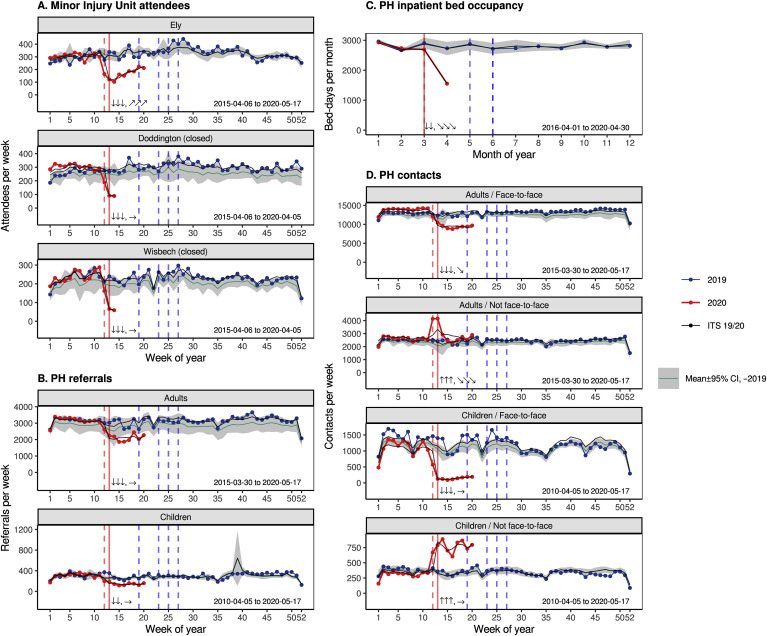
We examined changes in presentations and referrals to the primary provider of mental health and community health services in Cambridgeshire and Peterborough, UK (population ~0·86 million), plus service activity and deaths. We conducted interrupted time series analyses with respect to the time of UK "lockdown", which was shortly before the peak of COVID-19 infections in this area. We examined changes in standardized mortality ratio for those with and without severe mental illness (SMI).
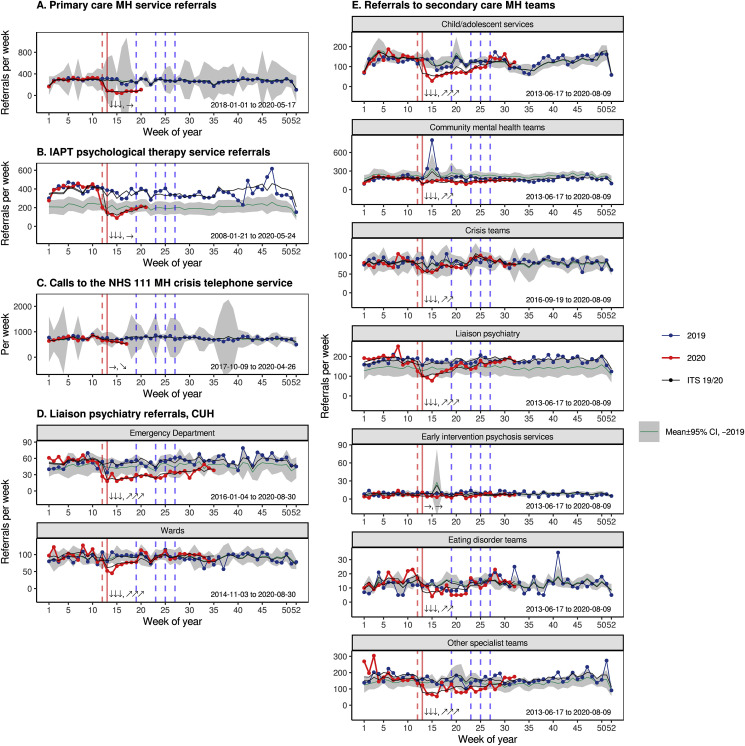
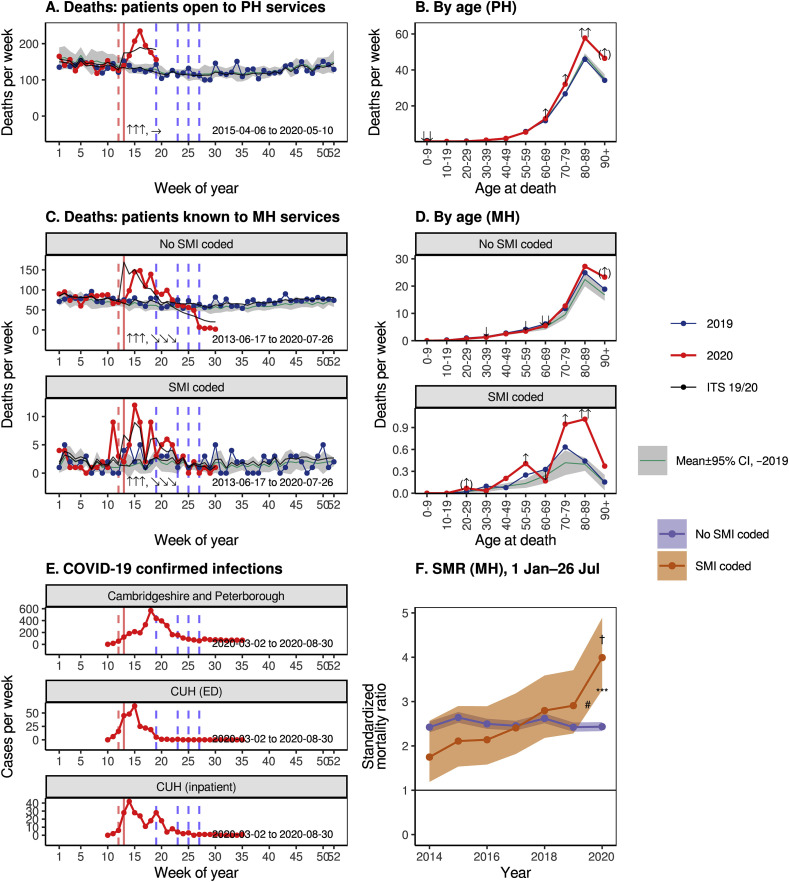
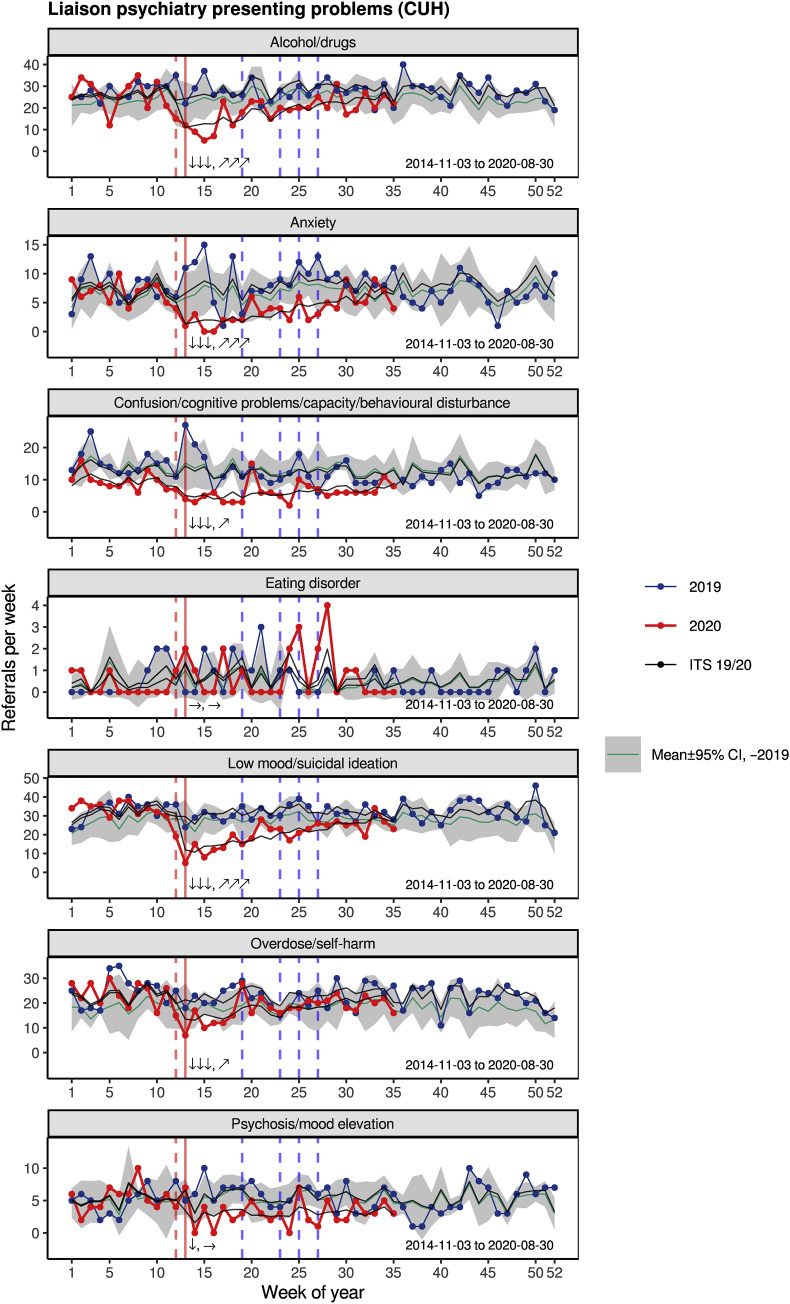
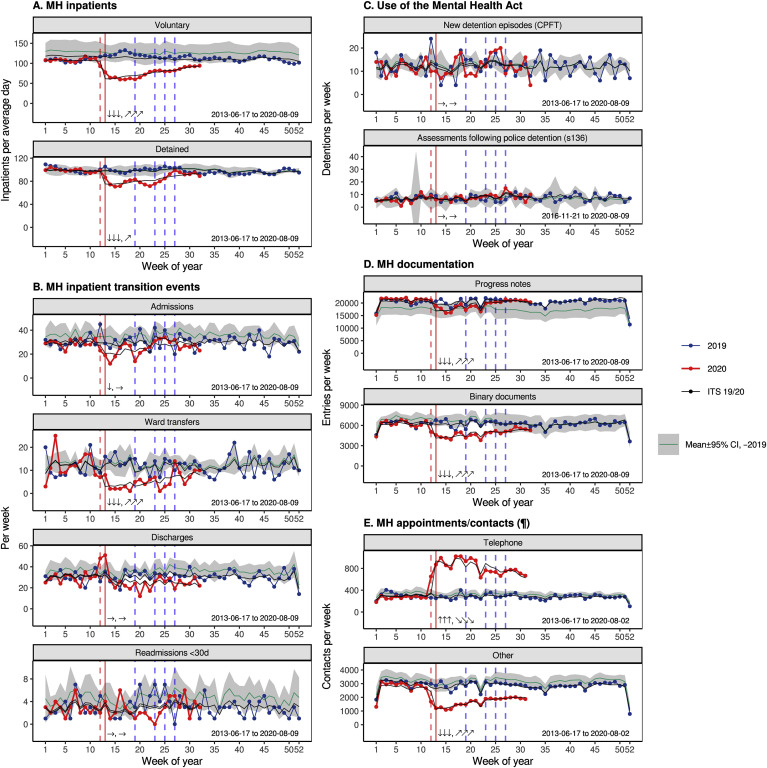
Referrals and presentations to nearly all mental and physical health services dropped at lockdown, with evidence for changes in both supply (service provision) and demand (help-seeking). This was followed by an increase in demand for some services. This pattern was seen for all major forms of presentation to liaison psychiatry services, except for eating disorders, for which there was no evidence of change. Inpatient numbers fell, but new detentions under the Mental Health Act were unchanged. Many services shifted from face-to-face to remote contacts. Excess mortality was primarily in the over-70s. There was a much greater increase in mortality for patients with SMI, which was not explained by ethnicity.
COVID-19 has been associated with a system-wide drop in the use of mental health services, with some subsequent return in activity. "Supply" changes may have reduced access to mental health services for some. "Demand" changes may reflect a genuine reduction of need or a lack of help-seeking with pent-up demand. There has been a disproportionate increase in death among those with SMI during the pandemic.
COVID-19 已对全球的社会互动和医疗保健产生影响。
我们研究了英国剑桥郡和彼得伯勒(人口约 860 万)的精神卫生和社区卫生服务初级提供者的就诊和转介情况的变化,以及服务活动和死亡情况。我们针对英国“封锁”(该地区 COVID-19 感染高峰前不久)时间进行了中断时间序列分析。我们检查了有和没有严重精神疾病(SMI)的患者标准化死亡率的变化。
封锁期间,几乎所有精神和身体健康服务的就诊和转介都有所减少,这表明供应(服务提供)和需求(寻求帮助)都发生了变化。此后,一些服务的需求有所增加。联络精神病学服务的所有主要就诊形式都出现了这种模式,除了饮食失调症,该疾病没有变化的证据。住院人数下降,但根据《精神卫生法》新的拘留人数没有变化。许多服务从面对面转为远程联系。超额死亡率主要发生在 70 岁以上人群。SMI 患者的死亡率增加幅度要大得多,这与种族无关。
COVID-19 与精神卫生服务系统的全面使用下降有关,随后活动有所恢复。“供应”变化可能会减少一些人获得精神卫生服务的机会。“需求”变化可能反映了实际需求的减少或缺乏寻求帮助导致的积压需求。在大流行期间,SMI 患者的死亡率大幅上升。