Faculté de Médecine, Université Paris-Saclay, 94270 Le Kremlin-Bicêtre, France.
INSERM UMR_S 999, Hypertension Pulmonaire: Physiopathologie et Innovation Thérapeutique, Hôpital Marie Lannelongue, 92350 Le Plessis-Robinson, France.
Int J Mol Sci. 2020 Oct 7;21(19):7400. doi: 10.3390/ijms21197400.
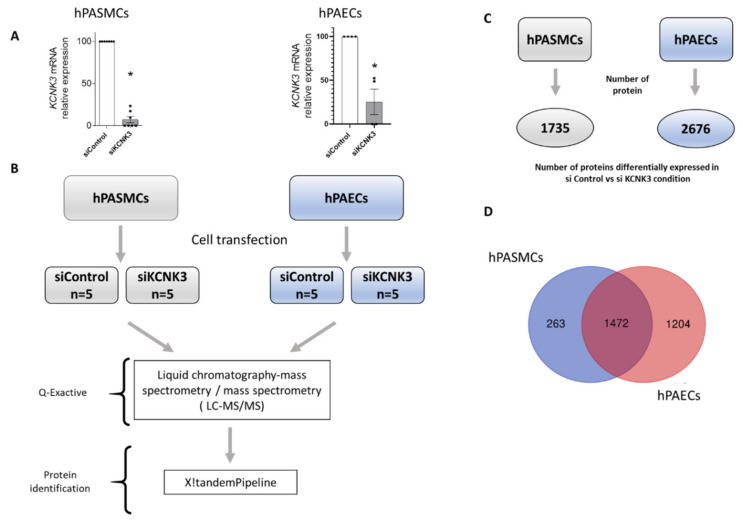
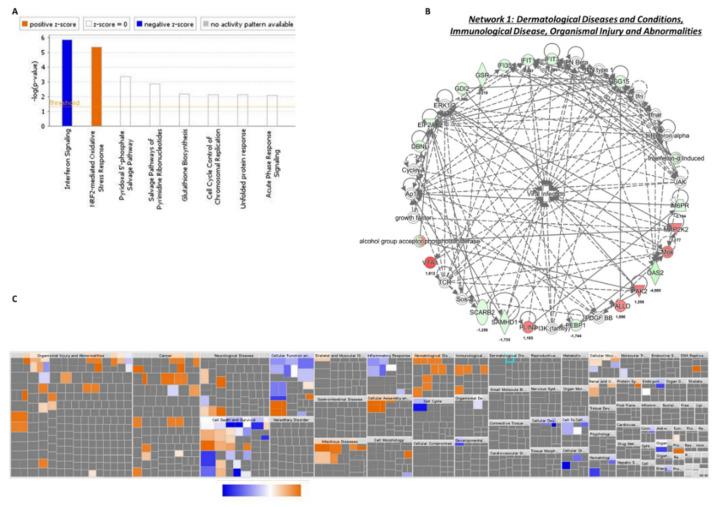
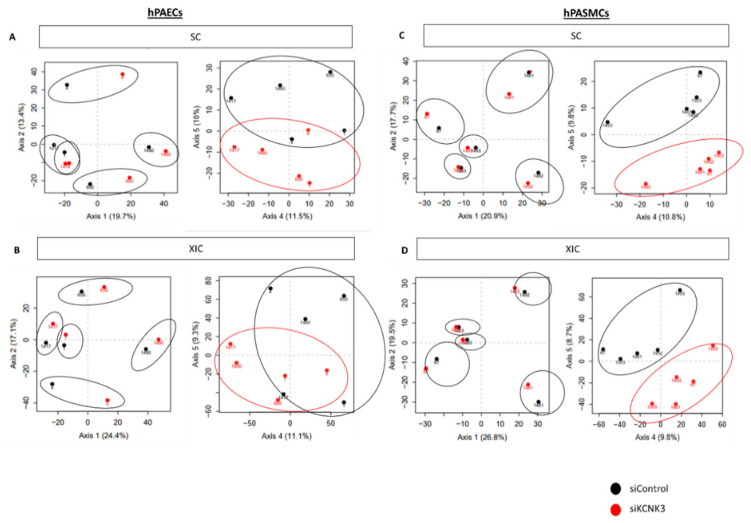
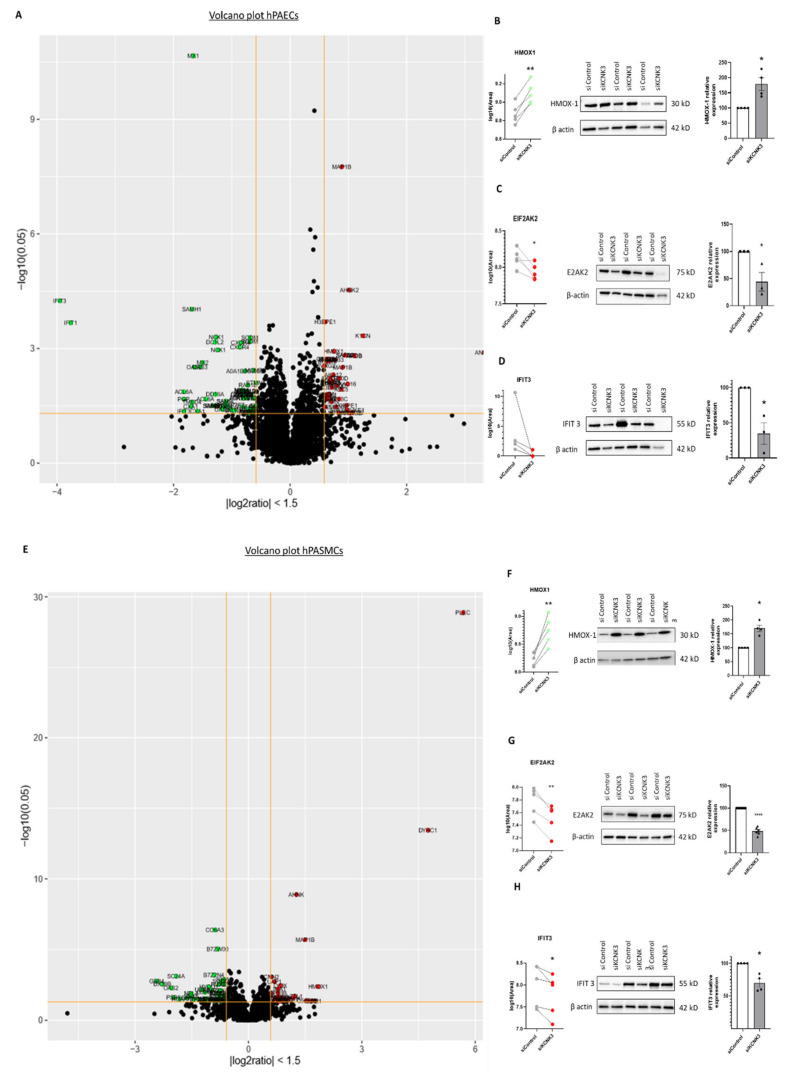
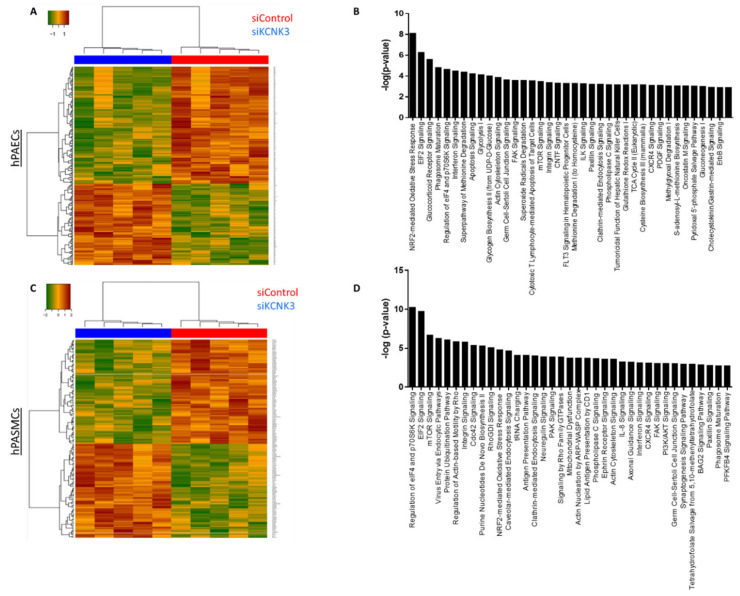
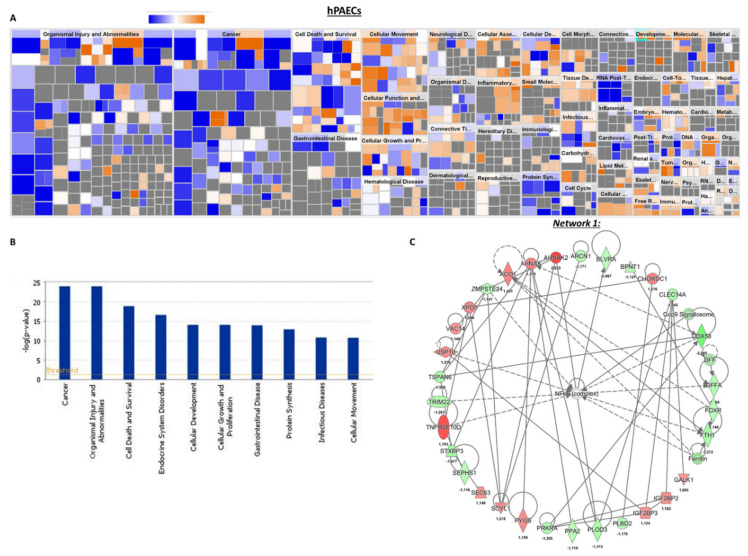
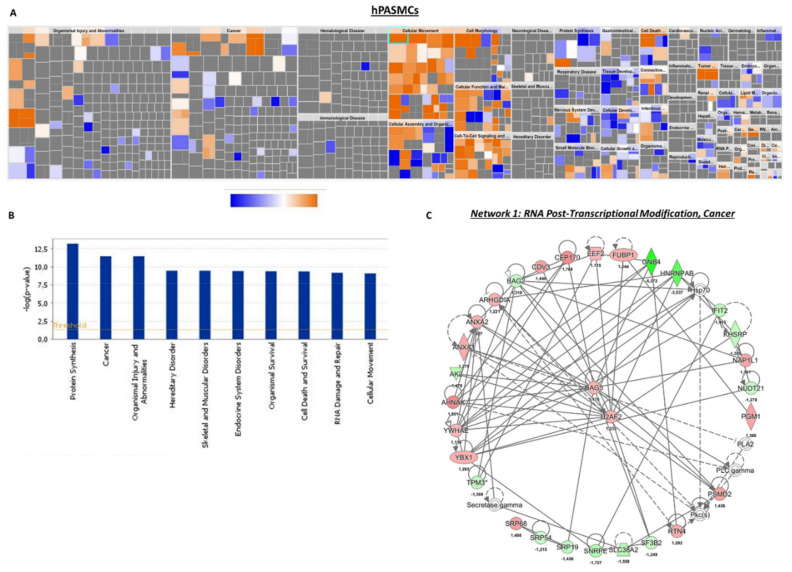
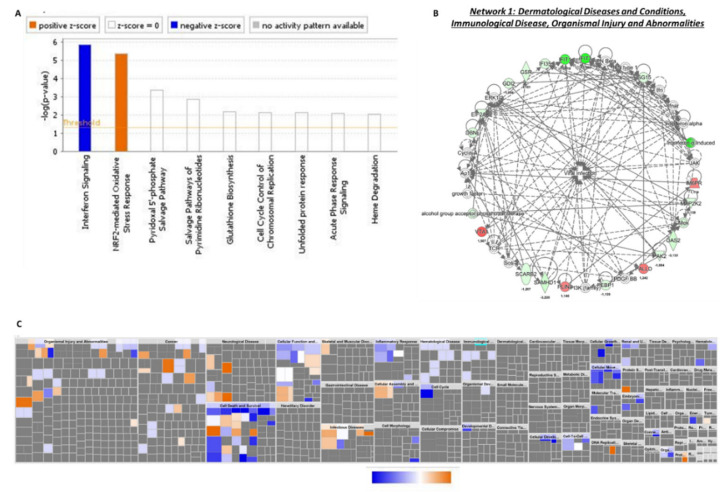
The physiopathology of pulmonary arterial hypertension (PAH) is characterized by pulmonary artery smooth muscle cell (PASMC) and endothelial cell (PAEC) dysfunction, contributing to pulmonary arterial obstruction and PAH progression. KCNK3 loss of function mutations are responsible for the first channelopathy identified in PAH. Loss of KCNK3 function/expression is a hallmark of PAH. However, the molecular mechanisms involved in KCNK3 dysfunction are mostly unknown. To identify the pathological molecular mechanisms downstream of KCNK3 in human PASMCs (hPASMCs) and human PAECs (hPAECs), we used a Liquid Chromatography-Tandem Mass Spectrometry-based proteomic approach to identify the molecular pathways regulated by KCNK3. KCNK3 loss of expression was induced in control hPASMCs or hPAECs by specific siRNA targeting KCNK3. We found that the loss of KCNK3 expression in hPAECs and hPASMCs leads to 326 and 222 proteins differentially expressed, respectively. Among them, 53 proteins were common to hPAECs and hPASMCs. The specific proteome remodeling in hPAECs in absence of KCNK3 was mostly related to the activation of glycolysis, the superpathway of methionine degradation, and the mTOR signaling pathways, and to a reduction in EIF2 signaling pathways. In hPASMCs, we found an activation of the PI3K/AKT signaling pathways and a reduction in EIF2 signaling and the Purine Nucleotides De Novo Biosynthesis II and IL-8 signaling pathways. Common to hPAECs and hPASMCs, we found that the loss of KCNK3 expression leads to the activation of the NRF2-mediated oxidative stress response and a reduction in the interferon pathway. In the hPAECs and hPASMCs, we found an increased expression of HO-1 (heme oxygenase-1) and a decreased IFIT3 (interferon-induced proteins with tetratricopeptide repeats 3) (confirmed by Western blotting), allowing us to identify these axes to understand the consequences of KCNK3 dysfunction. Our experiments, based on the loss of KCNK3 expression by a specific siRNA strategy in control hPAECs and hPASMCs, allow us to identify differences in the activation of several signaling pathways, indicating the key role played by KCNK3 dysfunction in the development of PAH. Altogether, these results allow us to better understand the consequences of KCNK3 dysfunction and suggest that KCNK3 loss of expression acts in favor of the proliferation and migration of hPASMCs and promotes the metabolic shift and apoptosis resistance of hPAECs.
肺动脉高压(PAH)的病理生理学特征是肺动脉平滑肌细胞(PASMC)和内皮细胞(PAEC)功能障碍,导致肺动脉阻塞和 PAH 进展。KCNK3 功能丧失突变是 PAH 中鉴定的第一种通道病。KCNK3 功能丧失/表达缺失是 PAH 的标志。然而,KCNK3 功能障碍涉及的分子机制在很大程度上尚不清楚。为了确定 KCNK3 在人 PASMCs(hPASMCs)和人 PAECs(hPAECs)中的下游病理分子机制,我们使用基于液相色谱-串联质谱的蛋白质组学方法来鉴定受 KCNK3 调节的分子途径。通过针对 KCNK3 的特异性 siRNA 诱导对照 hPASMCs 或 hPAECs 中的 KCNK3 表达缺失。我们发现,在 hPAECs 和 hPASMCs 中缺失 KCNK3 表达会导致分别表达差异的 326 和 222 种蛋白质。其中,53 种蛋白质在 hPAECs 和 hPASMCs 中是共同的。在不存在 KCNK3 的情况下,hPAEC 中特定的蛋白质组重塑主要与糖酵解、甲硫氨酸降解的超级途径和 mTOR 信号通路的激活以及 EIF2 信号通路的减少有关。在 hPASMCs 中,我们发现 PI3K/AKT 信号通路的激活以及 EIF2 信号通路和嘌呤核苷酸从头生物合成 II 和 IL-8 信号通路的减少。在 hPAECs 和 hPASMCs 中共同发现,KCNK3 表达缺失导致 NRF2 介导的氧化应激反应的激活和干扰素途径的减少。在 hPAECs 和 hPASMCs 中,我们发现 HO-1(血红素加氧酶-1)的表达增加和 IFIT3(具有四肽重复的干扰素诱导蛋白 3)的表达减少(通过 Western blot 验证),使我们能够鉴定这些轴以了解 KCNK3 功能障碍的后果。我们的实验基于特异性 siRNA 策略在对照 hPAECs 和 hPASMCs 中缺失 KCNK3 表达,使我们能够识别几种信号通路的激活差异,表明 KCNK3 功能障碍在 PAH 发展中起着关键作用。总之,这些结果使我们能够更好地理解 KCNK3 功能障碍的后果,并表明 KCNK3 表达缺失有利于 hPASMCs 的增殖和迁移,并促进 hPAECs 的代谢转变和抗凋亡。