Pulmonary Hypertension Multidisciplinary Unit, Cardiology Department, Hospital Universitario 12 de Octubre, 28041 Madrid, Spain.
Instituto de Investigación Sanitaria Hospital 12 de Octubre (i+12), 28041 Madrid, Spain.
Int J Mol Sci. 2023 Feb 19;24(4):4147. doi: 10.3390/ijms24044147.
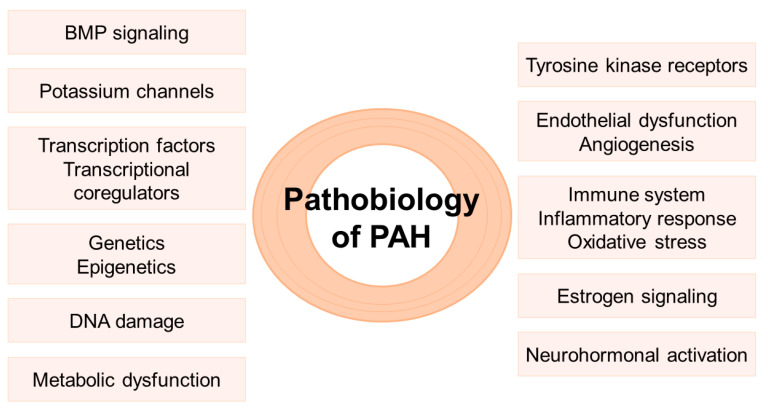
Pulmonary arterial hypertension (PAH) is a severe condition with a high mortality rate despite advances in diagnostic and therapeutic strategies. In recent years, significant scientific progress has been made in the understanding of the underlying pathobiological mechanisms. Since current available treatments mainly target pulmonary vasodilation, but lack an effect on the pathological changes that develop in the pulmonary vasculature, there is need to develop novel therapeutic compounds aimed at antagonizing the pulmonary vascular remodeling. This review presents the main molecular mechanisms involved in the pathobiology of PAH, discusses the new molecular compounds currently being developed for the medical treatment of PAH and assesses their potential future role in the therapeutic algorithms of PAH.
肺动脉高压(PAH)是一种严重的疾病,尽管在诊断和治疗策略方面取得了进展,但死亡率仍然很高。近年来,人们对其潜在的病理生物学机制有了重大的科学认识。由于目前可用的治疗方法主要针对肺血管舒张,但对肺血管中发生的病理变化没有影响,因此需要开发新的治疗化合物,以拮抗肺血管重构。这篇综述介绍了 PAH 病理生物学中的主要分子机制,讨论了目前正在开发用于治疗 PAH 的新分子化合物,并评估了它们在 PAH 治疗方案中的潜在未来作用。