State Key Laboratory of Natural Medicines, Department of Physiology, China Pharmaceutical University, Nanjing 210009, China.
Department of Pharmacy, Children's Hospital of Nanjing Medical University, Nanjing 210008, China.
Molecules. 2022 Jun 9;27(12):3724. doi: 10.3390/molecules27123724.
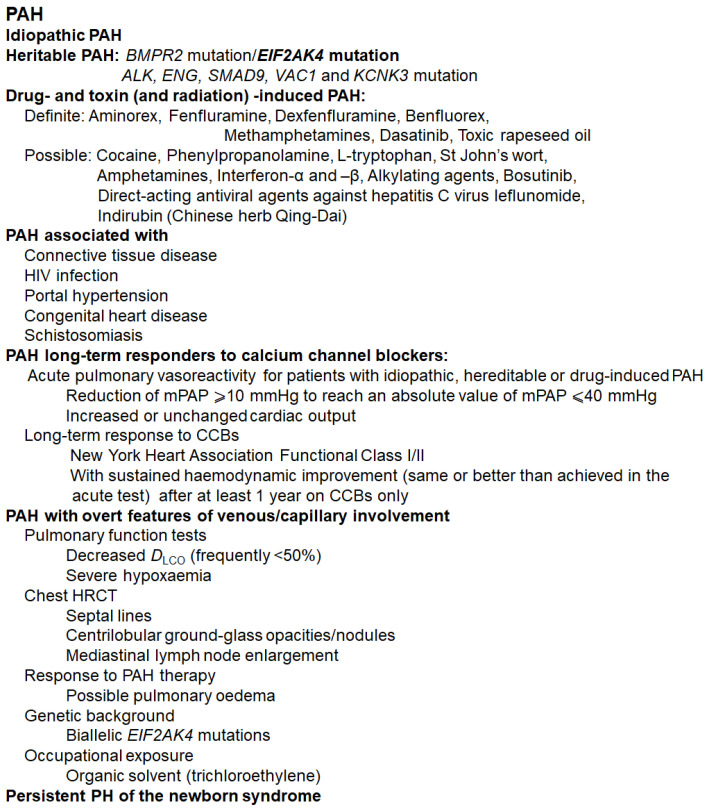
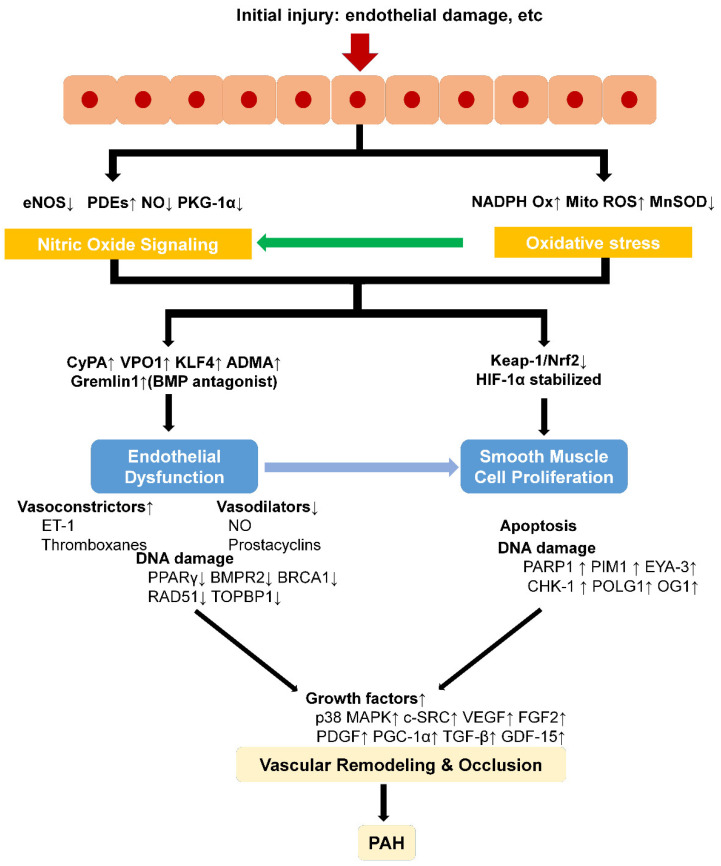
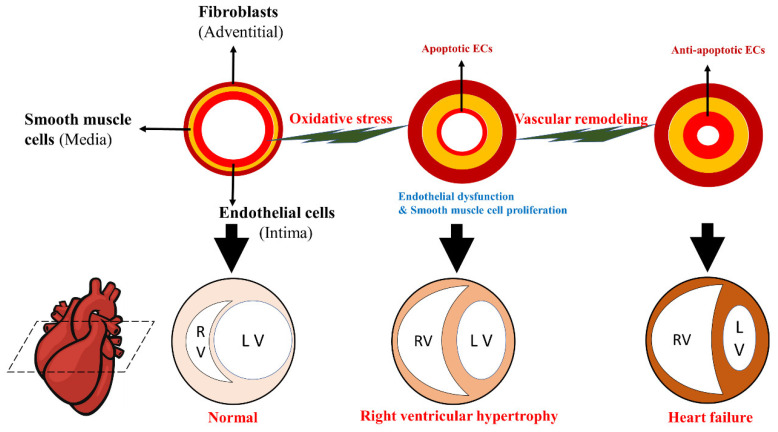
Pulmonary arterial hypertension (PAH) is clinically characterized by a progressive increase in pulmonary artery pressure, followed by right ventricular hypertrophy and subsequently right heart failure. The underlying mechanism of PAH includes endothelial dysfunction and intimal smooth muscle proliferation. Numerous studies have shown that oxidative stress is critical in the pathophysiology of PAH and involves changes in reactive oxygen species (ROS), reactive nitrogen (RNS), and nitric oxide (NO) signaling pathways. Disrupted ROS and NO signaling pathways cause the proliferation of pulmonary arterial endothelial cells (PAECs) and pulmonary vascular smooth muscle cells (PASMCs), resulting in DNA damage, metabolic abnormalities, and vascular remodeling. Antioxidant treatment has become a main area of research for the treatment of PAH. This review mainly introduces oxidative stress in the pathogenesis of PAH and antioxidative therapies and explains why targeting oxidative stress is a valid strategy for PAH treatment.
肺动脉高压(PAH)的临床特征为肺动脉压进行性升高,继而出现右心室肥厚,最终导致右心衰竭。PAH 的发病机制包括内皮功能障碍和内膜平滑肌增殖。大量研究表明,氧化应激在 PAH 的病理生理学中起关键作用,涉及活性氧(ROS)、活性氮(RNS)和一氧化氮(NO)信号通路的改变。ROS 和 NO 信号通路的破坏会导致肺动脉内皮细胞(PAECs)和肺血管平滑肌细胞(PASMCs)增殖,导致 DNA 损伤、代谢异常和血管重塑。抗氧化治疗已成为 PAH 治疗的主要研究领域。本综述主要介绍了 PAH 发病机制中的氧化应激和抗氧化治疗,并解释了为什么靶向氧化应激是 PAH 治疗的有效策略。