Department of Epidemiology and Biostatistics, University of California San Francisco, San Francisco.
Division of Research, Kaiser Permanente Northern California, Oakland.
Alzheimer Dis Assoc Disord. 2021;35(2):106-113. doi: 10.1097/WAD.0000000000000418.
Educational attainment is associated with late-life cognitive performance and dementia; few studies have examined diverse racial/ethnic groups to assess whether the association differs by race/ethnicity.
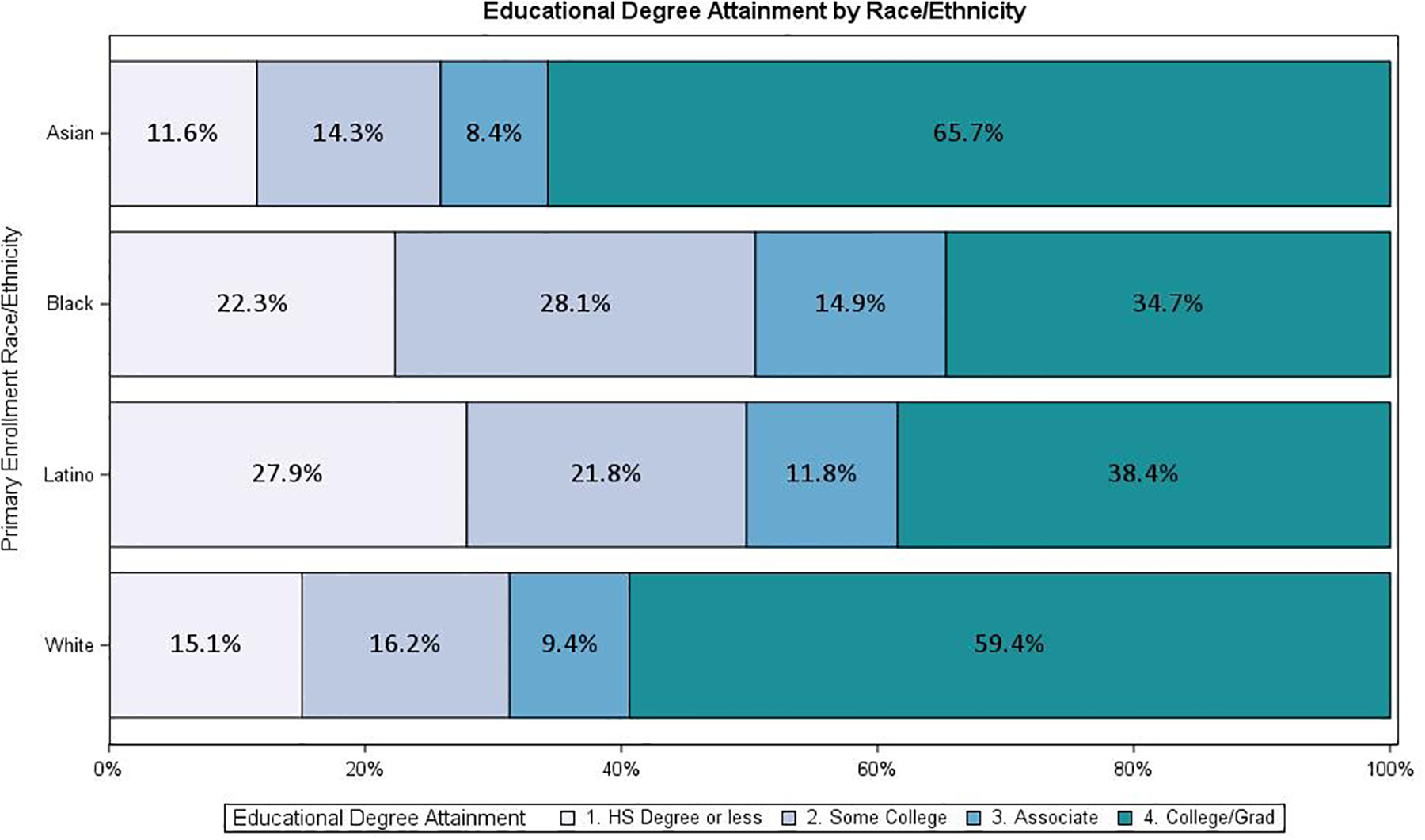
We investigated whether the association between educational attainment and cognition differed between White, Black, Asian, and Latino participants in the Kaiser Healthy Aging and Diverse Life Experiences study (n=1348). Covariate-adjusted multivariable linear regression models examined domains of verbal episodic memory, semantic memory, and executive functioning.
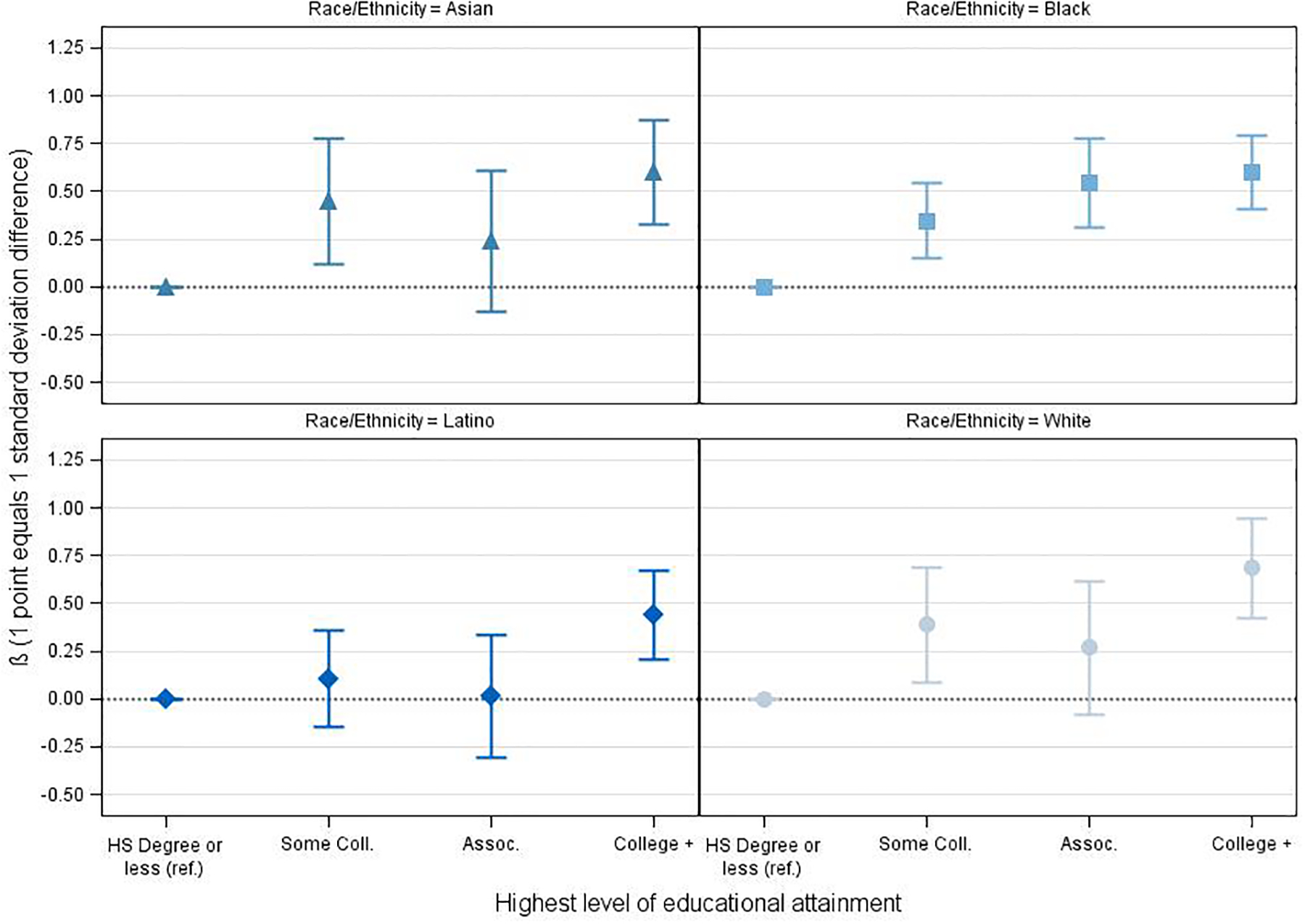
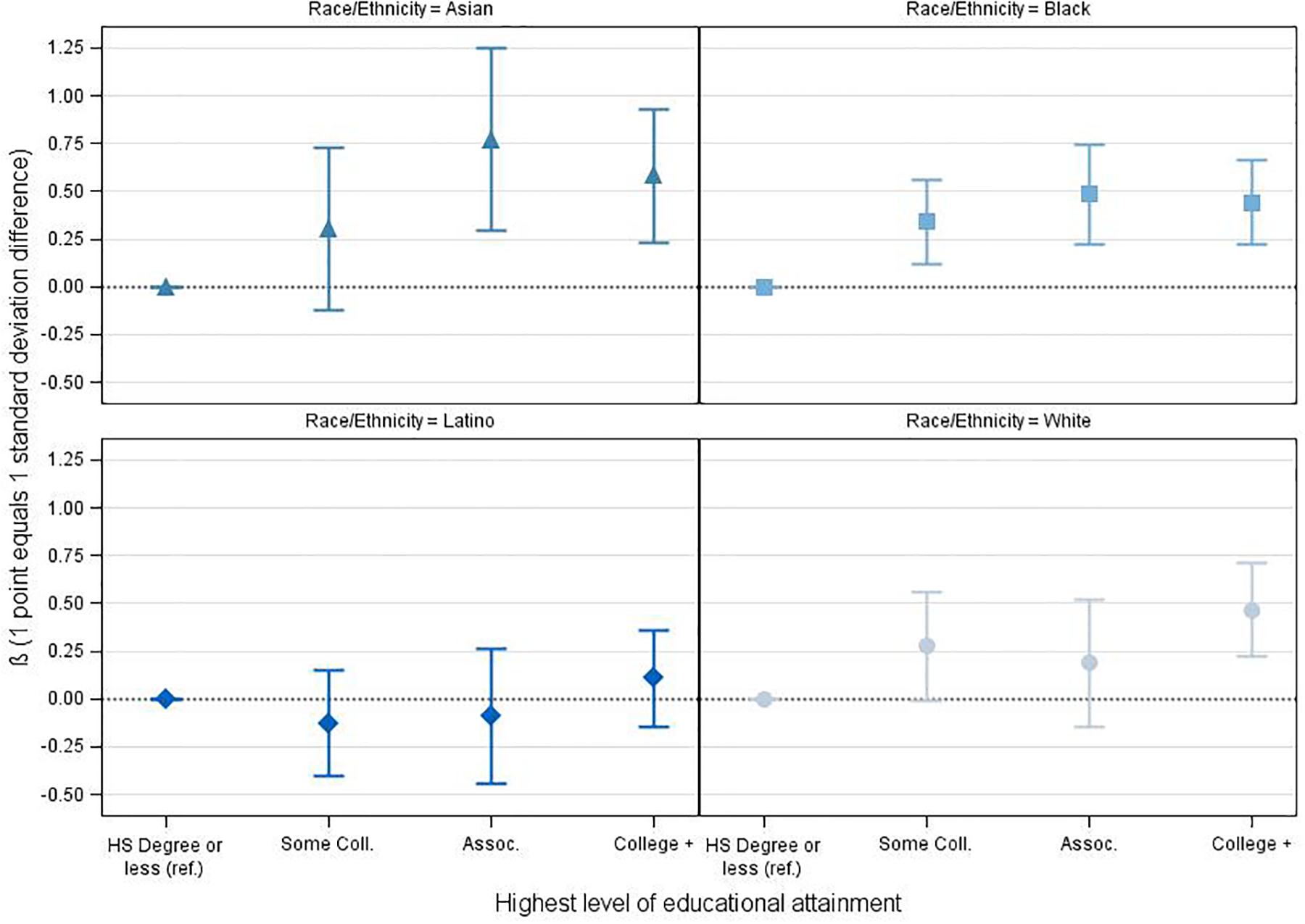
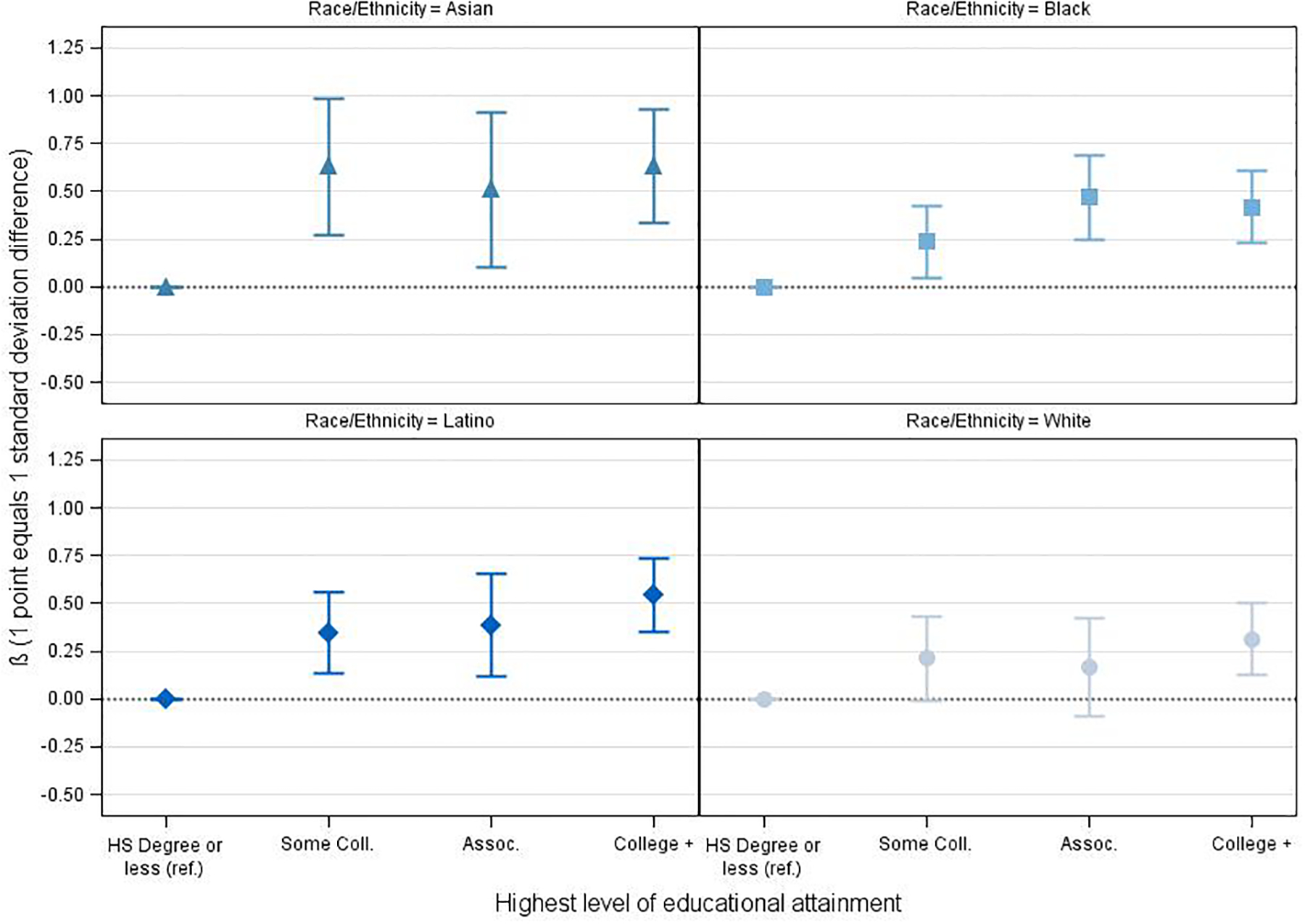
We observed significant effect heterogeneity by race/ethnicity only for verbal episodic memory (P=0.0198), for which any schooling between high school and college was beneficial for White, Asian, and Black participants, but not Latino participants. We found no evidence of heterogeneity for semantic memory or executive function.
With the exception of Latino performance on verbal episodic memory, more education consistently predicted better cognitive scores to a similar extent across racial/ethnic groups, despite likely heterogenous educational and social experiences.
受教育程度与晚年认知表现和痴呆有关;很少有研究检查不同的种族/民族群体,以评估这种关联是否因种族/民族而异。
我们调查了教育程度与认知之间的关联是否因 Kaiser Healthy Aging and Diverse Life Experiences 研究中的白种人、黑种人、亚洲人和拉丁裔参与者(n=1348)的种族/民族而异。经过协变量调整的多变量线性回归模型检查了言语情节记忆、语义记忆和执行功能等领域。
我们仅观察到种族/民族之间的显著效应异质性(P=0.0198),对于言语情节记忆,高中及以上的任何教育都有益于白种人、亚洲人和黑种人,但对拉丁裔参与者则没有益处。我们没有发现语义记忆或执行功能存在异质性的证据。
除了拉丁裔在言语情节记忆方面的表现外,受教育程度越高,与种族/民族群体的认知评分的相关性越一致,尽管教育和社会经历可能存在差异。