Cardiovascular Trials Unit, Manchester University NHS Foundation Trust, Manchester, United Kingdom; Faculty of Biology, Medicine and Health, University of Manchester, Manchester, United Kingdom.
Faculty of Biology, Medicine and Health, University of Manchester, Manchester, United Kingdom; The Christie NHS Foundation Trust, Manchester, United Kingdom.
Atherosclerosis. 2020 Nov;313:126-136. doi: 10.1016/j.atherosclerosis.2020.09.008. Epub 2020 Sep 15.
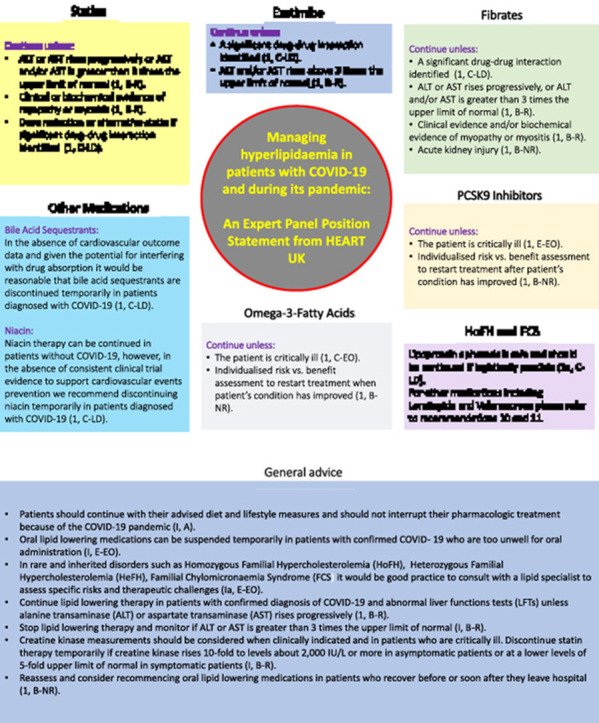
The emergence of the novel severe acute respiratory syndrome coronavirus 2 (SARS-CoV-2) which causes Coronavirus Disease 2019 (COVID-19) has resulted in a pandemic. SARS-CoV-2 is highly contagious and its severity highly variable. The fatality rate is unpredictable but is amplified by several factors including advancing age, atherosclerotic cardiovascular disease, diabetes mellitus, hypertension and obesity. A large proportion of patients with these conditions are treated with lipid lowering medication and questions regarding the safety of continuing lipid-lowering medication in patients infected with COVID-19 have arisen. Some have suggested they may exacerbate their condition. It is important to consider known interactions with lipid-lowering agents and with specific therapies for COVID-19. This statement aims to collate current evidence surrounding the safety of lipid-lowering medications in patients who have COVID-19. We offer a consensus view based on current knowledge and we rated the strength and level of evidence for these recommendations. Pubmed, Google scholar and Web of Science were searched extensively for articles using search terms: SARS-CoV-2, COVID-19, coronavirus, Lipids, Statin, Fibrates, Ezetimibe, PCSK9 monoclonal antibodies, nicotinic acid, bile acid sequestrants, nutraceuticals, red yeast rice, Omega-3-Fatty acids, Lomitapide, hypercholesterolaemia, dyslipidaemia and Volanesorsen. There is no evidence currently that lipid lowering therapy is unsafe in patients with COVID-19 infection. Lipid-lowering therapy should not be interrupted because of the pandemic or in patients at increased risk of COVID-19 infection. In patients with confirmed COVID-19, care should be taken to avoid drug interactions, between lipid-lowering medications and drugs that may be used to treat COVID-19, especially in patients with abnormalities in liver function tests.
新型严重急性呼吸综合征冠状病毒 2(SARS-CoV-2)的出现导致了 COVID-19 大流行。SARS-CoV-2 具有高度传染性,其严重程度差异很大。死亡率不可预测,但会被几个因素放大,包括年龄增长、动脉粥样硬化性心血管疾病、糖尿病、高血压和肥胖。很大一部分患有这些疾病的患者接受降脂药物治疗,因此出现了关于 COVID-19 感染患者继续使用降脂药物的安全性问题。一些人认为它们可能会使病情恶化。重要的是要考虑与降脂药物以及 COVID-19 的特定治疗方法的已知相互作用。本声明旨在汇集有关 COVID-19 患者使用降脂药物安全性的当前证据。我们根据当前知识提供了共识观点,并对这些建议的强度和证据水平进行了评级。我们广泛搜索了使用以下搜索词的 Pubmed、Google scholar 和 Web of Science 文章:SARS-CoV-2、COVID-19、冠状病毒、脂质、他汀类药物、贝特类药物、依折麦布、PCSK9 单克隆抗体、烟酸、胆汁酸螯合剂、营养保健品、红曲米、欧米伽-3 脂肪酸、洛美他派、高胆固醇血症、血脂异常和 Volanesorsen。目前没有证据表明降脂治疗在 COVID-19 感染患者中不安全。不应因大流行或在感染 COVID-19 风险增加的患者中断降脂治疗。对于确诊 COVID-19 的患者,应注意避免降脂药物与可能用于治疗 COVID-19 的药物之间的药物相互作用,尤其是在肝功能检查异常的患者中。