Department of Medical Affairs, The First Affiliated Hospital, Sun Yat-sen University, Guangzhou, China.
Department of Health Policy and Hospital Management, School of Public Health, Harbin Medical University, No.157 Baojian Road, Nangang District, Harbin, 150086, Heilongjiang, China.
BMC Health Serv Res. 2020 Oct 12;20(1):936. doi: 10.1186/s12913-020-05757-7.
To evaluate the impact of a restricted access policy on workplace violence in a healthcare setting.
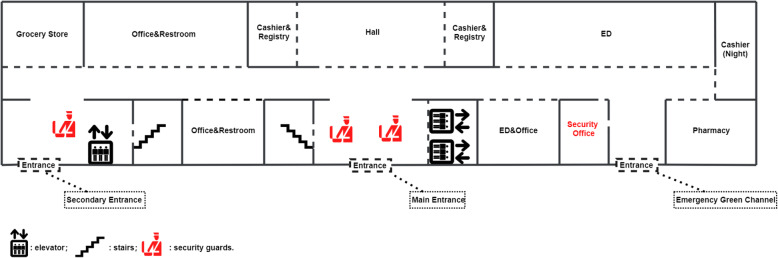
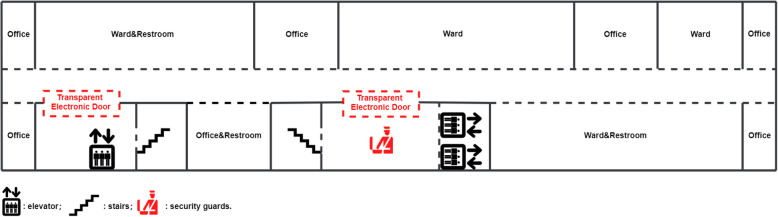
We surveyed healthcare workers before and after the implementation of a restricted-access policy at a tertiary hospital in north-eastern China. Data were collected in April 2017 and January 2019. Fisher's exact test were used to compare the difference in workplace violence prevalence between responses to two surveys. Survey 1 (S1) collected data from 345 healthcare professionals who had worked in the inpatient ward for at least 12 months. Survey 2 (S2) included 338 healthcare workers from the same ward who had been employed for more than two years. The effective response rates for the two studies was 79.31 and 83.25%, respectively. All 18 female security guards were included in the investigation in S2.
The prevalence of psychological violence was 62.03% in S1 and 34.62% in S2, the difference in prevalence showing statistical significance (P = 0.000), while the prevalence of physical violence was 3.77 and 4.73% respectively, showing no statistical significance (P = 0.573). The change in the rate of injury caused by physical violence was also statistically significant at 76.92 and 31.25% (P = 0.025), respectively. Security guards were at high risk of workplace violence under the policy. Most healthcare professionals thought this policy ameliorated treatment order, the sense of security, anxiety about workplace violence, and so forth, but one-third of the respondents thought that it caused patient dissatisfaction.
While the restricted access policy may be effective for healthcare professionals in avoiding or dealing with violence, such policy could contribute to new problems regarding the safety of security guards and the potential dissatisfaction of patients. The policy should be further developed to alleviate this phenomenon.
评估医疗环境中限制准入政策对工作场所暴力的影响。
我们在中国东北的一家三甲医院实施限制准入政策前后,对医护人员进行了调查。数据收集于 2017 年 4 月和 2019 年 1 月。采用 Fisher 确切概率检验比较两次调查中工作场所暴力发生率的差异。调查 1(S1)收集了 345 名在住院病房工作至少 12 个月的医疗专业人员的数据。调查 2(S2)包括来自同一病房的 338 名工作超过两年的医护人员。两项研究的有效应答率分别为 79.31%和 83.25%。S2 中所有 18 名女保安都参与了调查。
S1 中心理暴力的发生率为 62.03%,S2 中为 34.62%,差异有统计学意义(P=0.000),而身体暴力的发生率分别为 3.77%和 4.73%,差异无统计学意义(P=0.573)。身体暴力导致伤害的发生率变化也分别为 76.92%和 31.25%,差异有统计学意义(P=0.025)。政策下保安面临高工作场所暴力风险。大多数医护人员认为该政策改善了治疗秩序、安全感、对工作场所暴力的焦虑等,但三分之一的受访者认为这导致了患者不满。
虽然限制准入政策可能对医护人员避免或应对暴力有效,但可能会导致保安安全方面的新问题和患者潜在的不满。该政策应进一步完善,以缓解这种现象。